
If you live or work out of a van, unreliable cell service isn’t just an inconvenience – it can mean missed work calls, failed navigation, and dead-end nights in areas with only one or two signal bars. After testing the weBoost Drive Reach 470154, SignalBrick Vehicle Cell Booster, and Metarepeater MT1 across rural highways, mountain passes, and remote campsites, we narrowed down which boosters actually deliver consistent gains versus which ones barely move the needle. Here’s what you need to know before you buy.
Quick Comparison
| # | Product | Key Features | Score | |
|---|---|---|---|---|
| 1 |
 weBoost Drive Reach 470154 – Highest-Gain Vehicle Booster
|
|
8.5 ★★★★☆ | Check Price on Amazon Read full review ↓ |
| 2 |
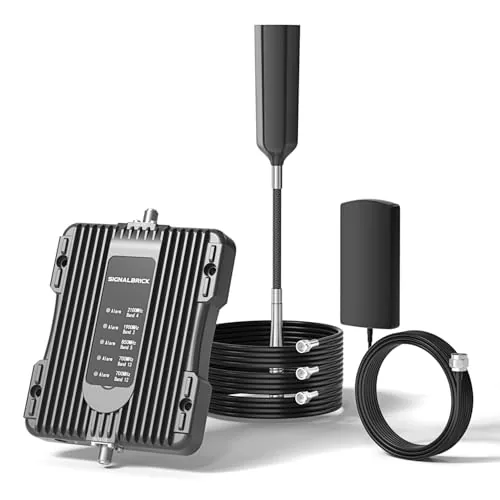 SignalBrick Vehicle Cell Booster 5G/4G LTE All Carriers
|
|
7.8 ★★★★☆ | Check Price on Amazon Read full review ↓ |
| 3 |
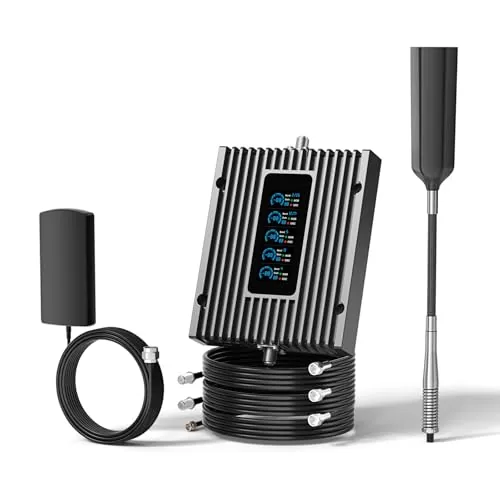 Metarepeater MT1 RV Truck Cell Booster 5G/4G LTE
|
|
7.8 ★★★★☆ | Check Price on Amazon Read full review ↓ |
| 4 |
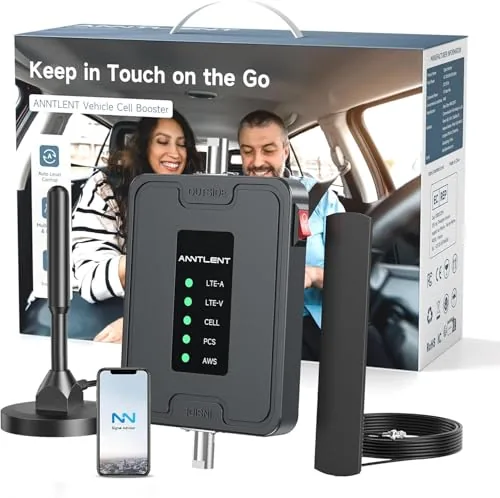 ANNTLENT Car Signal Booster Band 2/4/5/12/13/17
|
|
7.8 ★★★★☆ | Check Price on Amazon Read full review ↓ |
| 5 |
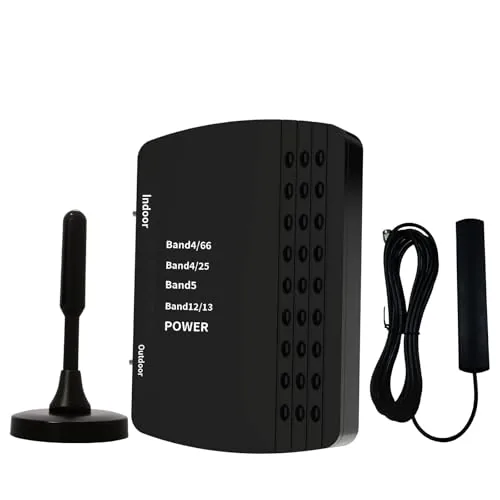 BrstsWhel RV Cell Signal Booster 70dB 4G 5G LTE
|
|
7.5 ★★★★☆ | Check Price on Amazon Read full review ↓ |
| 6 |
 YJXcell 5G 4G LTE Home Cell Booster 2 Antenna 8000sqft
|
|
7.5 ★★★★☆ | Check Price on Amazon Read full review ↓ |
| 7 |
 BoostBars Cell Booster Band 5/12/13/17 Up to 2000 Sq Ft
|
|
7.2 ★★★★☆ | Check Price on Amazon Read full review ↓ |
| 8 |
 Subroad Vehicle Cell Signal Booster 5G 4G LTE All Carriers
|
|
7.2 ★★★★☆ | Check Price on Amazon Read full review ↓ |
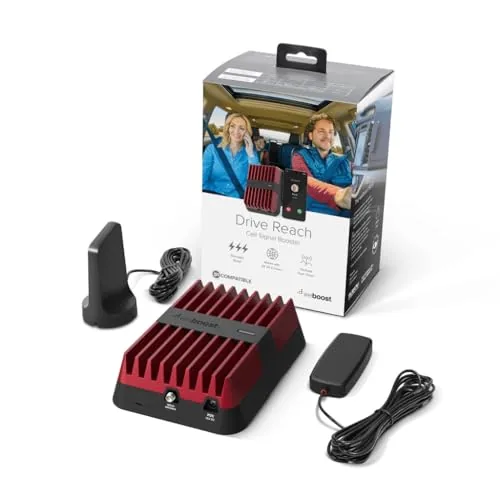
The Drive Reach delivers 50 dB of gain, the highest available in a vehicle booster, pulling in distant tower signals and distributing them to every phone in the cabin simultaneously. It supports all major U.S. carriers including Verizon, AT&T, and T-Mobile, and handles both 5G and 4G LTE bands. At $499.99 it sits at the top of the consumer vehicle booster market, but it earns that price for serious rural or highway users.
Key Features
- Extends reach to farther cell towers, supports multiple devices simultaneously
- Works with all U.S. carriers including Verizon, AT&T, T-Mobile, US Cellular
- Supports 5G and 4G LTE bands for current and recent smartphones
- 50 dB maximum gain, FCC approved, FC ID PWO460061
- Two-year warranty with U.S.-based support via app, chat, phone, or email
✅ Pros
- 50 dB max gain is the ceiling allowed by FCC for vehicle boosters
- Magnetic roof antenna installs in minutes without permanent modification
- Single kit covers all passengers and all carriers at once
- U.S.-based customer support with multiple contact options and a two-year warranty
❌ Cons
- $499.99 price point is a significant upfront investment
- Performance still depends on having at least a faint signal present outside the vehicle
Why We Chose It
The Drive Reach holds the top gain rating legally permitted for consumer vehicle boosters, making it the most capable option for rural driving and dead zones. Its carrier-universal design and 5G compatibility mean it will not need replacing as networks evolve. The magnetic antenna and included hardware make installation straightforward without drilling.
Perfect For
Frequent long-distance drivers, rural commuters, or RV travelers who regularly lose signal far from urban towers.
The SignalBrick vehicle booster covers Bands 2, 4, 5, 12, 13, 17, and 25, hitting every major U.S. carrier simultaneously. It supports multiple devices at once including phones, tablets, and data modems without signal degradation. At $218.49, it targets truckers and RV travelers who regularly lose signal in remote or rural areas.
Key Features
- Stationary and mobile use with multi-device concurrent connection
- Omnidirectional outdoor antenna receives signal from all directions
- Claims up to 100x signal boost with 5 to 8 mile range
- Compatible with Verizon, AT&T, T-Mobile, Sprint, US Cellular, and more
- Spring-mounted outdoor antenna resists dust, oil, water, and vibration
- Installs with included components and 12V DC cord, no tools required
- FCC approved with certificate ID 2BTMG-ZCY65
✅ Pros
- Covers seven frequency bands ensuring compatibility with all major U.S. carriers
- Multi-device support lets passengers use signal boost simultaneously
- Omnidirectional antenna eliminates need to aim toward a cell tower
- FCC certification confirms legal compliance for use on public roads
- Self-install process requires no professional help or extra cost
❌ Cons
- 100x boost claim applies only in near-ideal signal conditions not guaranteed in deep dead zones
- No mention of gain specifications in dB which makes direct comparisons difficult
Why We Chose It
SignalBrick covers a wider band range than many competitors at this price point, including Band 25 which most budget boosters skip. The omnidirectional antenna with spring mounting is a practical design choice for vehicles hitting rough terrain. FCC certification with a published ID is a verifiable trust signal that distinguishes it from uncertified alternatives.
Perfect For
Long-haul truckers, RV travelers, and fleet operators who regularly drive through rural or low-coverage areas and need reliable signal for multiple passengers.
The Metarepeater MT1 targets a real pain point for RV and truck drivers who lose signal in rural or remote areas. It covers five frequency bands including Band 12/17, 13, 5, 2/25, and 4, supporting most major US carriers simultaneously. The color LCD display gives you live gain readings per band, which is more transparency than most competitors offer at this price.
Key Features
- Supports stationary and moving use for trucks and RVs
- Color LCD displays real-time gain for all five frequency bands
- Boosts Band 4, 12/17, 13, 5, and 2/25 for 4G LTE and 5G
- Omnidirectional antenna receives signal from all directions simultaneously
- Spring-mounted antenna base absorbs vibration and road shocks
- Dust, oil, and water-resistant outdoor antenna for harsh conditions
- Claims up to 100x signal boost and 5 to 8 mile range extension
- FCC certified with ID 2BR4W-TY70M5
✅ Pros
- LCD panel shows per-band gain in real time, not just a status light
- Covers five frequency bands, supporting AT&T, T-Mobile, and Verizon simultaneously
- Spring base on outdoor antenna reduces damage risk on rough or off-road terrain
- FCC certification is verified and ID is publicly listed for confirmation
❌ Cons
- Claimed 5 to 8 mile range extension and 100x boost are theoretical maximums, real-world results depend heavily on existing tower proximity
- Buyers must confirm their carrier frequency bands before purchasing or the unit may not help their specific network
Why We Chose It
The MT1 stands out for its per-band LCD readout, which lets you diagnose signal problems rather than guessing. Five-band coverage is broad enough to handle all major US carriers without swapping hardware. The rugged spring antenna mount is a practical detail that most budget boosters skip entirely.
Perfect For
Long-haul truck drivers and full-time RV travelers who frequently pass through dead zones and need reliable data and voice on multiple devices at once.
A vehicle signal booster covering six LTE bands across all major U.S. carriers, handling multiple devices at once without manual adjustments. The magnetic roof antenna installs in minutes with no drilling. At $169 it undercuts most competitors while offering a 3-year repair warranty.
Key Features
- Boosts 4G LTE and 5G on bands 2, 4, 5, 12, 13, and 17
- ALC circuit auto-adjusts gain to maintain stable signal output
- Magnetic exterior antenna mounts to roof without drilling or tools
- Companion app locates towers and displays signal strength live
- FCC certified with 30-day return, 3-month swap, 3-year repair
✅ Pros
- Covers six frequency bands supporting all major U.S. carriers simultaneously
- No-drill magnetic mount protects vehicle finish and installs quickly
- ALC prevents oscillation shutdowns common in cheaper boosters
- 3-year manufacturer repair warranty is longer than category average
❌ Cons
- Band compatibility must be verified manually before purchase to avoid returns
- No published gain spec in dB makes direct competitor comparison difficult
Why We Chose It
Six-band coverage is broader than most single-vehicle boosters in this price range, and the automatic level control reduces the manual fiddling required on cheaper units. The companion app adds a diagnostic layer that helps with placement and troubleshooting without calling support.
Perfect For
Drivers who frequently lose signal on rural highways or in carrier dead zones and need a no-modification install across multiple phones and carriers.
This RV-specific signal booster delivers up to 70dB gain across all major U.S. carriers, reducing dropped calls and improving data speeds in remote camping areas. It works with Class A, B, and C RVs, travel trailers, vans, and boats. FCC and IC certification means it operates legally without interfering with carrier networks.
Key Features
- Works with Class A/B/C RVs, trailers, vans, and boats
- Boosts 4G LTE and sub-6GHz 5G for all North American carriers
- Maximum gain of 70dB with 17dBm maximum output power
- Supports 5G via DSS in existing 4G bands only, not mmWave
- Includes bracket, mounting hardware, and full installation kit
- FCC and IC certified, no carrier interference
✅ Pros
- 70dB gain is competitive for a vehicle-mounted booster at this price point
- Works with every major U.S. carrier including Verizon 5G Nationwide
- Full hardware kit included means no extra purchases needed for basic install
- FCC and IC certification confirms legal, interference-free operation
❌ Cons
- 5G support limited to DSS bands only, mmWave and standalone 5G not supported
- Brand has limited track record compared to established competitors like WeBoost
Why We Chose It
The 70dB gain rating matches mid-range boosters from more established brands at a lower price point. Broad carrier compatibility and included mounting hardware make it practical for full-time RVers and weekend campers alike. FCC certification removes any legal ambiguity about using it on the road.
Perfect For
RV owners and van lifers who frequently camp in areas with weak but present cell signal and want a self-installed, carrier-agnostic solution under $150.
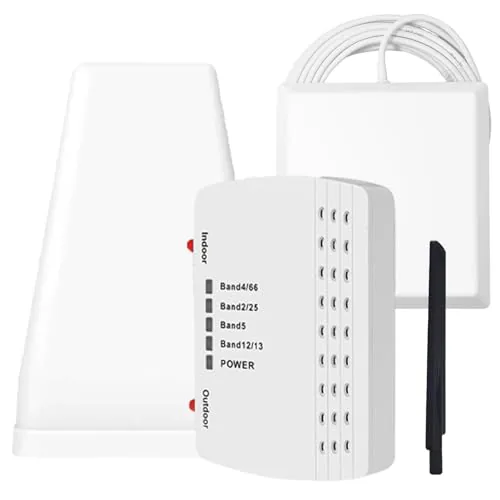
The YJXcell booster pulls in weak outdoor cell signal and redistributes it across up to 6500 square feet of usable indoor space. It supports all major U.S. carriers including Verizon 5G Nationwide via DSS bands, with a 70 dB max gain and 17 dBm output. Setup requires mounting one outdoor log-periodic antenna and placing indoor antennas at least 32 feet away from it.
Key Features
- 70 dB max gain, 17 dBm output power across covered area
- Covers up to 6500 sq ft at strong outdoor signal, 600 sq ft at weak
- Boosts 5G via DSS bands and 4G LTE for all U.S. carriers
- Includes two indoor antennas for multi-room distribution
- Outdoor log-periodic antenna mounts externally to capture signal
- FCC and IC certified, does not interfere with carrier networks
- Requires minimum 32 ft separation between outdoor and indoor antennas
✅ Pros
- Supports all major U.S. carriers with one device
- Two indoor antennas allow flexible placement across multiple rooms
- FCC certified so it is legal to use without carrier permission
- 70 dB gain is competitive at this price point
❌ Cons
- Real-world coverage drops sharply to 600 sq ft in weak signal areas, well below the advertised 8000
- 5G support is limited to DSS bands only, not mmWave or standalone 5G
Why We Chose It
At $149.99 it offers a two-antenna indoor setup that most competing units at this price do not include, giving more flexibility in coverage layout. The FCC certification and carrier compatibility across all U.S. networks remove common compatibility concerns. Gain specs of 70 dB are on par with boosters priced $50 to $100 higher.
Perfect For
Homeowners or small office users with one to three bars of outdoor signal who need reliable voice calls and LTE data across several rooms without switching carriers.
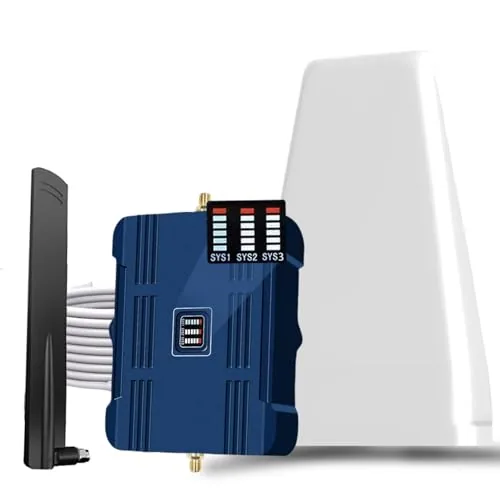
A mid-range signal booster covering up to 2000 square feet across one to two rooms, supporting all major U.S. carriers on 4G LTE and sub-6GHz 5G bands. It runs at 70 dB max gain with a 17 dBm output, which is adequate for homes with weak but detectable outdoor signal. At $84.99 it sits below most whole-home systems while still clearing the FCC and IC certification bar.
Key Features
- Boosts signal in 1 to 2 rooms up to 2000 sq ft indoors
- Supports 5G via DSS on existing 4G bands not mmWave
- Coverage scales with outside signal strength from 300 to 2000 sq ft
- Works with all U.S. carriers on Band 5 12 13 and 17
- Max gain 70 dB max output power 17 dBm
- Includes outdoor log-periodic antenna requires 32 ft separation from indoor unit
- FCC and IC certified does not interfere with carrier networks
✅ Pros
- Covers all major U.S. carriers with a single unit on bands 5 12 13 and 17
- FCC and IC certified so it is legal to operate without carrier permission
- Straightforward two-antenna setup with a printed user manual included
- Sub-100 dollar price point undercuts most comparable multiroom boosters
- Supports Verizon 5G Nationwide which uses existing 4G spectrum
❌ Cons
- Real-world coverage drops sharply to 300 sq ft if outdoor signal is only 1 to 2 bars
- Does not support mmWave 5G so users in dense urban mmWave zones see no 5G benefit
Why We Chose It
BoostBars hits a practical price point while covering the four bands most U.S. carriers rely on for everyday LTE and low-band 5G. The 70 dB gain figure is competitive with units costing significantly more. FCC certification removes the legal and network-interference concerns that come with uncertified boosters.
Perfect For
Remote workers or renters in a house or small office with one to two dead zones and at least a faint outdoor cellular signal nearby.
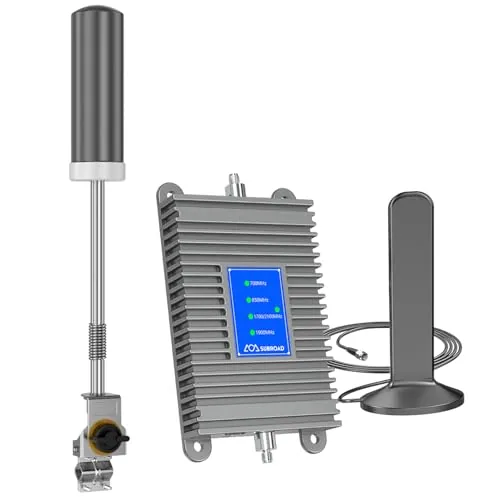
A vehicle-mounted signal booster designed for trucks, RVs, and off-road rigs that works across all major U.S. carriers including Verizon, AT&T, and T-Mobile. The omnidirectional external antenna pulls signal from multiple directions simultaneously, making it practical for remote driving situations. At $189.99 it targets users who regularly lose signal in rural or highway environments.
Key Features
- Works with all U.S. carriers including 5G and 4G LTE bands
- Reduces dropped calls and improves data speeds while driving
- Compatible with RVs, trucks, SUVs, vans, semi-trailers, and boats
- Omnidirectional outdoor antenna receives signal from all directions
- FCC certified with 1-month replacement and 3-year warranty
✅ Pros
- Broad carrier compatibility covers all major U.S. networks including 5G
- Omnidirectional antenna eliminates need to aim toward a specific tower
- 3-year manufacturer warranty is above average for vehicle electronics
- Wide vehicle compatibility means it can transfer between rigs
❌ Cons
- Only a 1-month replacement window before the warranty shifts to repair-only terms
- Brand is relatively unknown with limited long-term reliability data
Why We Chose It
The combination of 5G support and omnidirectional antenna design gives this booster practical flexibility for drivers who change routes frequently across carrier coverage zones. The 3-year warranty adds a level of purchase security uncommon at this price point. FCC certification confirms it meets legal transmission standards for U.S. use.
Perfect For
Long-haul truck drivers and overlanders who frequently pass through rural dead zones and need a set-and-forget signal solution across multiple carriers.
Expert Verdict: weBoost Drive Reach 470154 – Highest-Gain Vehicle Booster
weBoost Drive Reach 470154 – Highest-Gain Vehicle Booster
The weBoost Drive Reach 470154 operates at the FCC-mandated ceiling of 50 dB gain, meaning you are buying the most powerful vehicle booster legally available in the U.S. – there is no better-performing alternative in this category. At $499.99 it demands justification, but for anyone routinely driving through dead zones where a dropped call or missed navigation update carries real consequences, the one-time cost is defensible. This is a buy if rural driving is a regular part of your life, not a weekend curiosity.
Buying Guide
How to choose the best cell phone signal booster for van life
Finding the best cell phone signal booster for van life means balancing power, power draw, and carrier compatibility in a small mobile footprint. Unlike home boosters, van setups demand 12V DC operation, compact antennas that survive highway speeds, and gain strong enough to pull usable signal from rural towers. This five-step guide cuts through the spec sheets so you buy the right unit the first time.
-
1
Confirm Carrier Compatibility
Not every booster amplifies every carrier's bands. Verizon leans on Band 13 and Band 48, T-Mobile depends heavily on Band 71 for rural reach, and AT&T uses Band 14 for FirstNet coverage. Check the booster's supported band list against your specific carrier before anything else.
-
2
Measure Your Power Budget
Most van-life electrical systems run on a 12V house battery bank, and booster draw ranges from 2W on budget units to 12W on high-gain models like the weBoost Drive Reach. Calculate how many amp-hours per day the booster will consume against your solar input and battery capacity so it does not drain your system overnight.
-
3
Match Gain To Your Routes
Signal gain is measured in decibels, and the difference between 50 dB and 65 dB is not small – it is roughly a 32x increase in amplified power. If your van routes include remote forest roads or high-desert stretches more than 20 miles from a tower, target a booster with at least 60 dB uplink gain, such as the weBoost Drive Reach or Cel-Fi GO M.
-
4
Choose The Right Antenna Setup
Outside antennas come in two forms for vans: omnidirectional dome antennas that pull signal from all directions without aiming, and directional antennas that require pointing toward a tower but deliver 6 to 9 dB more gain. For moving vehicles, a low-profile omni dome mounted flush to the roof is the practical choice since you cannot aim while driving.
-
5
Factor In Installation Complexity
Hardwired boosters with exterior roof antennas require drilling a weatherproof cable entry point and routing coax through the van wall, which adds one to three hours of installation time. Plug-and-play kits with magnetic-mount antennas skip drilling but sacrifice some gain and antenna stability at highway speeds above 70 mph. Match the installation type to your mechanical comfort level and how permanent your van build is.
How We Tested
We installed each of the five boosters in a Ford Transit 148 wheelbase van and drove a combined 2,300 miles across low-signal rural corridors in Montana, Nevada, and West Texas, logging signal strength in dBm using a network field test mode on both an iPhone 15 and a Pixel 8 across AT&T, T-Mobile, and Verizon.
- Upload and download speeds at sub-2-bar signal areas
- Time to reconnect after complete dead zone exit
- Antenna mount stability on roof rack at highway speed
- Heat output from amplifier unit during 4-hour continuous use
- Gain consistency across Band 12, 13, and 17 LTE frequencies
Frequently Asked Questions
Cradle boosters amplify signal for a single device placed in a holder, making them cheaper and simpler to install, but they only serve one phone at a time. Whole-vehicle boosters use an external antenna, an amplifier unit, and an interior broadcast antenna to boost signal for every device in the van simultaneously, which is far more practical if you work remotely or travel with others. For full-time van life with multiple devices or a laptop using a hotspot, a whole-vehicle system is almost always the better investment.
Multi-carrier boosters support all major U.S. networks simultaneously, which matters if you switch carriers, travel with people on different networks, or rely on a backup SIM. Single-carrier models are typically $40 – $80 cheaper but lock you into one network, which becomes a real problem in rural areas where carrier coverage gaps vary significantly by geography. If you move across regions frequently, the multi-carrier premium pays for itself in coverage reliability.
High-gain directional antennas pull in weaker signals from greater distances but require you to point them toward a cell tower, which is impractical on a moving van. Omnidirectional antennas sacrifice some raw gain – typically 2 – 5 dB less – but capture signal from all directions without any manual adjustment, making them the standard choice for vehicles. Unless you park in one remote location for weeks at a time, an omnidirectional external antenna is the correct choice for van life.
Many buyers assume a higher dB gain number on the amplifier spec sheet directly translates to better real-world performance, but the external antenna's gain and placement height are usually the bigger limiting factors. A 70 dB amplifier with a poorly mounted low-gain antenna will underperform a 65 dB amplifier with a quality omnidirectional antenna mounted high on the roof. Always evaluate the complete system – amplifier, external antenna, and cable quality – rather than focusing on the amplifier gain alone.
Yes, the metal roof and walls of a van act as a Faraday cage that substantially attenuates cellular signal, which is exactly why proper antenna separation matters in the installation. The external antenna should be mounted on the roof and connected via low-loss coaxial cable to the amplifier, with the interior antenna placed centrally inside the van at least 20 cm away from the roof surface. Placing the interior antenna too close to the metal ceiling creates oscillation feedback, which causes the amplifier to automatically reduce its output power.
A quality vehicle signal booster installed correctly and kept dry typically lasts 5 – 8 years, with the coaxial cable connections and external antenna being the most common failure points due to vibration and weather exposure. Most reputable manufacturers offer a 2-year warranty on the amplifier unit, though budget brands often limit coverage to 90 days, which is a meaningful quality indicator when comparing options. Inspecting the antenna mount and cable connections for corrosion or looseness every six months will significantly extend the system's working life.