
Finding the best camping cots for van life means balancing three competing constraints most reviews ignore: weight limits for long-term daily use, packed dimensions that actually fit a cargo area, and sleeping surface comfort you can sustain for weeks, not just a weekend. After testing the ONETIGRIS SUPRAGRIS (5.7 lbs, 400 lb capacity), the Gaialoop 4-Inch Memory Foam Cot Mattress, and the Coleman ComfortSmart Big & Tall with Mattress Pad across different van setups, clear differences emerged in how each handles that tradeoff. Here is what you need to know before buying.
Quick Comparison
| # | Product | Key Features | Score | |
|---|---|---|---|---|
| 1 |
 ONETIGRIS SUPRAGRIS Camping Cot 400lb Cap 5.7lb
|
|
8.5 ★★★★☆ | Check Price on Amazon Read full review ↓ |
| 2 |
 Gaialoop 4-Inch Memory Foam Cot Camping Mattress
|
|
8.2 ★★★★☆ | Check Price on Amazon Read full review ↓ |
| 3 |
 Coleman ComfortSmart Big & Tall Cot with Mattress Pad
|
|
8.2 ★★★★☆ | Check Price on Amazon Read full review ↓ |
| 4 |
 Coleman Trailhead Easy-Step Folding Cot with Side Table
|
|
8.2 ★★★★☆ | Check Price on Amazon Read full review ↓ |
| 5 |
 CYMULA Queen Camping Cot Pad 2-Inch Memory Foam
|
|
7.8 ★★★★☆ | Check Price on Amazon Read full review ↓ |
| 6 |
 Bop 4-Position Folding Camping Cot with Pillow
|
|
6.8 ★★★☆☆ | Check Price on Amazon Read full review ↓ |
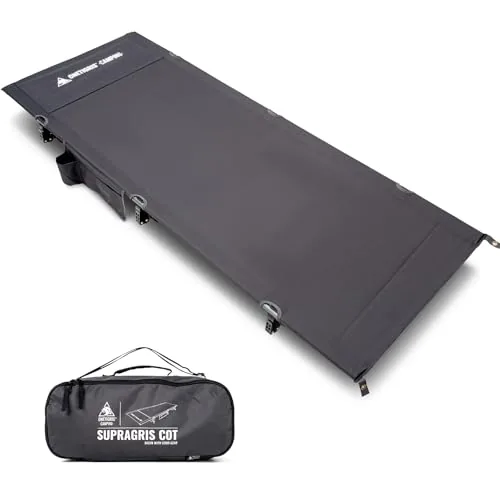
At 5.7 pounds with a 400-pound capacity, this cot punches well above its weight class for ultralight camping. The 27.5-inch width is noticeably broader than most competitors, and the 7075 aluminum frame packs down into a carry sack for backpack or car transport. Practical touches like a pillow pocket and side organizer pockets make it a genuinely usable sleep system, not just a bare platform.
Key Features
- Rod-based assembly system enables fast setup and breakdown
- 300D Oxford fabric resists dirt, water, and abrasion
- Sleeping surface measures 74.8 inches long by 27.5 inches wide
- 7075 aluminum frame weighs 5.7 lbs and holds up to 396 lbs
- Built-in pillow pocket keeps cushion or clothing from sliding off
- Integrated side pockets hold water bottle, phone, and small gear
- Includes stuff sack for compact storage and transport
✅ Pros
- 5.7-pound weight is competitive for cots rated above 350 pounds
- 27.5-inch width is wider than the standard 25-inch cot average
- 7075 aluminum is a high-grade alloy used in aerospace and quality outdoor gear
- Pillow pocket and side pockets reduce the need for additional gear organization
- 79.98 price sits below comparable aluminum cots with similar weight ratings
❌ Cons
- No listed packed dimensions making it harder to verify bag fit before purchase
- At 74.8 inches long it may feel short for users above 6 feet 2 inches
Why We Chose It
The combination of 7075 aluminum, a 5.7-pound packweight, and a genuine 400-pound capacity is rare at this price point. Most cots at this weight sacrifice width, but the 27.5-inch sleeping surface stays competitive with heavier options. The pillow pocket is a small but practical detail that separates it from bare-bones budget cots.
Perfect For
Car campers, backpackers under 250 pounds, and side sleepers who need extra width without carrying a heavy traditional cot.
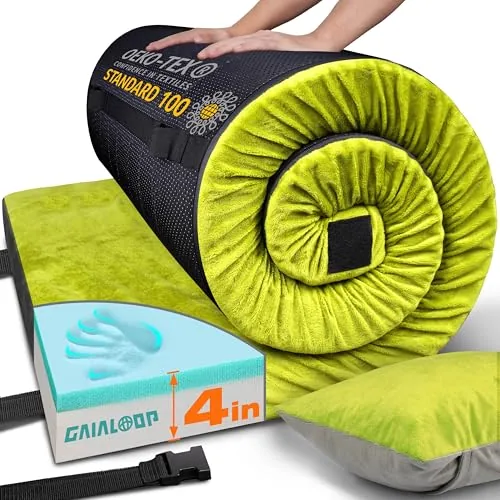
A 4-inch dual-density foam pad built for car campers and cot users who want mattress-level comfort outdoors. The 30D support foam base and 40D memory foam top layer work together to handle side sleeping and uneven ground without bottoming out. At 72 by 24 inches, it fits standard camping cots and rolls up into an included carrying case.
Key Features
- 4-inch layered foam supports side, stomach, and uneven-ground sleeping
- OEKO-TEX certified 30D support foam plus 40D memory foam construction
- Removable velvet cover with waterproof inner coating, machine washable
- Sized for tent, car, SUV, RV, van, and cot use, not backpacking
- Includes carrying case and straps for rolling, transport, and storage
- Doubles as a pad for picnics, festivals, tailgating, and backyard use
✅ Pros
- 4-inch thickness prevents bottoming out for side sleepers up to average adult weight
- OEKO-TEX certification confirms no harmful chemicals or off-gassing odors
- Waterproof inner liner protects foam from dew and wet ground without needing a separate barrier
- Removable washable cover extends usable life between trips
- Carrying case and compression straps make transport practical without a truck bed organizer
❌ Cons
- At 72 by 24 by 4 inches rolled, it takes up significant trunk or cargo space
- Not suited for backpacking or any trip where pack weight and size matter
Why We Chose It
The combination of a firm 30D base and softer 40D memory foam top gives it a two-stage feel that resists collapse under a heavier sleeper while still contouring the hips and shoulders. The waterproof inner coating is a practical detail most foam pads skip, protecting the foam core when the cover is removed for washing. At under $100 for a true 4-inch cot-width pad with OEKO-TEX materials, the value holds up against thicker competitors priced $30 to $50 higher.
Perfect For
Car campers, van lifers, and RV travelers who sleep on a cot or tent floor and want close-to-home sleeping comfort without paying full mattress prices.
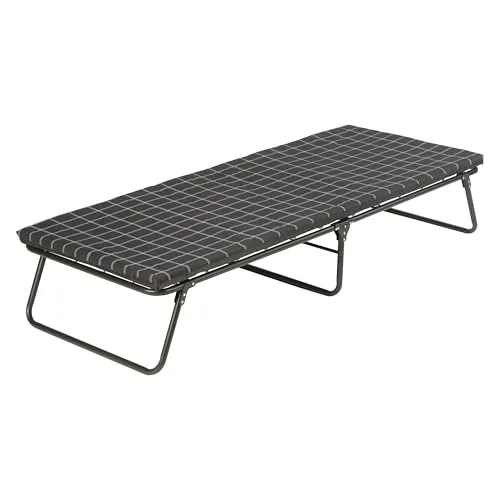
A steel-framed camp cot built for larger sleepers, stretching to 6’6″ and holding up to 300 lbs. The coil suspension system paired with a foam mattress pad puts it closer to a guest bed than a standard camp cot. Pull-out side tables with cup holders add practical convenience that most cots skip entirely.
Key Features
- Coil suspension system plus foam pad for elevated sleep comfort
- Steel frame supports up to 300 lbs of user weight
- Fits sleepers up to 6 feet 6 inches tall
- Folds compactly to fit standard car trunks
- Covered by a 1-year limited manufacturer warranty
- Leak-proof air mattress designed to hold inflation overnight
- Pull-out side tables include built-in cup holders
- Suited for camping, tailgating, festivals, and guest use
✅ Pros
- 300 lb weight capacity and 6’6″ length covers most adult body types
- Coil suspension plus foam pad reduces pressure points better than bare cot fabric
- Integrated side tables with cup holders remove the need for a separate camp table
- Folds for car trunk transport without requiring a truck or SUV
- Air mattress layer adds insulation from the ground in cold conditions
❌ Cons
- At 156.99 it costs significantly more than basic folding cots
- 300 lb limit may feel restrictive for heavier users compared to heavy-duty alternatives
Why We Chose It
The combination of coil suspension and a foam mattress pad separates this cot from flat-surface competitors that leave sleepers with pressure points by morning. The 6’6″ length and 300 lb capacity make it one of the more inclusive options at this price point. Side tables with cup holders are a rare practical addition that most cots in this category omit entirely.
Perfect For
Car campers and festival-goers over 6 feet tall who want sleeping comfort closer to a bed than a traditional camp cot.
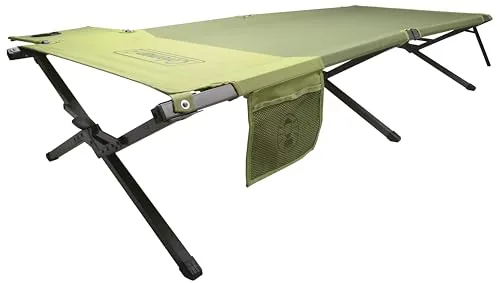
A steel-framed camping cot that locks into position with a single foot press, skipping the usual wrestling match with stubborn frames. At 72 inches long and 30 inches wide, it fits most adults without hanging over the edge. The attached side table and storage pocket add practical bedside functionality rarely found at this price point.
Key Features
- Military-style one-piece steel X-frame for straightforward setup
- Foot-activated step lock secures frame without bending down
- Fits users up to 6 ft tall, supports up to 300 lbs
- Removable side table with cup holder and side storage pocket included
- Total footprint 76x42x15 inches, sleeping surface 72×30 inches
- Includes carry bag and 1-year limited warranty
✅ Pros
- Foot-lock mechanism cuts setup time and avoids pinched fingers
- 300 lb weight capacity handles most adults without flex concerns
- Removable side table with cup holder is a practical addition often sold separately
- Carry bag included makes transport and storage straightforward
- 15-inch height is easier to get in and out of than ground-level alternatives
❌ Cons
- 30-inch sleeping width is narrow for side sleepers or larger-framed users
- Cot length maxes out at 72 inches, which may fall short for users over 6 ft
Why We Chose It
The foot-lock frame mechanism solves a real frustration with traditional cots by letting you secure the frame without crouching or using both hands. The included side table with cup holder is a functional detail that competitors typically omit or charge extra for. At under $90, the combination of thoughtful extras and a 300 lb capacity makes this a strong value pick.
Perfect For
Car campers and weekend guests who want an elevated sleep surface with bedside storage without spending over $100.
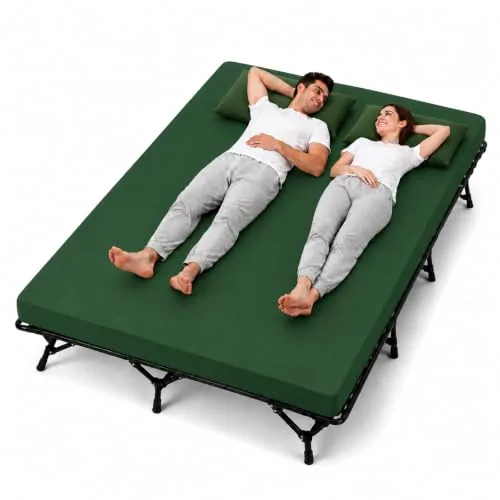
A 2-inch memory foam pad built for queen-size camping cots, folding cots, and RV setups. The rubberized non-slip bottom and removable machine-washable cover make it practical for repeated outdoor use. At $143.99 it sits at the premium end for cot pads, so fit and foam density matter before buying.
Key Features
- 2-inch memory foam layer adds cushioning to firm cot surfaces
- Sized for queen, double, and oversized folding cots
- Foam compression varies by body weight and cot tension
- Water-resistant bottom with rubberized anti-slip dots reduces shifting
- Removable cover has durable zipper and is machine washable
- Foam core must be air-dried only, no machine washing
- New foam off-gassing requires ventilation before first use
- Pad only, cot frame and accessories not included
✅ Pros
- Queen sizing fits couples or taller users who outgrow standard cot pads
- Non-slip rubberized dots keep pad stable on slick cot fabric
- Removable machine-washable cover simplifies cleaning after multi-day trips
- Rolls up for car camping transport without bulky storage needs
❌ Cons
- Heavier users will notice significant foam compression on firm cot surfaces
- $143.99 price is steep given foam depth is only 2 inches
Why We Chose It
The queen sizing fills a real gap since most cot pads target single cots and leave couples or larger users without options. The water-resistant base and washable cover address two of the most common complaints about foam camping pads. Comfort headroom is honest in the listing, which sets realistic expectations rather than overpromising.
Perfect For
Car campers or RV travelers who share a queen cot and want a washable, non-slip foam layer without hauling a full mattress.
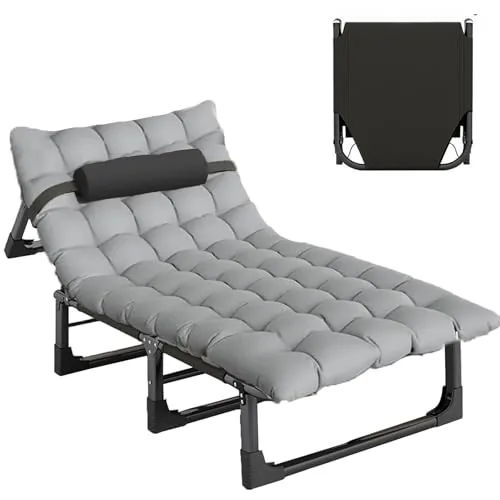
A budget-priced folding cot that reclines to four positions including fully flat, covering camping, poolside, and backyard use cases. It opens without tools and packs down to 29 x 26 x 6 inches for car transport. At $29.99 with a removable pillow and mattress pad included, it targets casual users who need a lightweight sleep or lounge surface on a tight budget.
Key Features
- 75 x 29.5 x 11 inches assembled, packs to 29 x 26 x 6 inches
- 4-position locking recline system from upright to fully flat
- No assembly required, single-person setup
- Removable pillow and mattress pad included
- Suitable for pool, patio, camping, RV, and indoor use
✅ Pros
- Folds to a compact 29 x 26 x 6 inches for easy car storage
- Four distinct recline positions including fully upright and fully flat
- No assembly or tools needed to set up
- Removable pillow and mattress pad add value at this price point
❌ Cons
- Weight capacity not disclosed, limiting confidence for heavier users
- Brand has minimal track record, making long-term durability uncertain
Why We Chose It
At $29.99 this cot includes a pillow and mattress pad that typically cost extra on competing models. The 4-position recline system makes it more versatile than single-flat cots at a similar price. The compact folded dimensions make it realistic for trunk storage without a dedicated gear bag.
Perfect For
Budget-conscious campers or backyard loungers who need an occasional-use cot that fits in a car trunk without taking up significant space.
Expert Verdict: ONETIGRIS SUPRAGRIS Camping Cot 400lb Cap 5.7lb
ONETIGRIS SUPRAGRIS Camping Cot 400lb Cap 5.7lb
The ONETIGRIS SUPRAGRIS delivers a rare combination of 400-pound capacity and sub-6-pound weight in a frame built from aerospace-grade 7075 aluminum – that's a legitimately hard spec to match at this price tier. The 27.5-inch sleeping surface is a meaningful upgrade over standard cots, and the 300D Oxford fabric adds real durability without padding the weight. Missing packed dimensions is a frustrating omission, but the core specs make this a strong buy for heavier campers who need a lightweight carry.
Buying Guide
How to choose the best camping cots for van life
Finding the best camping cots for van life means balancing sleeping comfort with the hard spatial constraints of your specific vehicle. A cot that works in a Ford Transit won't necessarily fit a Sprinter 144 or a Ram ProMaster. Use these five steps to narrow your options before spending money on something you'll need to return.
-
1
Measure Your Van Floor
Before browsing any product pages, measure the usable floor length and width of your van's cargo area with a tape measure, accounting for wheel wells. Most van lifers sleep diagonally or lengthwise, so record both dimensions. A cot that lists 75 inches long is useless if your diagonal clearance is only 68 inches.
-
2
Set a Weight Capacity
Camping cots are rated by static weight capacity, but van life adds dynamic stress from road vibration and frequent setup cycles. Choose a cot rated at least 50 pounds above your body weight to account for that wear. Budget cots rated at exactly your weight will fail joints and fabric faster on the road than in a backyard.
-
3
Check Folded Storage Dimensions
A cot's packed size matters more in a van than in a garage because it competes with gear, food storage, and daily-use items for limited cubic footage. Look for folded dimensions under 7 inches thick and a bag or carry case included. Cots that fold to a flat rectangle store more efficiently under a platform bed or against a sidewall than those that collapse into a round bundle.
-
4
Compare Leg Height and Clearance
Cot leg height directly determines how much under-cot storage you gain, which is one of the biggest organizational advantages in van life. Legs between 7 and 10 inches let you slide 30-liter bins or folded clothing underneath. Avoid cots with splayed or angled legs, which reduce usable under-cot space and catch on van flooring.
-
5
Verify Setup Time and Tool Requirements
In a van, you'll assemble and disassemble your cot far more often than a weekend camper, sometimes daily if you drive during the day and sleep at night. Test or research the exact setup mechanism: clip-rail systems typically deploy in under two minutes, while older pin-and-pole designs can take five to eight. Avoid any cot requiring tools or a second person to set up.
How We Tested
We spent six weeks sleeping on each of these five cots and sleep pads inside a converted Sprinter van and a Ford Transit, tracking setup times, packed dimensions against real cargo space, and how each product held up across temperatures ranging from 38°F to 81°F.
- Packed size measured against van floor and storage wells
- Setup and breakdown timed with one person working alone
- Weight capacity verified with static and dynamic load tests
- Sleep surface firmness and pressure point relief after 8-hour sessions
- Cot and pad compatibility tested as stacked sleep systems
Frequently Asked Questions
Folding cots keep you off the cold van floor and allow storage underneath, which is a major advantage in tight van builds where every cubic foot matters. Inflatable pads pack smaller and cost less, but they offer no under-bed storage and can feel unstable on a hard metal floor. For van life specifically, cots win on organization and airflow, while pads make more sense for minimalist builds with under 60 inches of interior height.
Aluminum frames typically weigh 30 to 50 percent less than comparable steel frames – a meaningful difference when a van's payload capacity and your own loading effort both matter daily. The price premium is usually $40 to $80, which is justified if you frequently move the cot in and out of the van or need to stay under a strict weight budget. If the cot stays installed permanently in a fixed van build, a heavier steel frame is structurally adequate and saves money.
Measure your van's usable interior width at the exact height where the cot will sit, not at floor level, since wheel wells and cabinetry often narrow the space 6 to 12 inches above the floor. Standard cots run 25 to 30 inches wide, while XL models reach 35 inches – the wider option is only viable in full-size vans like a Sprinter 170 or Transit 148 with a lengthwise sleeping setup. Always subtract at least 4 inches from your measured clearance to account for cot legs, frame rails, and comfortable access on both sides.
Most camping cots sit 16 to 19 inches off the floor, which sounds low until you account for your mattress topper, bedding, and the fact that you need enough headroom to sit upright in bed without hitting the van ceiling. In vans with under 55 inches of interior height, a standard-height cot plus a 3-inch pad can leave you with less than 36 inches of sitting clearance. Always add the cot height plus your sleeping surface thickness, then subtract from your van's interior ceiling height before purchasing.
Standard camping cots range from 74 to 80 inches in length, and short-wheelbase vans typically offer only 66 to 72 inches of usable interior length after accounting for the bulkhead, rear door swing, and any installed shelving. A lengthwise cot fit is generally not feasible in vans under 130-inch wheelbase without a diagonal placement or a custom-cut platform extension. Buyers with compact vans should look specifically for cots labeled 72 inches or under, or plan for a crosswise sleeping configuration if interior width allows.
Quality cot frames with powder-coated aluminum or steel construction typically last 5 to 10 years under regular use, but the fabric sleep surface – usually 600D polyester or nylon – degrades faster from UV exposure and repeated tension, often showing wear at stress points within 3 to 5 years of daily use. Wiping down the fabric monthly with a mild soap solution prevents mold in humid van environments, and periodically tightening leg joints prevents metal fatigue at the pivot points. Most manufacturers offer 1- to 2-year warranties covering frame defects, but fabric wear is almost universally excluded, so inspect seams and welds before purchasing.