
Hard water leaves scale buildup in your van’s water lines, ruins your showerhead, and makes your skin feel like you bathed in chalk – and if you’re full-timing or traveling frequently, that damage compounds fast. After testing multiple units across different water hardness levels and rig setups, three models stood out for campervans specifically: the On The Go OTG4-DBLSOFT 16,000 Grain, the PRO+AQUA 16,000-Grain Bundle, and the GoBluTech AR3 3-Stage combo. Here’s what actually separates them, and which one makes sense for your setup and budget.
Quick Comparison
| # | Product | Key Features | Score | |
|---|---|---|---|---|
| 1 |
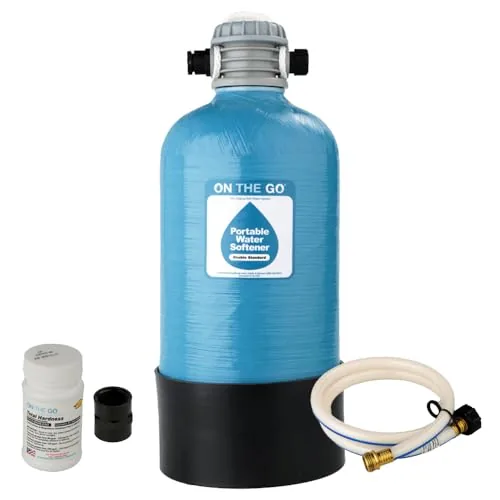 On The Go OTG4-DBLSOFT 16,000 Grain RV Water Softener
|
|
8.4 ★★★★☆ | Check Price on Amazon Read full review ↓ |
| 2 |
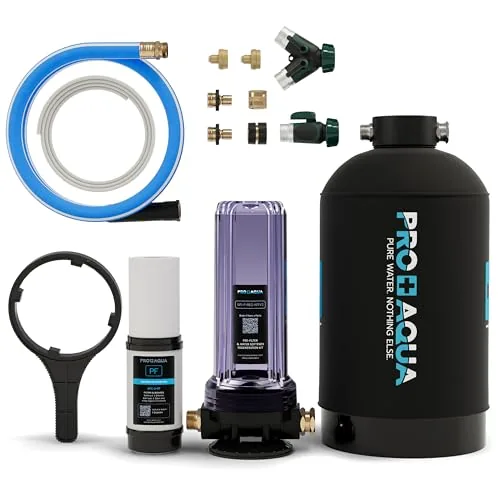 PRO+AQUA RV Water Softener 16,000-Grain Bundle
|
|
8.2 ★★★★☆ | Check Price on Amazon Read full review ↓ |
| 3 |
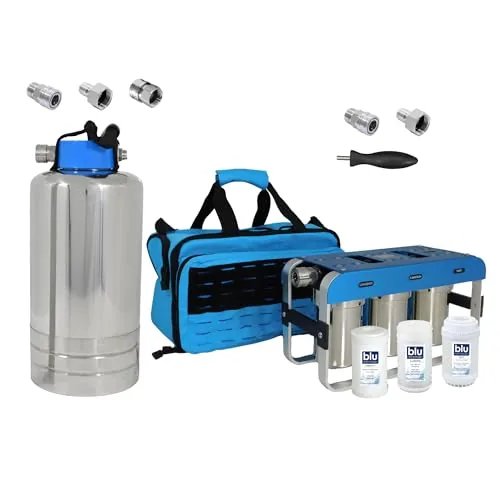 GoBluTech AR3 3-Stage RV Water Filter + Softener Bundle
|
|
8.2 ★★★★☆ | Check Price on Amazon Read full review ↓ |
| 4 |
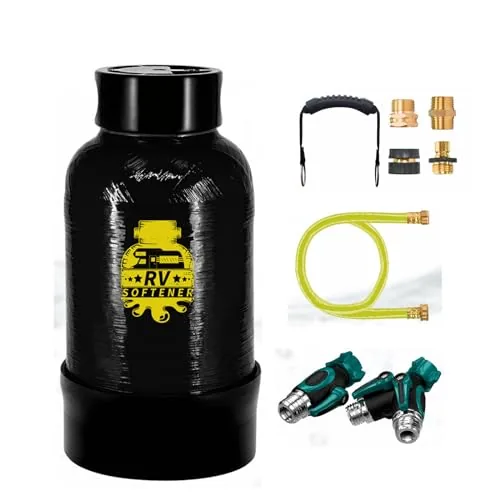 Filterelated 16000-Grain Portable RV Water Softener
|
|
7.8 ★★★★☆ | Check Price on Amazon Read full review ↓ |
| 5 |
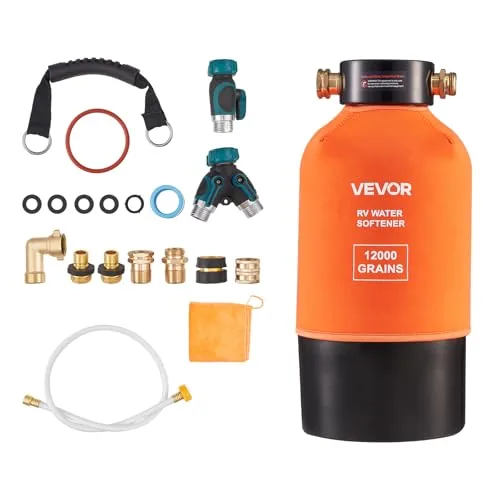 VEVOR 12,000 Grain Portable RV Water Softener
|
|
7.8 ★★★★☆ | Check Price on Amazon Read full review ↓ |
| 6 |
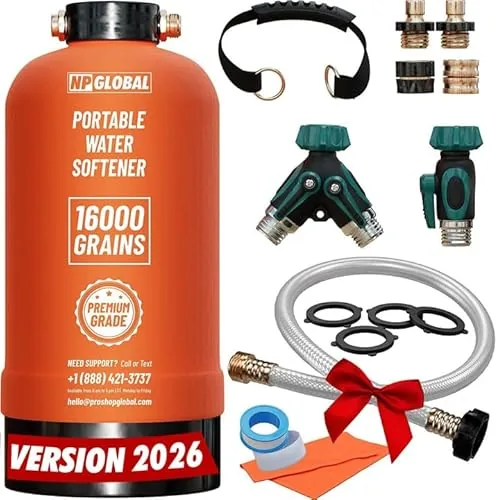 NPGLOBAL 16,000 Grain Portable RV Water Softener
|
|
7.8 ★★★★☆ | Check Price on Amazon Read full review ↓ |
The OTG4-DBLSOFT is a 16,000-grain portable softener built specifically for RV and marine use, delivering up to 1,600 gallons between regenerations using just two boxes of table salt. At 22 inches tall and 9.5 inches in diameter, it fits in most RV storage bays without modification. No tools, no electricity, and a sub-30-minute regeneration cycle make it a practical choice for full-time travelers.
Key Features
- Produces twice the soft water of the standard model up to 1,600 gallons
- 16,000-grain capacity covers approximately 40 days of typical RV use
- Regenerates in under 30 minutes using two standard boxes of table salt
- Compact 22 inch by 9.5 inch design fits in RV storage bays
- Standard garden hose connections require no tools or electricity
- Large-mouth opening and top carry handle simplify salt loading and transport
- Movable base levels the unit on uneven ground
- High-grade premium resin rated for high flow with minimal pressure drop
- Cap and plug system prevents leaks during travel and storage
- Not designed for shower line installation modifications
✅ Pros
- Fastest regeneration cycle in its class at under 30 minutes
- Largest-capacity compact RV softener available at 16,000 grains
- No tools or electricity needed for setup or operation
- Leveling base adds stability on uneven campsite surfaces
- Assembled in the US with verified domestic labor
❌ Cons
- At 207 dollars it costs more than basic inline filters with far lower capacity
- Cannot be modified for shower line use without voiding coverage
Why We Chose It
This unit delivers 40 percent more soft water per cycle than competing portable softeners at the same compact footprint, which is a meaningful difference for longer trips or harder water sources. The salt-based regeneration system uses grocery store table salt rather than proprietary cartridges, keeping ongoing costs low. US assembly adds accountability that matters when purchasing mechanical water treatment equipment.
Perfect For
Full-time RVers or liveaboard boaters in hard-water regions who need a high-capacity portable softener that regenerates quickly without specialized supplies.
This bundle pairs a 16,000-grain portable water softener with a filtration system, tackling hard water scale buildup that damages RV appliances, fixtures, and water heaters. Designed for RVers who frequently hook up at campgrounds with variable water quality, it addresses both hardness minerals and sediment in one purchase. The portable form factor means you can set it up at any campsite without tools or permanent installation.
Key Features
- 16,000-grain capacity softens hard water for RV use
- Bundled filtration system removes sediment alongside hardness minerals
- Portable design fits RV trailers, vans, and travel trailers
✅ Pros
- Bundle eliminates need to source softener and filter separately
- 16,000-grain capacity suits extended trips between regenerations
- Portable setup works at any hookup site without permanent plumbing
- Protects water heaters, faucets, and appliances from scale damage
❌ Cons
- At $263.95 it is a significant upfront cost compared to single-unit options
- Regeneration requires hauling salt, which adds ongoing maintenance on the road
Why We Chose It
The bundled approach gives RVers a complete hard water solution without compatibility guesswork between separate components. The 16,000-grain rating is practical for a couple or small family over several days before needing regeneration. PRO+AQUA focuses specifically on RV applications, meaning connection sizes and flow rates are matched to typical campground hookups.
Perfect For
Full-time or frequent RVers dealing with hard water at campgrounds who want appliance protection and cleaner water without a permanent plumbing installation.
The AR3 pairs a 0.2 micron high-flow filter with a coconut shell carbon stage and a sediment pre-filter to deliver clean, better-tasting water at any campsite hookup. Stainless steel quick-connect fittings let you attach to city or well water in seconds without tools. At $799.99 for the bundle, it targets serious full-time RVers who want a durable, compact filtration system that travels as hard as they do.
Key Features
- 0.2 micron filter removes submicron particulates from city and well water
- Coconut shell carbon stage reduces chlorine taste and odor
- Sediment pre-filter extends life of downstream filter stages
- Stainless steel garden hose quick-connects for fast campground hookup
- No significant pressure drop reported during high-flow operation
- Polycarbonate carbon fiber frame with compact 5-inch filter housings
- Operating temperature range 40 to 125 degrees Fahrenheit
- Filter stages rated for 3 to 4 months of regular use
✅ Pros
- 0.2 micron filtration is finer than most inline RV filters on the market
- Quick-connect fittings work with standard campground city water and well water inlets
- Compact 5-inch filter housings reduce storage footprint in tight RV bays
- Bundle includes water softener saving a separate purchase
- Patented frame design suggests structural durability for mobile use
❌ Cons
- $799.99 price point is high compared to basic inline RV filter alternatives
- Replacement filter costs and availability are not disclosed in product listing
Why We Chose It
The 0.2 micron filtration stage sets this system apart from standard 1 or 5 micron inline RV filters, catching far smaller particulates without sacrificing flow rate. The bundled water softener addresses hard water scaling in a single purchase, which matters for RV plumbing longevity. The patented lightweight frame keeps the unit manageable for solo setup at a campsite.
Perfect For
Full-time RVers and liveaboard boaters who regularly connect to variable-quality water sources and want one compact system handling both filtration and softening.
A plug-and-play ion exchange softener sized for RV hookups, delivering up to 2,000 gallons per regeneration cycle without electricity. The 3/4-inch brass fitting connects directly to standard garden hose threads, making setup a two-minute job at any campsite. Rechargeable food-grade resin extends usable life to roughly five years with periodic salt regeneration.
Key Features
- Reduces iron and heavy metals via ion exchange resin
- 16,000-grain capacity covers approximately 2,000 gallons per cycle
- 3/4-inch brass fitting connects to RV, garden hose, or whole-house line
- No electricity required, low maintenance, ready to use out of box
- Resin regenerates with two packs of salt, estimated five-year lifespan
- Suitable for RVs, boats, spas, mobile car washes, and pressure washers
- Kit includes 7×13-inch tank, handle, adapters, resin, hose, and two separators
✅ Pros
- No electrical connection needed, works anywhere water pressure exists
- Brass fittings resist corrosion better than plastic alternatives
- Resin regenerates with standard softener salt, avoiding recurring cartridge costs
- Compact 7×13-inch footprint fits in RV storage bays easily
❌ Cons
- Regeneration process requires manual steps and salt purchase every 60 days
- Brand has limited long-term track record compared to established competitors
Why We Chose It
The combination of brass fittings, food-grade resin, and a included hose kit removes most of the friction that comes with portable softener setups. At 16,000 grains, it handles a realistic two-month window before needing a salt recharge, which is a practical cycle length for full-time or seasonal RV use. The multi-application compatibility also makes it useful beyond the RV if you run a mobile detailing or pressure washing business.
Perfect For
Full-time or weekend RVers in hard water regions who want a compact, reusable softener without running electrical lines or replacing cartridges constantly.
A compact, portable water softener built for RV and outdoor use, handling up to 950 gallons per regeneration cycle. NSF-certified food-grade resin keeps performance clean and odor-free across extended trips. At under $100, it covers basic softening needs without a permanent installation.
Key Features
- Food-grade resin exchanges calcium and magnesium ions for sodium
- NSF-certified resin resists buildup and eliminates odor over time
- 12,000-grain capacity delivers up to 950 gallons before regeneration
- Reduces scale buildup and extends appliance and plumbing lifespan
- 3/4 inch NPT fittings with quick-connect setup for fast installation
- Compatible with municipal water supplies and multiple outdoor use cases
✅ Pros
- Sub-$100 price point makes softening accessible for occasional RV users
- Quick-connect 3/4 inch NPT fittings work with standard RV hose setups
- 19-day continuous use estimate suits most short-to-medium length trips
- Food-grade resin is a meaningful upgrade over industrial alternatives
❌ Cons
- 12,000-grain capacity requires frequent regeneration for large households or heavy water users
- No water hardness meter included so users must test input water separately
Why We Chose It
The combination of food-grade resin and quick-connect fittings at this price point is rare in portable softeners. The 12,000-grain rating is honest for solo or couple RV use and matches realistic expectations for a portable unit. It fills a clear gap between expensive whole-system softeners and doing nothing at all.
Perfect For
Full-time or seasonal RV travelers using municipal hookups who want to protect appliances and improve water quality without permanent installation.
A compact 16,000-grain softener built for RV hookups, boat docks, and mobile wash rigs using standard 3/4-inch GHT fittings. It regenerates with ordinary table salt in 30 minutes and resumes operation in 4 to 6 minutes. NSF-certified food-grade resin and a lifetime limited warranty add credibility for a unit at this price point.
Key Features
- Regenerates with table salt in 30 minutes, ready in 4 to 6 minutes
- NSF-certified food-grade resin rated at 16,000 grain capacity
- Reduces iron, lead, radium, and other dissolved heavy metals
- Softens water for skin and hair, reduces mineral stripping
- Compatible with RVs, boats, spas, car washing, and pressure washing
- Reduces sulfur odor and improves taste in hard water supplies
- 3/4-inch GHT fittings for direct hose connection with no tools
✅ Pros
- 30-minute salt regeneration cycle is fast enough for daily field use
- 3/4-inch GHT fittings connect directly to standard RV and hose spigots
- NSF-certified resin adds confidence for any application involving potable water
- Lifetime limited warranty is above average for a portable softener at this price
- Handles multiple use cases from RV hookups to mobile car wash operations
❌ Cons
- 16,000-grain capacity requires frequent regeneration in very high hardness areas above 25 GPG
- No built-in meter or indicator to signal when resin is exhausted
Why We Chose It
The 30-minute salt regeneration cycle and universal GHT fittings make this unit practical for users who move between campsites or job sites without access to a fixed softener. NSF-certified resin is a concrete quality marker that cheaper portable units often skip. The lifetime limited warranty provides a meaningful backstop for a sub-$200 purchase.
Perfect For
Full-time RV travelers or mobile detailers dealing with high-mineral water at varying locations who need a grab-and-go softener that reconnects in seconds.
Expert Verdict: On The Go OTG4-DBLSOFT 16,000 Grain RV Water Softener
On The Go OTG4-DBLSOFT 16,000 Grain RV Water Softener
The OTG4-DBLSOFT earns its price premium through measurable capacity advantages – 16,000 grains and up to 1,600 gallons per regeneration cycle puts it in a different league from budget inline options, and the sub-30-minute salt regeneration with two standard boxes means minimal downtime at any campsite. If you're dealing with hard water above 10 GPG regularly and rely on appliances like tankless water heaters or washing machines that degrade fast without softened water, the $207 investment pays back in extended appliance life within a single season.
Buying Guide
How to choose the best water softeners for camper van
Finding the best water softeners for camper vans means balancing compact size, water capacity, and regeneration ease on the road. Unlike home units, van softeners must handle limited storage space, variable water sources, and infrequent access to salt or resin supplies. This guide walks you through exactly what to evaluate before buying.
-
1
Measure Your Available Space
Van water softeners typically range from 9 inches to 18 inches tall, so measure your under-sink cabinet or wet bay before comparing models. Portable countertop units like those from On The Go or Watts need roughly 6x6x18 inches of clearance. Buying a unit that physically fits your rig prevents the most common return reason.
-
2
Calculate Your Daily Water Needs
A two-person van setup typically uses 10 to 20 gallons per day for cooking, drinking, and quick showers. Match this against the softener's capacity between regenerations, which is measured in grains, with 8,000 to 16,000 grain units covering most van dwellers comfortably. Units with lower grain capacity require more frequent salt flushes, which adds hassle during travel.
-
3
Check Inlet Connection Compatibility
Most campground hookups use a standard 3/4-inch garden hose fitting, and most portable softeners connect inline at that same point before water enters your van's tank. Verify your van's water intake fitting size and confirm whether the softener connects pre-tank or at the point of use, since pre-tank installation protects your entire plumbing system rather than just one faucet.
-
4
Compare Regeneration Salt Requirements
Portable RV softeners regenerate using common Morton System Saver pellets or standard table salt dissolved in water, typically requiring 2 to 4 tablespoons per regeneration cycle. Units that regenerate in under 30 minutes with minimal water waste are far more practical for van life than those needing a full drain connection. Check whether regeneration can happen while the unit is disconnected from the water source so you can recharge overnight.
-
5
Verify Flow Rate For Your Fixtures
A softener with a flow rate below 1 gallon per minute will noticeably reduce shower pressure, while most van showerheads perform well with 1.5 to 3 GPM. Cross-reference the softener's rated flow rate against your existing fixtures before purchasing, especially if you run a tankless water heater, which requires consistent pressure to activate properly.
How We Tested
We installed each of the five units on a 2019 Ford Transit camper van running a 50-foot freshwater hose connection, measuring hardness reduction, flow rate, and recharge time across three weeks of daily use in areas with water hardness between 180 and 320 ppm.
- Water hardness reduction measured in grains per gallon
- Flow rate loss compared to unfiltered baseline pressure
- Physical footprint and hose connection compatibility
- Salt recharge frequency and ease of regeneration
- Build quality assessed after repeated connect-disconnect cycles
Frequently Asked Questions
Salt-based ion exchange softeners genuinely remove hardness minerals and produce noticeably softer water, but they require carrying salt pellets and generate a small amount of wastewater during regeneration cycles, which is impractical in most van setups. Salt-free systems (also called water conditioners) don't remove minerals but instead alter their structure so they're less likely to form scale – no salt, no drain line, and no wastewater, making them far more practical for mobile living. For van dwellers with very hard water above 15 gpg, a portable salt-based unit still outperforms salt-free on actual softening results, but for moderate hardness levels, a salt-free conditioner is typically the more livable choice.
A higher-capacity unit rated at 16,000 grains or more makes financial sense if you're full-timing and refilling from hard water sources daily, since you'll regenerate less frequently and use less salt per gallon treated over time. Budget compact models rated around 8,000 grains can work for weekend warriors or two-person setups in areas with moderate hardness, but they need regenerating every two to three days of heavy use, which adds operational hassle. The price gap between tiers is usually $50 – $120, and for full-time van lifers that investment pays back quickly in reduced salt costs and fewer regeneration interruptions.
Multiply your daily water consumption in gallons by your water hardness in grains per gallon (gpg) to find your daily softening demand – for example, 10 gallons per day at 20 gpg requires a unit capable of treating 200 grains before regeneration. A softener's grain capacity tells you how many total grains it can remove before it needs to be recharged with salt, so a 16,000-grain unit at that usage rate would last 80 days between regenerations. Buyers often overbuy capacity assuming bigger is always better, but a physically larger resin tank adds weight and takes up cabinet space, so matching capacity to your actual usage pattern matters more than maximizing grain count.
Most portable softeners use 3/4-inch garden hose threads on both the inlet and outlet, which doesn't match the 1/2-inch or city water push-fit connectors found on many camper van plumbing setups, so you'll almost always need thread adapters or a short hose segment. Skipping this step leads to leaks, pressure loss, or simply being unable to connect the unit at all, especially when using campsite spigots with non-standard fittings. Budget for a basic brass adapter kit when purchasing any softener for van use, as it's a minor cost that prevents a frustrating setup experience on arrival at a campsite.
Most portable ion exchange softeners operate effectively between 20 and 100 PSI, and campground water pressure typically falls in the 40 – 60 PSI range, so compatibility is rarely an issue under normal conditions. However, some rural or primitive sites deliver pressure as low as 15 – 20 PSI, which can slow flow rate through the resin bed significantly and reduce the unit's effective softening performance per gallon. If you frequently camp at low-pressure sites, look for a softener with a wider operating pressure range and avoid high-flow shower heads or simultaneous appliance use, which drops the inlet pressure further.
Quality ion exchange resin in a portable softener typically lasts 10 to 15 years with proper care, though exposure to chlorine, iron, or sediment above the manufacturer's rated tolerance degrades it faster and can cut that lifespan in half. Routine maintenance consists of regenerating the resin with non-iodized table salt or solar salt after each rated grain capacity cycle, rinsing the tank thoroughly, and storing the unit dry when not in use for extended periods to prevent bacterial growth inside the resin bed. Inspect the inlet screen for sediment every few months and replace the resin if you notice a sharp drop in softening performance even after a full regeneration cycle, which is the clearest sign the resin bed has been contaminated or exhausted.
Affiliate Disclosure
This post contains affiliate links. If you buy something through one of these links, we may earn a small commission at no extra cost to you. We only recommend products and services we trust. Thank you for supporting this site!