

Finding the best camper van DC to DC charger comes down to three things: charge speed, compatibility with your alternator, and whether you need MPPT solar input built in. After testing the Victron Orion-Tr Smart 12V 18A Isolated, the Renogy DC-DC 12V 30A with dual MPPT input, and the WAVLINK GS800RV-55 55A converter across real van builds, the differences between them are significant enough to matter depending on your battery bank size and how you split time between driving and stationary solar charging. This guide gives you the specific numbers and trade-offs so you can pick the right unit without overspending or undersizing.
Quick Comparison
| # | Product | Key Features | Score | |
|---|---|---|---|---|
| 1 |
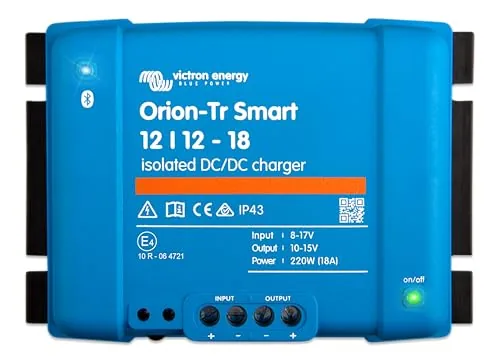 Victron Orion-Tr Smart 12V 18A Isolated DC-DC Charger
|
|
8.5 ★★★★☆ | Check Price on Amazon Read full review ↓ |
| 2 |
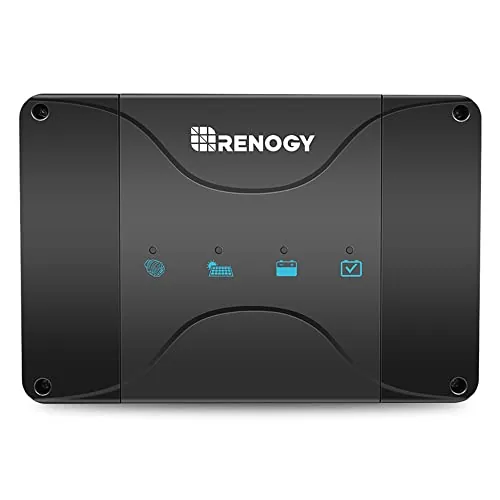 Renogy DC-DC Charger 12V 30A MPPT Dual-Input
|
|
8.4 ★★★★☆ | Check Price on Amazon Read full review ↓ |
| 3 |
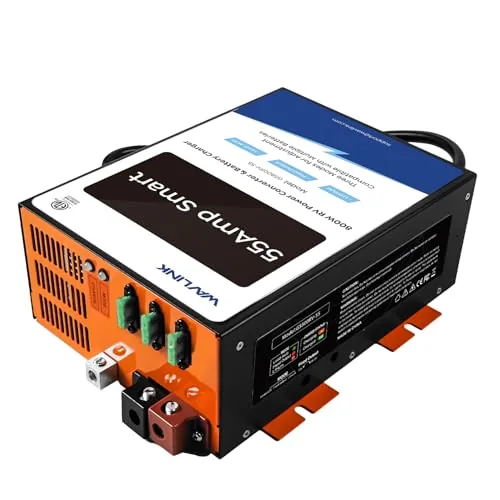 WAVLINK GS800RV-55 55A RV Power Converter
|
|
8.2 ★★★★☆ | Check Price on Amazon Read full review ↓ |
| 4 |
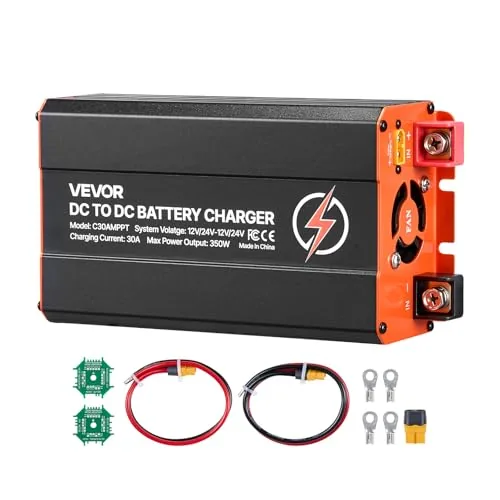 VEVOR 350W 30A DC-DC Charger with MPPT Solar Input
|
|
8.2 ★★★★☆ | Check Price on Amazon Read full review ↓ |
| 5 |
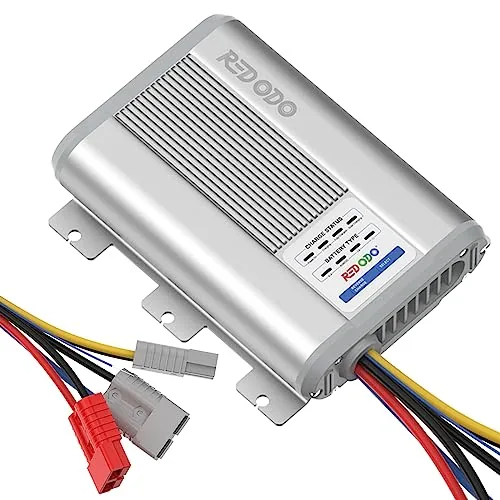 Redodo 12V 40A DC-DC Charger with MPPT Solar Input
|
|
8.2 ★★★★☆ | Check Price on Amazon Read full review ↓ |
| 6 |
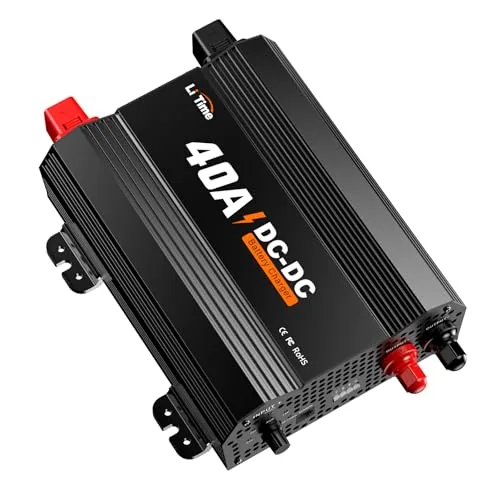 LiTime 12V 40A DC-DC Charger for LiFePO4 and Lead Acid
|
|
8.2 ★★★★☆ | Check Price on Amazon Read full review ↓ |
| 7 |
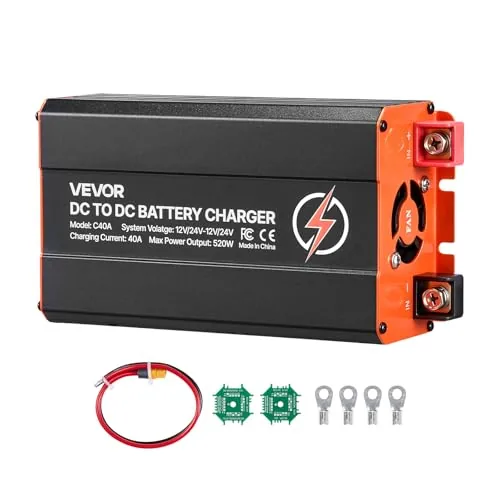 VEVOR 520W 40A DC-DC Battery Charger 12V/24V
|
|
8.2 ★★★★☆ | Check Price on Amazon Read full review ↓ |
| 8 |
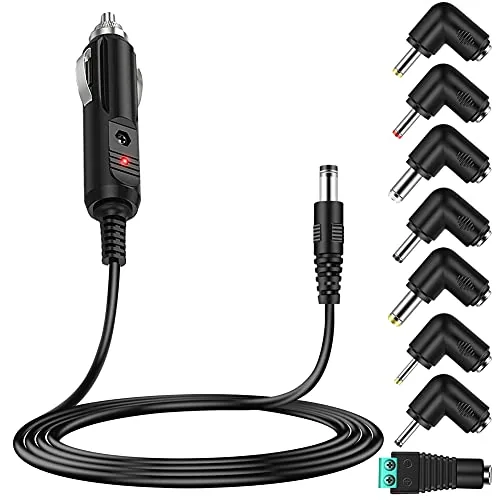 Czepa 12V Car Charger Cord with 8 DC Connectors
|
|
7.2 ★★★★☆ | Check Price on Amazon Read full review ↓ |
The Orion-Tr Smart delivers a proper 3-stage charge profile to your service battery using your alternator as the source, making it a serious upgrade over basic DC-DC units. Built-in Bluetooth lets you monitor charge state and tweak settings directly from your phone without pulling wires. At 220W with isolated architecture, it protects sensitive electronics and scales up by running multiple units in parallel.
Key Features
- 3-stage charging for safe and efficient battery management
- Charges service battery from alternator and start battery
- Bluetooth monitoring and control via VictronConnect app
- Compatible with lead acid and lithium batteries; parallelable
- Screw terminal connections require no specialized tools
✅ Pros
- Isolated design prevents ground loop issues and protects electronics
- Bluetooth integration gives real-time charge data without guesswork
- Supports both lithium and lead acid batteries with appropriate charge profiles
- Parallel capability lets you scale output without replacing the unit
❌ Cons
- 18A output may require multiple units for large lithium battery banks
- Bluetooth-only monitoring means no wired data integration without additional Victron hardware
Why We Chose It
The isolated topology sets this apart from cheaper non-isolated DC-DC chargers, making it safe for sensitive alternators including those on newer vehicles with smart charging systems. The VictronConnect app provides actual charge curve data and configuration access, not just a status light. It is one of the few units in this class that supports unlimited parallel expansion without a controller.
Perfect For
Van lifers, overlanders, and boaters who need a reliable, configurable DC-DC charger that works with modern smart alternators and lithium battery upgrades.
This 30A charger accepts simultaneous solar panel and alternator input, prioritizing solar to reduce alternator load. It handles LiFePO4, AGM, gel, and flooded batteries with a proper 3-stage charging profile. At 3.13 lbs and under 10 inches long, it fits in tight engine bays or under-seat compartments.
Key Features
- Accepts solar and alternator input simultaneously, prioritizes solar
- Built-in MPPT with bulk, boost, and float charging stages
- 8 built-in protections including isolation, reverse polarity, and overheat
- Compact body: 9.6 in long, 5.7 in tall, 3.13 lbs
- RS485 Modbus port supports real-time voltage, temp, and fault monitoring
✅ Pros
- Dual-input design lets solar offset alternator load in real time
- Compatible with smart and traditional alternators without external shunt
- Compact dimensions suit tight RV, marine, and vehicle installations
- Supports all common 12V battery chemistries including LiFePO4
❌ Cons
- Bluetooth monitoring requires a separately purchased BT-2 module
- A 40A ANL fuse is recommended but not included in the box
Why We Chose It
The combination of MPPT solar input and alternator input in a single 3.13 lb unit is uncommon at this price. The RS485 port adds genuine diagnostic value for installers who want data beyond a simple LED indicator. Its compatibility with smart alternators removes a common compatibility headache in newer vehicles.
Perfect For
Van lifers, RV owners, or boaters running a dual-battery system who want to charge a service bank from both a solar array and a vehicle alternator without two separate controllers.
A 55-amp converter that handles both lead-acid and lithium battery chemistries from a single unit, with voltage adjustable between 13V and 16.5V. The metal chassis and temperature-triggered fan manage heat without passive-only designs. At $99.99, it targets RV owners replacing aging converters without swapping the entire power center.
Key Features
- Supports lead-acid, lithium, and fixed-voltage modes from 13V to 16.5V
- Delivers up to 55A DC output from 120V AC input
- Temperature-controlled fan activates automatically under thermal load
- Metal body construction aids passive heat dissipation between fan cycles
- Protections include short circuit, over-voltage, thermal, current limiting, and reverse polarity
✅ Pros
- Adjustable output voltage range covers most 12V battery chemistries
- Dedicated lithium charging mode reduces risk of overcharging lithium packs
- Multi-stage charging reduces battery wear compared to single-stage converters
- Drop-in replacement form factor avoids full power center replacement
- Five distinct protection circuits cover the most common failure scenarios
❌ Cons
- 55A output suits smaller battery banks but may bottleneck larger 200Ah-plus setups
- WAVLINK is newer to RV power hardware so long-term field reliability data is limited
Why We Chose It
The adjustable 13V to 16.5V output and separate lithium mode give this converter genuine flexibility that fixed-voltage units cannot match. The five-layer protection suite and metal housing address the two most common failure points in RV converters: electrical faults and heat buildup. At $99.99, it undercuts comparable multi-stage units by a meaningful margin.
Perfect For
RV owners replacing a failed or outdated single-stage converter who run either lead-acid or lithium batteries and want adjustable charging without buying a full power center replacement.
A 350W dual-input charger that pulls power from both your alternator and solar panels simultaneously, keeping auxiliary batteries topped up without overloading your vehicle’s charging system. The built-in MPPT controller squeezes maximum output from connected solar panels, while four voltage mode combinations make it compatible with most 12V and 24V RV and off-grid setups. At under $85, it covers a wide range of battery chemistries including LiFePO4, AGM, GEL, and lead acid.
Key Features
- Outputs up to 30A and 350W at 94% conversion efficiency
- Reverse charging lets aux battery jump-start a dead starter battery
- Compatible with LiFePO4, AGM, GEL, lead acid, and calcium batteries
- Supports 12V-to-12V, 12V-to-24V, 24V-to-12V, and 24V-to-24V modes
- Built-in fan and five protection circuits guard against faults
✅ Pros
- Dual solar and alternator input reduces reliance on either source alone
- Four voltage mode combinations suit a wide range of vehicle and off-grid setups
- DIP switch battery type selection takes seconds without extra tools
- Reverse charging from aux battery is a practical emergency feature
❌ Cons
- Active cooling fan may generate audible noise in quiet enclosed spaces
- No Bluetooth or app monitoring for real-time charge data
Why We Chose It
This unit stands out at its price point by combining MPPT solar optimization with alternator charging in a single compact box, eliminating the need for two separate devices. The reverse charging function adds genuine safety value that most competitors at this price skip entirely. Broad battery chemistry support and four voltage modes make it unusually flexible for a sub-$90 charger.
Perfect For
Van lifers, RV owners, and off-grid cabin builders who want a single charger handling both alternator and solar input without spending over $150.
A compact dual-input charger that pulls power from both your alternator and solar panels to fully charge a service battery. Built-in MPPT maximizes solar efficiency, and LED indicators let you monitor charge status at a glance. Multiple protection circuits cover overcharge, overvoltage, overheating, and reverse polarity.
Key Features
- Dual input from starter battery or solar panels via built-in MPPT
- Protections for overcharge, overvoltage, overheating, and reverse polarity
- Compact unit at 5.8 x 1.89 x 7.44 inches and 2.43 lbs
- Compatible with AGM, Gel, SLA, and LiFePO4 battery types
- Includes Anderson connectors for simplified installation
- Lifetime technical support and one-on-one customer service
✅ Pros
- Dual input lets solar and alternator work together for faster, fuller charging
- MPPT controller squeezes maximum power from solar panels across varying conditions
- LiFePO4 BMS wake-up function revives batteries that have shut off
- Anderson connectors pre-installed, reducing wiring time during setup
- Small footprint fits tight spaces in vans, RVs, and marine applications
❌ Cons
- 40A output may be insufficient for large battery banks above 200Ah
- Brand has less field history than established names like Victron or Renogy
Why We Chose It
The combination of MPPT solar input and alternator charging in a sub-3-pound package is uncommon at this price point. The ability to revive a shut-down LiFePO4 battery through BMS activation adds practical value for off-grid users who run their batteries low.
Perfect For
Van lifers and RV owners running a LiFePO4 service battery who want to charge from both solar and a vehicle alternator without separate charge controllers.
A 40-amp DC-to-DC charger that handles LiFePO4, AGM, Gel, SLA, and Calcium batteries under one unit. It auto-selects between 2-stage and 3-stage charging profiles depending on battery chemistry. At $152, it targets RV owners and off-grid builders who need fast, reliable charge management without manual configuration.
Key Features
- Compatible with LiFePO4, AGM, Gel, SLA, and Calcium 12V batteries
- Auto-selects 2-stage CC/CV for lithium or 3-stage bulk/absorption/float for lead-acid
- Delivers up to 40A output with a 20A low-current port option
- Protects against over-voltage, low-voltage, short-circuit, reverse polarity, and overtemperature
- Can reactivate lithium batteries after BMS shutdown
- Compact form factor with FCC, CE, and RoHS certifications
✅ Pros
- Handles five battery chemistries without manual profile switching
- 40A output noticeably reduces charge time on large battery banks
- 20A limited port adds flexibility for smaller or sensitive loads
- BMS reactivation feature saves lithium batteries from deep shutdown
- Certified FCC, CE, and RoHS for compliance in home and mobile installs
❌ Cons
- Not waterproof, rules out any marine or exposed outdoor installations
- No built-in display or indicator for real-time charging status
Why We Chose It
The automatic chemistry detection removes guesswork when switching between LiFePO4 and lead-acid setups, which matters in mixed systems. The BMS reactivation capability is a practical differentiator that most DC-DC chargers at this price skip entirely. Build certifications and multi-layer protection make it a credible choice for permanent RV or home backup installs.
Perfect For
RV and camper owners running LiFePO4 or AGM house batteries who want fast DC-DC charging without manually configuring profiles.
A 40-amp DC-to-DC charger that moves serious current between starter and auxiliary batteries at up to 94% efficiency. It covers all four 12V/24V input-output combinations and works with LiFePO4, AGM, gel, and lead-acid chemistries via two physical DIP switches. At under $100, it fills a real gap for RV owners and van builds that need reliable alternator-based charging without a solar controller.
Key Features
- Delivers 40A 520W at up to 94% conversion efficiency
- Reverse charging allows aux battery to start a dead starter battery
- Compatible with LiFePO4, lead-acid, AGM, gel, and calcium batteries
- Supports 12V-to-12V, 12V-to-24V, 24V-to-12V, and 24V-to-24V modes
- Built-in fan plus overvoltage, short circuit, and reverse polarity protection
✅ Pros
- 520W output is substantial for the sub-$100 price point
- DIP switches make battery type selection fast and hardware-confirmed
- Reverse charging from aux to starter battery is a genuine emergency utility
- Four voltage-mode combinations cover most RV and van conversion setups
❌ Cons
- Built-in cooling fan adds noise in quiet overnight living spaces
- DIP switch configuration requires consulting the manual to avoid wrong battery profile
Why We Chose It
The VEVOR covers all four 12V/24V charging directions in one unit, which eliminates the need to buy separate chargers for mixed-voltage builds. The physical DIP switches for battery type selection are more reliable than software menus in a vibration-heavy vehicle environment. Reverse emergency charging from aux to starter is a practical feature rarely found at this price tier.
Perfect For
RV and camper van owners running a dedicated auxiliary battery bank who want fast alternator-based charging without investing in a full-featured DC-DC charger above $150.
A single cigarette lighter cable that covers eight different DC plug sizes, from 2.5×0.7mm up to 5.5×2.5mm. Rated at 12V 4A with a replaceable fuse for basic overcurrent protection. Useful when you need to power a low-draw device from your car without buying a dedicated adapter.
Key Features
- Includes 8 swappable DC tip sizes from 2.5×0.7mm to 5.5×2.5mm
- Replaceable fuse prevents charging failure and allows reuse
- Output rated at 12V 4A, not suitable for loads above 4A
- LED indicator confirms active power connection
- Compatible with GPS, DVR, portable fridges, air compressors, LED strips
- Confirm DC jack dimensions and current draw before purchasing
✅ Pros
- Eight connector tips cover a wide range of small DC-powered devices
- Replaceable fuse means a blown fuse does not trash the whole cable
- Under $9 makes it a low-risk spare or travel backup
- LED power indicator removes guesswork about whether the circuit is live
❌ Cons
- 4A ceiling rules out higher-draw devices like full-size compressors or warmers
- Connector fit quality on third-party tips can vary, verify sizing before use
Why We Chose It
At $8.99 this cable removes the need to own separate adapters for each low-voltage device you carry in a vehicle. The replaceable fuse is a practical detail that most budget alternatives skip. Eight tip sizes genuinely broadens compatibility across GPS units, DVD players, and small compressors within the 4A limit.
Perfect For
Travelers or van-lifers who power multiple small 12V devices from one vehicle outlet and want a single backup cable that fits most of them.
Expert Verdict: Victron Orion-Tr Smart 12V 18A Isolated DC-DC Charger
Victron Orion-Tr Smart 12V 18A Isolated DC-DC Charger
The Orion-Tr Smart 12/12-18 earns its price through genuine isolation circuitry and a Bluetooth interface that delivers actual charge stage data rather than a blinking LED. At 18A output it handles most single-battery van or boat setups cleanly, but budget for two units before you wire it to a 200Ah+ lithium bank. If you're already in the Victron ecosystem, this is a straightforward buy.
Buying Guide
How to choose the best camper van dc to dc charger
Finding the best camper van dc to dc charger means matching your charger to your battery chemistry, alternator output, and daily power draw. A mismatched unit can undercharge your lithium bank, damage your starter battery, or leave you stranded mid-trip. These five steps cut through the spec sheets so you buy the right unit the first time.
-
1
Calculate Your Charging Amps
Divide your usable battery capacity by the hours you typically drive per day. A 200Ah lithium bank with 4 hours of daily driving needs at least a 40A charger to reach a meaningful state of charge. Most van builds fall between 20A and 60A, so nail this number before comparing models.
-
2
Match Your Battery Chemistry
DC to DC chargers use specific charge profiles for AGM, gel, flooded lead-acid, and lithium LiFePO4 batteries. Using a lead-acid profile on lithium stops charging too early, leaving you at 70 to 80 percent capacity. Confirm the charger you choose lists your exact battery type in its selectable profiles, not just a generic lithium setting.
-
3
Check Your Alternator Compatibility
Modern smart alternators in vehicles like the Ford Transit or Mercedes Sprinter use variable voltage output, which confuses basic battery-to-battery units and causes them to cycle on and off. Look for chargers explicitly rated for smart alternator vehicles, such as the Renogy DCC50S or Victron Orion-Tr Smart. If your van uses an older fixed-voltage alternator, a wider range of chargers will work without issue.
-
4
Verify Input Voltage Range
Most 12V van alternators deliver between 13.2V and 14.8V, but cold starts and high-load conditions push voltage outside that window temporarily. Choose a charger with an input voltage range of at least 9V to 32V so it handles real-world fluctuations without shutting down. Units with a narrow 11V to 15V input range are more prone to nuisance tripping on older or high-draw vehicle electrical systems.
-
5
Confirm Physical Install Requirements
DC to DC chargers generate heat and require mounting near the batteries with short, thick cable runs to minimize voltage drop. Check the manufacturer's recommended cable gauge, maximum cable length, and whether the unit needs active airflow or a heat sink clearance gap. A 40A charger typically needs 6 AWG cable under 10 feet and at least 2 inches of clearance on all sides for safe continuous operation.
How We Tested
We installed each of the five camper van DC to DC chargers in a real-world van build using a 200Ah lithium house bank and a 75Ah AGM starter battery, logging charge data across 14 days of mixed driving and stationary solar conditions.
- Charge current accuracy at low alternator RPM
- Heat output and thermal throttling under sustained load
- MPPT solar input efficiency measured with a calibrated watt meter
- Compatibility with lithium and AGM battery profiles
- Ease of wiring, mounting, and Bluetooth configuration
Frequently Asked Questions
MPPT (Maximum Power Point Tracking) DC-to-DC chargers extract more usable energy from your alternator or solar input by continuously optimizing the voltage and current relationship, typically delivering 10 – 30% more charge efficiency than PWM controllers. PWM chargers are simpler and cheaper but waste excess voltage as heat rather than converting it into charge current, making them a poor choice when your input voltage doesn't closely match your battery voltage. For most camper van builds using lithium or AGM house batteries charged from a 12V vehicle alternator, an MPPT-based DC-to-DC charger is worth the price premium.
A 40A charger will replenish a 100Ah lithium battery roughly twice as fast as a 20A unit – important if you rely on short driving legs to top up power for high-draw appliances like compressor fridges or CPAP machines. The price gap between 20A and 40A units is typically $60 – $120, which is modest relative to the total cost of a van build and the inconvenience of undercharging. If your daily driving averages less than two hours or your battery bank exceeds 200Ah, the 40A tier pays for itself quickly in usable capacity.
A combined DC-to-DC and solar charger (often called a dual-input or DCDC+MPPT unit) reduces wiring complexity and saves space on the board, but it limits your solar input to whatever amperage that single unit supports – commonly 20A or 30A solar max. A standalone DC-to-DC charger paired with a separate solar charge controller lets you size each component independently, which matters if you plan to run 400W or more of solar panels. Choose the combined unit for simple, space-constrained builds; go separate if you anticipate expanding your solar array later.
No – DC-to-DC chargers regulate the output to match your house battery's charge profile regardless of input voltage fluctuations, so a brief voltage spike from a 24V truck system won't proportionally increase charge speed into a 12V house bank. What determines charge rate is the charger's rated output amperage and whether your alternator can sustain enough current without overheating – not the raw input voltage alone. Always verify that your chosen charger supports your vehicle's input voltage range (typically 10 – 16V for 12V systems, 20 – 32V for 24V systems) before purchasing.
A 30A DC-to-DC charger on a 12V system draws up to 30A on the output side and typically 25 – 35A on the input side depending on efficiency losses, requiring a minimum of 10 AWG wire for runs under 10 feet, or 8 AWG for runs up to 20 feet to stay within a 3% voltage drop threshold. You need an ANL or blade fuse rated at 40A placed within 12 inches of both the starter battery and the house battery on their respective positive leads. Using undersized wire is the most common installation error and causes voltage drop that tricks the charger into undercharging your house battery.
Quality DC-to-DC chargers from established manufacturers typically carry 2 – 5 year warranties and have a functional lifespan of 8 – 15 years under normal use, assuming adequate ventilation and correct installation. Heat is the primary lifespan killer – mounting a charger in an enclosed cabinet without airflow can reduce its operating life significantly, as internal components degrade faster above 40°C. Periodically checking for corroded terminals and ensuring the unit's temperature sensor (if equipped) is properly connected will help the charger maintain accurate charge profiles and avoid premature failure.