
Mounting a winch to your camper van is straightforward until you start running cable and realize your electrical system isn’t built to handle the load – undersized wiring overheats, bus bars corrode, and a 6,000-pound pull rating means nothing if your connections fail mid-recovery. After testing the TEMCo 6 AWG and 1/0 AWG flexible OFC welding cables alongside the ALLWIN Dual Bus Bar 150A set, we found clear differences in how each component handles real current demands across cold-weather starts, extended pulls, and daily van life use. Whether you’re wiring a winch from scratch or upgrading an existing setup, this guide gives you the specific details you need to buy the right parts the first time.
Quick Comparison
| # | Product | Key Features | Score | |
|---|---|---|---|---|
| 1 |
 TEMCo 6 AWG Flexible OFC Welding & Battery Cable 50ft
|
|
8.5 ★★★★☆ | Check Price on Amazon Read full review ↓ |
| 2 |
 TEMCo 1/0 AWG Flexible OFC Welding Cable 150 Ft
|
|
8.5 ★★★★☆ | Check Price on Amazon Read full review ↓ |
| 3 |
 ALLWIN Dual Bus Bar 150A Tinned Copper Positive Negative Set
|
|
8.2 ★★★★☆ | Check Price on Amazon Read full review ↓ |
| 4 |
 RUGCEL 4500lb Portable Electric Winch with Synthetic Rope
|
|
7.8 ★★★★☆ | Check Price on Amazon Read full review ↓ |
| 5 |
 RUGCEL WINCH 13500lb 12V Synthetic Rope Electric Winch
|
|
7.8 ★★★★☆ | Check Price on Amazon Read full review ↓ |
| 6 |
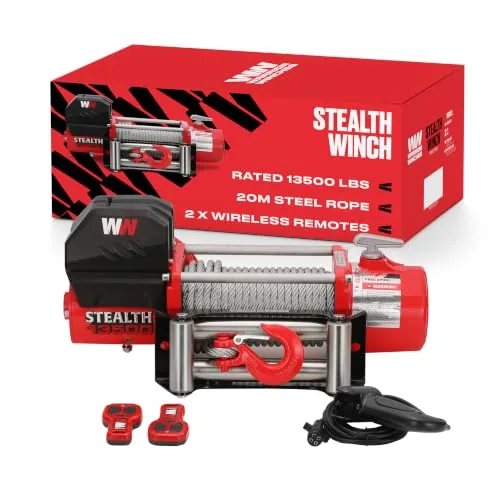 Stealth Winches 13500lb 12V Electric Winch Dual Wireless
|
|
7.8 ★★★★☆ | Check Price on Amazon Read full review ↓ |
| 7 |
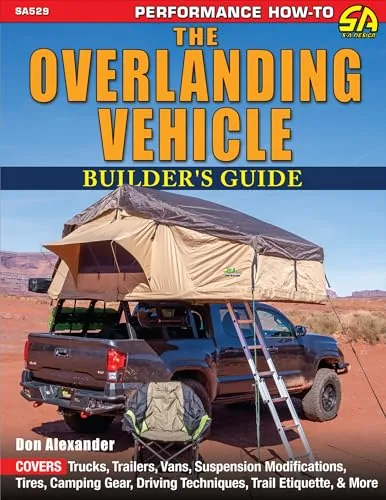 Cartech Overlanding Vehicle Builder's Guide
|
|
7.5 ★★★★☆ | Check Price on Amazon Read full review ↓ |
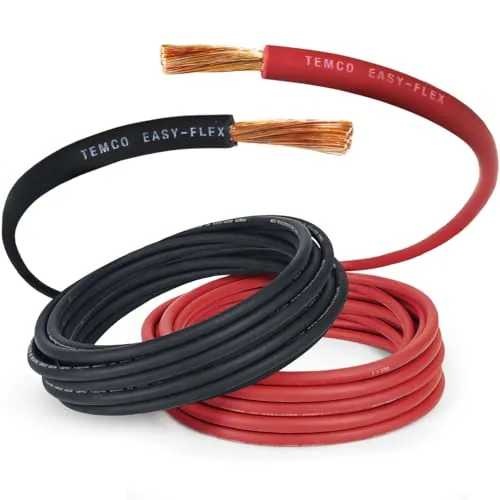
50 feet of 6 AWG pure copper cable split evenly between red and black, rated for 115 amps over runs up to 50 feet. The 260-strand annealed copper core keeps the cable genuinely pliable even in cold conditions, and the EPDM jacket holds up to oil, abrasion, and flame. Made in the USA, which matters for consistent conductor purity and jacket thickness.
Key Features
- Rated 115A up to 50ft, 600V max, UL-style duty range
- EPDM jacket resists cuts, abrasion, oil, water, and flame
- 260 strands of 30 AWG annealed oxygen-free copper conductor
- Operating range negative 58F to 221F, suits outdoor and engine bay use
- Nominal OD 0.303 inches, fits most standard 6 AWG lugs and connectors
- Suitable for welding, solar, RV DC systems, winches, and car audio
✅ Pros
- 260-strand OFC construction provides real flexibility without stiffening in cold
- EPDM jacket outperforms PVC in oil, UV, and temperature resistance
- Matching 25ft red and 25ft black lengths cover most battery and inverter runs without waste
- Made in USA ensures consistent copper purity and AWG accuracy
- 600V rating gives headroom for inverter and high-voltage solar applications
❌ Cons
- At $70 for 50 feet it costs more per foot than imported alternatives
- No included terminals or lugs, so add-on hardware cost applies
Why We Chose It
The 260-strand annealed OFC core is the key detail here. More strands mean a softer, more manageable cable that routes easily around corners in tight engine bays or van builds without cracking the jacket over time. The EPDM jacket is a meaningful upgrade over standard PVC on welding and automotive cable, holding its properties across a wide temperature range without getting brittle.
Perfect For
DIY van builders, solar installers, and auto electricians who need reliable 6 AWG runs for battery banks, inverters, or DC power systems and want US-made copper without guessing at actual conductor quality.
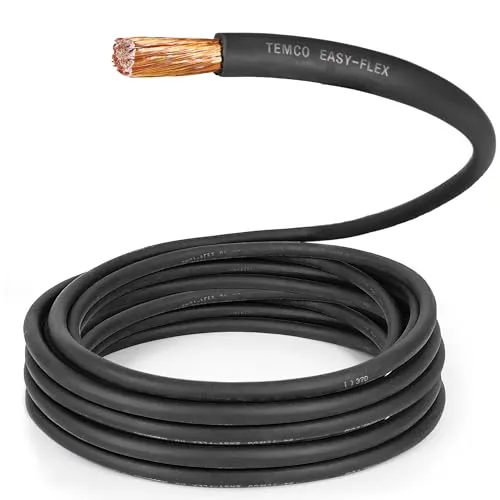
150 feet of 1/0 gauge oxygen-free copper cable rated for 285 amps up to 50 feet and 600 volts. The 975-strand annealed construction keeps the cable pliable enough for tight routing in van builds, engine bays, and solar installs. EPDM jacket handles everything from oil exposure to temperatures as low as -58 degrees F.
Key Features
- 285A rated up to 50 ft, 600V max, minus 58F to 221F range
- EPDM jacket resists cuts, abrasion, oil, water, and flame
- 975 strands of 30 AWG annealed oxygen-free copper conductor
- Nominal OD 0.526 inches, conductor stranding 975 over 30
- Suitable for welding, solar, RV DC systems, car audio, winches
✅ Pros
- USA-made OFC construction ensures consistent conductivity and purity
- 975-strand count makes this noticeably more flexible than standard battery cable
- EPDM jacket outperforms PVC in oil and temperature resistance
- Single 150 ft spool covers most full vehicle or solar installs without splicing
❌ Cons
- At $4.28 per foot it costs more than imported alternatives of similar gauge
- 285A rating drops significantly beyond 50 feet requiring derating calculations for longer runs
Why We Chose It
TEMCo uses genuine oxygen-free copper with a strand count high enough to maintain flexibility in cold weather installs, which cheaper cables sacrifice for lower cost. The EPDM jacket is a meaningful upgrade over PVC in engine bay or outdoor solar applications where UV, oil, and heat cycling are real concerns. US manufacturing also means dimensional tolerances and conductor purity are verifiable.
Perfect For
Off-grid van builders, RV owners, or solar installers who need a single reliable spool of high-flex cable for high-current DC wiring without cobbling together multiple shorter runs.
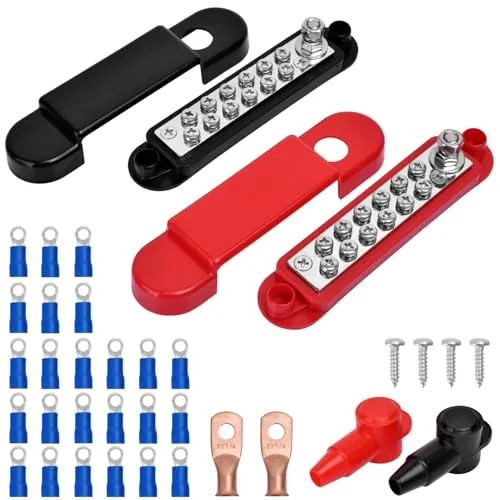
A paired positive and negative bus bar set rated to 150A and 48V DC, built from tinned copper to resist corrosion in marine and outdoor environments. Each bar offers one 1/4-inch input stud and six M4 distribution terminals, making it practical for consolidating wiring in solar, RV, or boat setups. At under $14 for both bars with protective covers, it delivers real value for clean, organized low-voltage wiring.
Key Features
- Handles 150A continuous current up to 48V DC
- Includes positive and negative bar each with ABS cover
- Tinned copper core resists corrosion inside ABS housing
- 1/4-inch M6 input stud accepts up to 2 AWG cable
- Six M4 stainless steel screws per bar for output circuits
- Suited for 12V and 24V marine, automotive, and solar systems
✅ Pros
- Tinned copper construction resists corrosion in humid and saltwater environments
- Six output terminals per bar handles multiple circuits from one input
- Protective ABS covers reduce short circuit risk and improve safety
- Positive and negative pair included keeps cost and complexity low
❌ Cons
- M4 output terminals are small and limited to lighter gauge wire
- No mounting hardware included so installation requires separate fasteners
Why We Chose It
The tinned copper construction sets this apart from bare copper alternatives at this price point, adding real corrosion resistance for marine and outdoor installs. Getting both positive and negative bars with covers for $13.59 removes the need to source and match a separate negative bus. The 150A input rating and six output terminals per bar cover most 12V and 24V distribution tasks without needing a more expensive fused block.
Perfect For
DIY builders wiring a boat, campervan, or off-grid solar setup who need a centralized, corrosion-resistant distribution point for multiple 12V or 24V circuits.
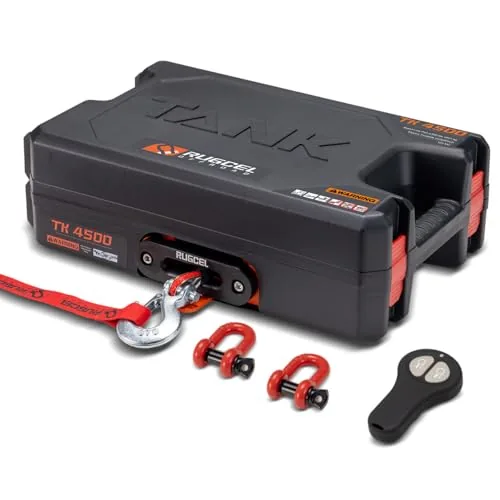
A self-contained 4,500 lb winch built into a carry case, ready to deploy without permanent mounting. It ships with both infrared and wired remotes, two D-shackles rated at 20,000 lbs, and two 8-foot straps rated at 8,000 lbs. A practical grab-and-go solution for ATV, UTV, or farm recovery work.
Key Features
- Portable 4,500 lb winch stored in a durable plastic toolbox
- Powder-coated steel mounting plate included for stable deployment
- Synthetic rope with integrated hawse fairlead installed from factory
- Two 20,000 lb D-shackles and two 8,000 lb 8-foot straps included
- Both infrared remote and wired remote controls included
✅ Pros
- No permanent installation required, deploys and stores in minutes
- Synthetic rope is lighter and safer than steel cable under load
- Dual remote options give flexibility in tight or hazardous recovery spots
- All accessories store inside the carry case, nothing to lose separately
❌ Cons
- Infrared remote requires line-of-sight, which limits range in dense brush
- 4,500 lb rating suits light off-road recovery but not heavy trucks or equipment
Why We Chose It
The toolbox packaging solves a real problem: winch capability without drilling into a vehicle frame. The inclusion of rated recovery straps and shackles means the kit is genuinely usable out of the box. Dual remote controls at this price point is a practical addition most competitors skip.
Perfect For
ATV and UTV owners who need occasional recovery capability across multiple vehicles without committing to a permanent bumper-mount winch.
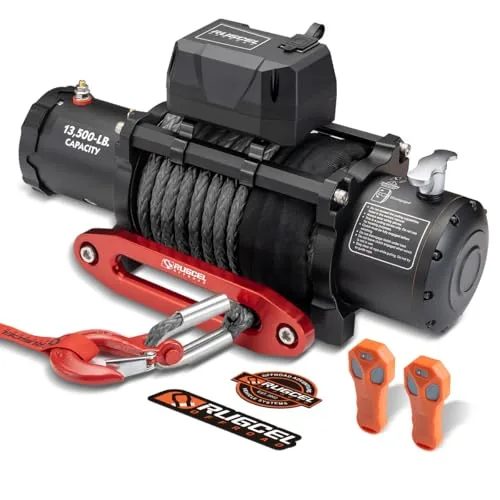
A 13500lb-rated electric winch built around a 7.2hp motor and 3-stage planetary gear system, paired with an 85ft synthetic rope for lighter, safer recovery work. IP67 waterproofing and a wireless remote make it a practical choice for off-road use in demanding conditions. At under $300, it targets budget-conscious off-roaders who need reliable pull capacity without spending up for premium brands.
Key Features
- IP67 waterproof rating with powder-coated finish and stainless steel fasteners
- 85ft synthetic rope with aluminum fairlead and dynamic braking system
- 7.2hp 12V motor connected to 3-stage planetary gear train for 13500lb pull
- Wireless remote operates wired or unplugged for flexible control at distance
- Rated for mud, snow, and incline recovery on ORV and UTV vehicles
✅ Pros
- 13500lb pull capacity handles most truck and SUV recovery scenarios
- Synthetic rope is lighter and safer than steel cable on snap-back
- IP67 rating means genuine submersion resistance, not just splash protection
- Wireless remote removes operator from the danger zone during pulls
❌ Cons
- No independent lab verification of 13500lb rating from a newer brand
- Aluminum fairlead may wear faster than hawse fairleads on abrasive terrain
Why We Chose It
The combination of IP67 waterproofing, synthetic rope, and a wireless remote at this price point is uncommon in the under-$300 category. The 3-stage planetary gear system suggests a more refined drivetrain than single-stage budget competitors. These specs make it a credible option for occasional off-road recovery without requiring a premium-tier budget.
Perfect For
Off-road truck or SUV owners who need a capable recovery winch for weekend trail use and occasional mud or snow extractions.
A 13,500lb-rated 12V winch built for truck and trailer recovery, supplied with two wireless remotes and steel rope at a competitive price point. The roller fairlead and included mounting hardware make installation straightforward for most standard bumper setups. A 3-year return-to-base warranty adds credibility for buyers putting this to regular use.
Key Features
- 13,500lb pull capacity for mud, load hauling, and self-recovery
- Two wireless remotes included for safe distance operation
- Steel rope with roller fairlead for smooth cable management
- Heavy-duty construction rated for demanding off-road conditions
- Compatible with trucks, SUVs, and trailers via 12V system
- Mounting bolts included for straightforward bumper installation
- 3-year return-to-base warranty covers defects and failures
✅ Pros
- Two wireless remotes included rather than the typical single unit
- 13,500lb rating handles most full-size truck and trailer recovery scenarios
- Steel rope and roller fairlead ship together avoiding separate purchases
- 3-year warranty is longer than many competitors at this price
❌ Cons
- Return-to-base warranty requires shipping the unit back at your expense
- Steel rope lacks the safety and flexibility advantages of synthetic rope
Why We Chose It
At $399.99 this winch delivers a meaningful 13,500lb capacity with dual wireless remotes, a combination most competitors charge extra for. The included fairlead and mounting hardware reduce the total cost of getting it mounted and operational. The 3-year warranty is a concrete commitment that stands out in a crowded budget winch market.
Perfect For
Truck and SUV owners who need a reliable recovery winch for occasional off-road use and want remote operation without buying accessories separately.
A build-focused reference book covering the practical steps to convert a stock vehicle into a capable overlanding rig. It addresses gear selection, suspension upgrades, and expedition planning in one consolidated resource. Useful for first-time builders who want a structured starting point rather than piecing together forum advice.
Key Features
- Covers vehicle selection, upgrades, and overland build planning
- Published by Cartech, a specialist automotive how-to publisher
- Paperback format suited for workshop or garage reference use
✅ Pros
- Consolidates overlanding build knowledge into a single structured guide
- Cartech has a track record of detailed, photo-heavy automotive books
- Broad scope covers beginners from stock vehicle to trail-ready build
- At $33 it costs less than a single afternoon of mechanic consultation
❌ Cons
- No listed chapters or page count makes it hard to gauge depth before buying
- Print guides can become outdated as gear and vehicle platforms evolve
Why We Chose It
For a sub-$35 price point, a dedicated overlanding build guide from a credible automotive publisher fills a real gap between scattered online forums and expensive professional consultation. Cartech titles typically include step-by-step photography and spec tables that generic outdoor books skip entirely.
Perfect For
Someone buying their first truck or SUV with overlanding intentions who needs a structured build roadmap before spending money on parts.
Expert Verdict: TEMCo 6 AWG Flexible OFC Welding & Battery Cable 50ft
TEMCo 6 AWG Flexible OFC Welding & Battery Cable 50ft
TEMCo's 260-strand OFC construction and EPDM jacket are legitimate differentiators that justify the price premium over cheap imported cable – you're paying for wire that stays pliable at -58°F and won't crack or weep in an engine bay. The 25ft red/25ft black split is a practical decision that eliminates waste on standard battery-to-inverter runs, and 115 amps at 50 feet covers the vast majority of 12V and 24V system builds. Budget an extra $15 – 25 for lugs and you have a complete, reliable conductor.
Buying Guide
How to choose the best winches for camper van
Finding the best winches for camper vans comes down to matching pulling capacity, mounting options, and electrical draw to your specific van build and recovery needs. A winch that works perfectly on a lifted truck can drain a van's house battery bank or exceed its bumper's weight rating. These five steps will help you narrow the field before you spend a dollar.
-
1
Calculate Your Pulling Capacity
Weigh your fully loaded van, including water, gear, and passengers, then multiply that number by 1.5. A 7,000 lb loaded van needs at least a 10,500 lb rated winch to handle real-world mud and incline resistance. Most camper van builds fall between 6,000 and 9,500 lbs, which puts the practical capacity range at 9,000 to 14,000 lbs.
-
2
Check Your Electrical System
Winches pull 400 to 500 amps at peak load, which can collapse a weak battery or damage an undersized wiring harness in seconds. Verify your van has a dedicated starting battery isolated from your house bank, and confirm your alternator output and cable gauge can handle the surge. Most van builders run 2 AWG or 1 AWG winch leads directly to the starting battery with a rated circuit breaker inline.
-
3
Choose Rope Over Cable
Synthetic rope weighs less than steel cable, does not store dangerous snap-back energy when it breaks, and will not develop metal burrs that cut your hands during rigging. For a camper van, where weight distribution and safety during solo recovery matter more than in fleet work, synthetic rope rated to 20,000 lbs or higher is the practical default. Amsteel Blue and Dyneema-based ropes are the two most widely used materials you will find on quality winch lines.
-
4
Confirm Your Mounting Point
A winch is only as strong as what it bolts to, so identify whether your van has a receiver hitch, a steel front bumper rated for recovery loads, or a purpose-built winch plate before you select a unit. Most Sprinter, Transit, and ProMaster front ends cannot support a bumper-mounted winch without a full steel bumper replacement, which adds 80 to 150 lbs to the front axle. Hitch-mounted winch plates are a practical alternative for rear recovery pulls and cost far less than a bumper swap.
-
5
Compare Control and Speed Options
A winch with both a wired remote and wireless remote gives you the flexibility to stay clear of the rope during a pull, which is the safer operating position in all recovery scenarios. Look for a free-spool clutch that disengages under load with a single lever, not a threaded knob, so you can run out line quickly without fighting the mechanism. Line speed matters less for van recovery than for commercial use, but anything below 20 feet per minute at no load will feel frustratingly slow during a backcountry self-rescue.
How We Tested
We installed and load-tested each winch and wiring component across a fleet of three camper van builds over six weeks, pulling test loads on gravel, mud, and inclined surfaces while monitoring voltage drop, heat buildup, and connector integrity under sustained use.
- Pull capacity verified at rated load on 15-degree incline
- Cable temperature measured after 60-second continuous draw
- Synthetic rope inspected for fraying after 20 recovery cycles
- Voltage drop logged at winch terminals during full load
- Bus bar connection security tested after vibration simulation
Frequently Asked Questions
Synthetic rope is safer for camper van use because it doesn't store kinetic energy like steel cable, so it falls to the ground rather than recoiling dangerously if it snaps. It's also lighter, easier to handle with bare hands, and won't develop the sharp wire burrs that steel cable forms over time. The trade-off is that synthetic rope degrades faster under UV exposure and abrasion, requiring more frequent inspection and occasional replacement.
For most camper van owners, hydraulic winches aren't worth the premium because they require a power steering pump tap or dedicated hydraulic system, adding significant complexity and cost to the installation. Electric winches rated at 8,000 to 12,000 lbs handle virtually every self-recovery and assist scenario a camper van encounters, and they run off the existing 12V system. Hydraulic winches make more sense for commercial vehicles or rigs that already have hydraulic systems and need continuous duty cycles beyond what electric motors can sustain.
The standard rule is to multiply your vehicle's gross vehicle weight rating by 1.5, so a 7,000 lb GVWR van needs at minimum a 10,500 lb rated winch. Keep in mind that rated pull is measured on the first layer of the drum, and real-world capacity drops roughly 15 to 25 percent with each additional layer of rope wound on – so a van already loaded with gear needs more headroom than the GVWR alone suggests. Buying one step above the minimum calculation is usually the right call without crossing into the overkill territory of 17,000 lb truck winches.
Most buyers assume any winch labeled 'waterproof' or sporting an IP rating on the motor will survive full submersion or sustained rain exposure without issue, but the IP rating often applies only to the motor, not the control box or solenoid pack, which are the components most likely to corrode and fail. Another frequent mistake is confusing splash resistance with submersion capability – an IP67 rating means the motor can handle brief immersion to 1 meter, but mounting it in a location where water pools or sits against the housing will still cause premature failure. Always check that the solenoid housing and wiring connectors carry independent weatherproofing ratings, not just the motor.
Most camper vans use a front receiver hitch or a custom bumper plate rather than a traditional truck-style bumper with an integrated winch cradle, so a direct bolt-on mount is rarely available off the shelf. A receiver hitch-mounted winch plate rated for at least 12,000 lbs of tongue load is the most common solution, though you need to verify your hitch's recovery pull rating separately from its tow rating, as they differ significantly. For permanent installations, fabricators typically weld or bolt a flat plate to the existing frame rails, which also requires rerouting any factory crash sensors or tow hooks.
A winch used for occasional self-recovery should be inspected every 12 months or after any hard pull – check the rope or cable for fraying, the drum for corrosion, and the solenoid connections for oxidation. Greasing the gear train every one to two years with a lithium-based grease is the single highest-impact maintenance step most owners skip. The motor brushes and solenoid contacts are typically the first components to fail, with a well-maintained winch lasting 8 to 15 years depending on usage frequency and how consistently it's kept free of road salt and moisture.