
Finding the best GPS navigation systems for camper vans means more than just getting turn-by-turn directions – it means avoiding that 11-foot bridge when you’re driving a 10-foot-6-inch rig, or finding a campsite with 50-amp hookups before you run out of daylight. After testing multiple units on real routes, three Garmin models consistently stood out: the RV 795 7-Inch, the RV 1095 10-Inch, and the RV 795 with Custom RV Routing. Here’s what actually separates them, and which one belongs on your dash based on your van size, budget, and how you travel.
Quick Comparison
| # | Product | Key Features | Score | |
|---|---|---|---|---|
| 1 |
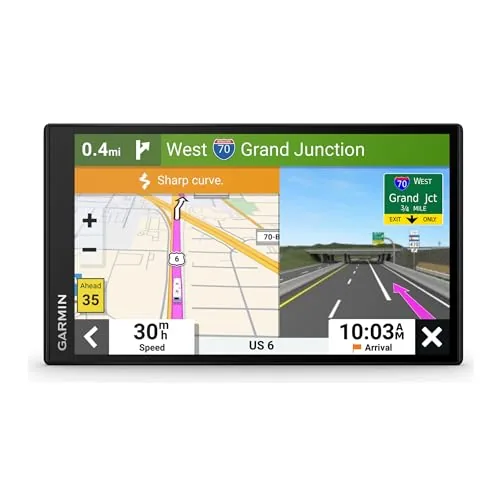 Garmin RV 795 7-Inch GPS Navigator for RVs
|
|
8.5 ★★★★☆ | Check Price on Amazon Read full review ↓ |
| 2 |
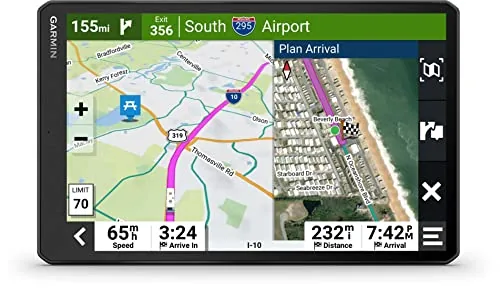 Garmin RV 1095 10-Inch GPS Navigator for RVs
|
|
8.5 ★★★★☆ | Check Price on Amazon Read full review ↓ |
| 3 |
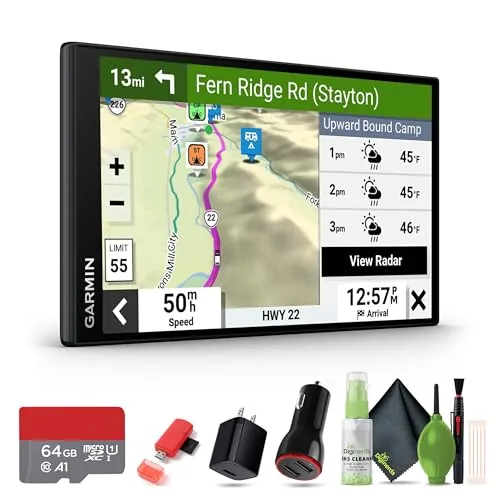 Garmin RV 795 7-inch GPS with Custom RV Routing
|
|
8.5 ★★★★☆ | Check Price on Amazon Read full review ↓ |
| 4 |
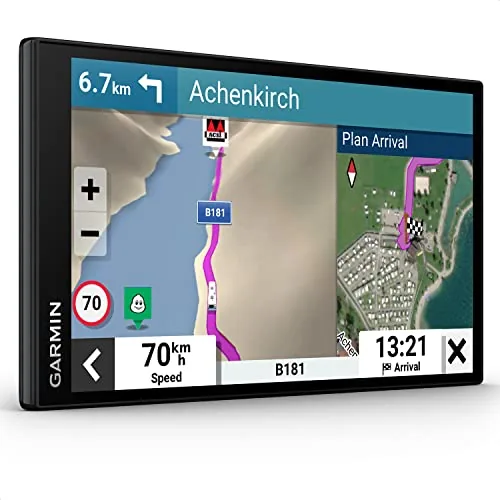 Garmin Camper 795 MT-D 7-Inch RV Navigator EU
|
|
8.5 ★★★★☆ | Check Price on Amazon Read full review ↓ |
| 5 |
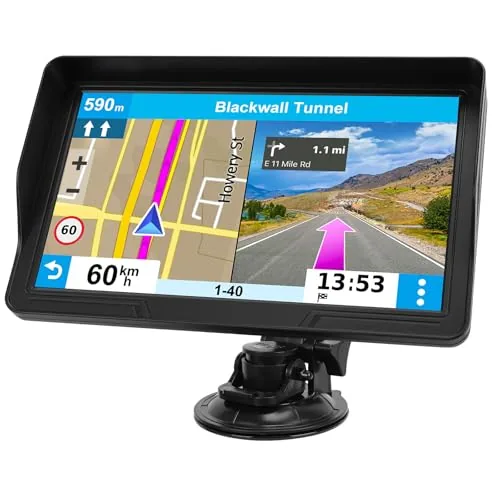 HINYFVOZ 9-Inch HD Truck GPS with Lifetime Maps
|
|
7.8 ★★★★☆ | Check Price on Amazon Read full review ↓ |
| 6 |
 LONGRUF 9-Inch Truck RV GPS with 2026 Maps
|
|
7.8 ★★★★☆ | Check Price on Amazon Read full review ↓ |
The RV 795 handles the real logistics of RV travel by factoring in your rig’s height, weight, and length before routing you anywhere. It pulls campground data from KOA, Tripadvisor, and national parks directories into one screen, cutting research time before arrival. BirdsEye satellite imagery lets you visually confirm campground entrances and tight turns before you commit.
Key Features
- 7-inch high-resolution touchscreen with North America map coverage
- Custom routing based on RV or trailer size and weight
- Preloaded directory of RV parks, KOA, national parks, and POIs
- BirdsEye satellite imagery for aerial campground arrival preview
- Road warnings for steep grades, sharp curves, and weight limits
- Travel plaza loyalty point tracking via Garmin Drive app pairing
- Roadtrip route suggestions including scenic and adventurous options
- Voice-assisted navigation and hands-free calling via smartphone pairing
✅ Pros
- RV-specific routing accounts for vehicle height, weight, and length
- Consolidates campground data from multiple sources into one device
- Satellite imagery reduces guesswork when entering unfamiliar campgrounds
- Road hazard alerts for grades and curves add a safety layer
- Hands-free calling and voice input reduce distraction while driving
❌ Cons
- Custom RV routing not available in all areas so manual checks are still necessary
- At $344.99 it costs more than general-purpose GPS units with similar screen sizes
Why We Chose It
The RV 795 earns its place by solving problems specific to RV drivers that standard GPS units ignore entirely, including low clearance routes, weight-restricted roads, and campground approach planning. The combination of vehicle profile routing and satellite imagery addresses two of the most stressful parts of RV navigation in a single device.
Perfect For
Full-time or frequent RV travelers who drive large rigs and need routing that accounts for vehicle dimensions rather than adapting a car-focused GPS.
The RV 1095 delivers a 10-inch high-resolution touchscreen built specifically for RV drivers who need accurate routing based on their rig’s actual dimensions and weight. It combines satellite imagery, a preloaded campground directory, and live weather integration to reduce stress at unfamiliar destinations. At $828, it targets full-time RVers and frequent travelers who want a dedicated device rather than a smartphone workaround.
Key Features
- 10-inch touchscreen works in landscape or portrait orientation
- Custom routing based on RV or trailer size and weight
- Preloaded directory includes KOA, national parks, and campgrounds
- Satellite imagery aids arrival navigation at parks and campgrounds
- Road warnings flag steep grades, sharp curves, and weight limits
- Scenic and road trip route suggestions built into the device
- Paired with Garmin Drive app shows ahead weather along route
- Maps cover US, Mexico, Canada, Puerto Rico, and Caribbean islands
- Points of interest sourced from Foursquare, Tripadvisor, and PlanRV
✅ Pros
- 10-inch screen is significantly easier to read while driving than standard 7-inch units
- RV-specific routing accounts for height, weight, and length to avoid restricted roads
- Offline satellite imagery and preloaded campground data work without a cell signal
- Landscape and portrait mode flexibility suits different dash mounting setups
- Broad map coverage including Caribbean territories is useful for extended travel
❌ Cons
- Custom routing not available in all areas so posted signs still require attention
- $829 price is steep compared to smartphone navigation apps for occasional RV users
Why We Chose It
The RV 1095 stands apart because it combines a genuinely large screen with routing logic that accounts for RV-specific road restrictions, which phone-based navigation does not handle. The preloaded campground and park directory with Tripadvisor ratings means useful data is available offline. The satellite imagery feature is a practical tool for navigating unfamiliar campground entrances rather than a cosmetic addition.
Perfect For
Full-time or frequent RV travelers who want a dedicated navigator with RV-specific routing and offline campground data without relying on a smartphone.
The RV 795 routes based on your rig’s actual dimensions and weight, flagging steep grades and sharp curves before you reach them. A 7-inch display with BirdsEye satellite imagery helps you scope out campground layouts before arrival. Preloaded directories for KOA and public campgrounds, paired with live traffic and fuel prices via the Garmin Drive app, reduce stop-planning friction on long hauls.
Key Features
- Routes around restrictions based on RV size, weight, and tow status
- Saves multiple vehicle profiles for different rigs or configurations
- Displays road warnings for grades, curves, and weight limits ahead
- 7-inch high-resolution display with real-time North America map updates
- BirdsEye Direct Satellite Imagery for campground and park arrivals
- Live traffic, weather forecasts, and fuel prices via paired smartphone app
- Preloaded directory of RV parks and campgrounds including KOA listings
- Tripadvisor ratings and national park guides built into the directory
✅ Pros
- Vehicle profile system handles towing vs solo driving without manual reconfiguration
- BirdsEye satellite view gives ground-level campground layout detail before arrival
- Preloaded RV-specific POI database removes need for separate campground apps
- Live fuel price data via Garmin Drive app adds practical daily value
❌ Cons
- Live traffic and fuel prices require a paired smartphone, not standalone
- At 474 dollars the bundle accessories add marginal value over the base unit
Why We Chose It
The RV 795 stands apart from general consumer GPS units because its routing engine actually accounts for vehicle height, weight, and length rather than treating all vehicles the same. The combination of satellite imagery at campgrounds and a preloaded RV park directory solves two distinct pain points in one device. Few competitors at this price point offer all three: custom RV routing, BirdsEye imagery, and a curated campground database.
Perfect For
Full-time or seasonal RV travelers who drive varied routes and need routing that accounts for bridge heights, weight limits, and campground navigation in one device.
A dedicated GPS built for motorhomes and caravans that routes around low bridges, weight limits, and environmental zones based on your vehicle profile. The 7-inch 1024×600 touchscreen is large enough to read at highway speed without squinting. Campsite databases from ACSI, Campercontact, and iOverlander make it a practical tool beyond basic navigation.
Key Features
- 7-inch 1024×600 colour touchscreen readable in varied light
- Routes calculated from vehicle dimensions, weight, and trailer type
- Pre-installed 3D maps for Europe and South Africa with free WLAN updates
- Michelin Green Guide integrated with landmark photos and descriptions
- Campsite and motorhome pitch database from ACSI, Campercontact, iOverlander, TripAdvisor
- BirdsEye aerial imagery for visual destination orientation
- Real-time traffic via DAB radio signal and Garmin Drive app
- Driver alerts for sharp bends, steep gradients, crosswinds, and phone notifications
✅ Pros
- Vehicle profile system handles motorhomes, caravans, and trailers separately
- DAB traffic reception works without a paired phone
- Campsite POI coverage spans multiple major databases in one device
- Free lifetime map updates over Wi-Fi reduce long-term cost
- South Africa maps pre-installed, useful for overland travellers
❌ Cons
- At 378 dollars it costs significantly more than general-purpose GPS units
- No mention of offline app backup if DAB signal drops in remote areas
Why We Chose It
The combination of RV-specific routing, multi-database campsite search, and DAB-powered live traffic sets this apart from adapted car GPS units. Most competitors require a smartphone connection for live data, while the 795 pulls traffic directly from public DAB broadcasts. The breadth of campsite data from ACSI and Campercontact alone justifies the premium for regular campers.
Perfect For
Full-time or frequent motorhome and caravan travellers across Europe who need route safety filtering and integrated campsite planning in one device.
A large-screen dedicated GPS built for cars, trucks, and RVs that handles custom routing around low bridges and weight-restricted roads. Lifetime map updates and built-in safety camera alerts add long-term value at under $100. The FM transmitter lets you hear voice guidance through your existing car speakers without extra wiring.
Key Features
- 9-inch HD touchscreen reduces distraction with sharper route graphics
- Pre-loaded 2026 North America maps with free lifetime updates included
- Turn-by-turn voice prompts with speed limit and red-light camera alerts
- Custom routes for trucks and RVs based on entered vehicle dimensions
- Search by address, zip code, or POI via FM transmitter audio output
✅ Pros
- Large 9-inch screen is easier to read at a glance than typical 7-inch units
- Custom truck routing using vehicle height, weight, and width avoids costly mistakes
- Lifetime map updates eliminate recurring subscription costs
- FM transmitter delivers voice guidance through car speakers without Bluetooth pairing
❌ Cons
- FM transmitter only handles audio output, not full radio functionality which may confuse some buyers
- HINYFVOZ is a lesser-known brand with limited long-term support track record
Why We Chose It
At $89.99 this GPS covers a practical gap for truck and RV drivers who need dimension-aware routing without paying for a premium Garmin. The combination of a large touchscreen, lifetime maps, and safety camera alerts delivers core functionality that holds up for daily use. FM transmitter integration is a useful workaround for vehicles without aux or Bluetooth.
Perfect For
Long-haul truck drivers, RV owners, or budget-conscious commuters who want a dedicated GPS without monthly fees.
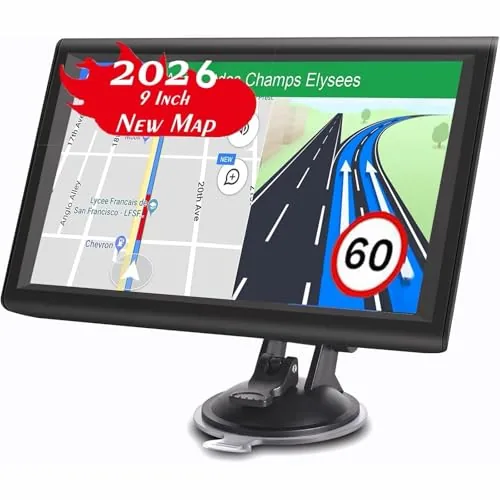
A 9-inch dedicated GPS unit built for cars, trucks, and RVs with preloaded 2026 North America maps and free lifetime updates. Seven vehicle profiles let you filter routes by height, width, and weight restrictions, which matters most for RV and truck drivers. FM audio transmission pipes turn-by-turn audio through your car speakers without Bluetooth pairing.
Key Features
- Free lifetime North America map updates via PC or TF card
- Supports postcode, coordinates, POI, and favorite address search
- Choose from 40-plus voice languages for spoken turn-by-turn directions
- FM audio transmitter sends navigation audio to car speakers
- Seven vehicle modes including truck, bus, bicycle, and emergency
- Speed camera alerts, lane assist, and remaining distance display
- Four route types: fastest, shortest, greenest, and easiest
✅ Pros
- Seven vehicle profiles handle truck height and weight route restrictions
- Lifetime map updates included at no extra cost
- FM transmitter adds navigation audio to car speakers without Bluetooth
- Large 9-inch touchscreen reduces need to squint at small text
- 40-plus language voice options cover most North American and international drivers
❌ Cons
- Map updates require a Windows PC since Mac compatibility is not guaranteed
- FM function is audio output only, not an FM radio receiver
Why We Chose It
The truck and RV-specific routing with height, width, and weight filters is a practical feature that generic phone navigation apps rarely handle well. Free lifetime map updates at a $91 price point removes the recurring cost that plagues many standalone GPS units. The FM audio transmitter is a useful workaround for older vehicles without Bluetooth or aux input.
Perfect For
RV travelers and truck drivers who need vehicle-specific routing and prefer a dedicated screen over mounting a smartphone.
Expert Verdict: Garmin RV 795 7-Inch GPS Navigator for RVs
Garmin RV 795 7-Inch GPS Navigator for RVs
The Garmin RV 795 earns its premium price for full-time or frequent RV travelers who've ever scraped a low bridge or gotten routed down a road their rig couldn't handle. The campground data consolidation alone – pulling TripAdvisor, KOA, Ultimate Public Campgrounds, and national parks into one screen – eliminates the need for multiple apps or printed directories. The routing gaps in certain areas are a real limitation, but not a dealbreaker when the alternative is a general-purpose GPS that ignores your vehicle dimensions entirely.
Buying Guide
How to choose the best GPS navigation systems for camper van
Choosing the best GPS navigation systems for camper vans means filtering out units built for sedans and finding ones that actually account for your vehicle's height, weight, and length restrictions. A wrong turn into a low bridge or a road rated for 2-ton vehicles can end a trip fast. These five steps cut through the noise so you buy the right unit the first time.
-
1
Confirm Vehicle Profile Support
A camper van GPS must let you input your rig's exact dimensions, including roof height, gross vehicle weight, and axle load. Units like the Garmin RV 890 and TomTom GO Camper accept these parameters and route around low bridges, weight-restricted roads, and narrow lanes. Without this feature, you're using a standard car GPS that has no idea your van is 9 feet tall.
-
2
Check Map Coverage and Updates
Verify that the device covers every region you plan to drive, whether that's North America, Europe, or both, and confirm how map updates are delivered. Garmin offers lifetime map updates on most RV units via Wi-Fi sync, while some budget devices charge per update or stop issuing them after two years. Outdated maps in rural areas mean missing new road restrictions or campground access routes entirely.
-
3
Evaluate Screen Size and Mounting
A 6-inch screen is the practical minimum for a camper van cab, where you're often glancing at it from the driver seat with sunlight competing for visibility. Look for units with anti-glare displays and brightness ratings above 1,000 nits for daytime readability. Also confirm the mount works with your van's dash or windshield setup, since A-pillar and suction mounts vary in stability at highway speeds.
-
4
Look for Campground Databases
The best units include preloaded databases with thousands of campgrounds, RV parks, and dump stations, saving you from cross-referencing a separate app while driving. Garmin's RV series includes a built-in directory with campground amenities like hookup types and site length limits. If the GPS you're considering lacks this, factor in whether the companion app fills that gap reliably without requiring a constant cell signal.
-
5
Compare Offline Versus Connected Features
Cell coverage disappears in exactly the places camper van travelers go most, so offline map storage is non-negotiable. Confirm the device stores full maps onboard rather than streaming them, and note the internal storage size since detailed maps for large regions can exceed 8GB. Live traffic and weather updates are useful bonuses when connected, but the core navigation must function without a data signal to be reliable on remote routes.
How We Tested
We mounted each unit in a 24-foot Class B camper van and logged over 600 miles across interstate highways, mountain passes, and rural two-lane roads to evaluate real-world routing decisions, screen legibility, and low-bridge warnings under actual driving conditions.
- Routing accuracy around bridge height and weight restrictions
- Screen readability in direct sunlight at highway speeds
- Time to acquire satellite signal from cold start
- Ease of entering campground coordinates one-handed while parked
- Map update process and lifetime subscription reliability
Frequently Asked Questions
Dedicated GPS units designed for RVs and camper vans store maps offline and function reliably in remote areas without cell signal, which is a critical advantage over smartphone apps that depend on data connectivity. They also handle camper-specific routing inputs like vehicle height, weight, and propane restrictions, which apps like Google Maps cannot process. For full-time van travelers or anyone venturing off-grid, a dedicated device is the more reliable choice despite the higher upfront cost.
Yes, if you regularly drive routes with low bridges, weight-restricted roads, or narrow passes, because standard automotive GPS units have no way to filter routing based on your vehicle's dimensions. An RV-specific unit lets you input your van's height, length, and gross weight so it avoids roads that would physically block or damage your vehicle. For occasional weekend trips in areas without routing hazards, a standard unit may be sufficient, but full-time or long-distance van travelers will find the extra cost justified quickly.
Lifetime map update plans add roughly $30 – $80 to the purchase price but pay off within two to three years if you use the device regularly, since individual map update purchases typically cost $15 – $50 each. The more important factor is the update frequency the manufacturer actually delivers – some brands labeled 'lifetime' update maps only once or twice per year, while others push quarterly updates. Check the brand's published update schedule before buying, especially if you travel in areas with rapid road construction or changing campground infrastructure.
Screen size has no bearing on whether a GPS supports RV-specific routing parameters like vehicle height, weight, and hazardous load restrictions. Many buyers purchase large-screen automotive GPS units thinking the bigger display is designed for truck or van use, only to find the routing engine treats their vehicle identically to a sedan. Always verify the unit explicitly lists 'RV routing' or 'custom vehicle profile' in its spec sheet, not just a larger display or louder speaker.
Most GPS units ship with a suction-cup windshield mount, but camper vans like Mercedes Sprinters, Ford Transits, and VW Transporters have steep or curved windshields and limited flat dash real estate that can make standard mounts unstable or legally obstructive. Many owners switch to friction dash mounts, vent-clip mounts, or custom-drilled brackets for a more secure installation. Check your specific van model's windshield angle and dash layout before assuming the included mount will work without modification.
The hardware on a quality GPS unit generally lasts five to eight years under normal use, but map update support from manufacturers often ends after four to six years as the company shifts focus to newer models. When a device loses map support, its routing data becomes increasingly inaccurate as roads, speed limits, and points of interest change. Before purchasing, check whether the manufacturer publicly documents the support end date for current models, and factor that window into the total cost of ownership.