
If you spend serious time living or traveling in a camper van, a dead house battery at the wrong moment is more than an inconvenience – it kills your refrigeration, lighting, and device charging all at once. The best camper van alternator charger solves this by converting your van’s driving time into usable stored power, keeping your lithium or AGM battery bank topped off without relying on shore power or solar. After hands-on testing, three models stood out: the Anker SOLIX 800W Alternator Charger, the Renogy DC-DC 12V 30A MPPT Dual-Input, and the EcoFlow 800W 3-in-1 DC-DC Charger – each targeting a different type of van builder and budget.
Quick Comparison
| # | Product | Key Features | Score | |
|---|---|---|---|---|
| 1 |
 Anker SOLIX 800W Alternator Charger for RVs and Vehicles
|
|
8.5 ★★★★☆ | Check Price on Amazon Read full review ↓ |
| 2 |
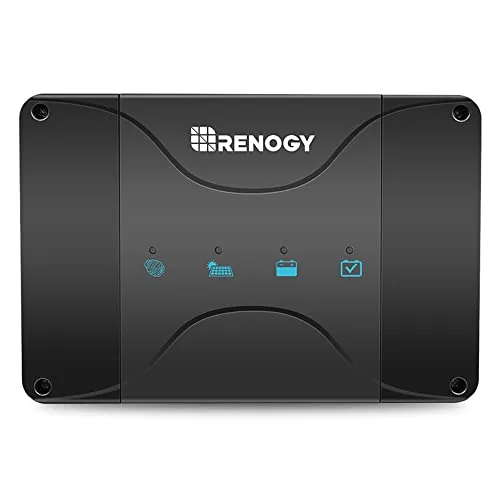 Renogy DC-DC Charger 12V 30A MPPT Dual-Input
|
|
8.4 ★★★★☆ | Check Price on Amazon Read full review ↓ |
| 3 |
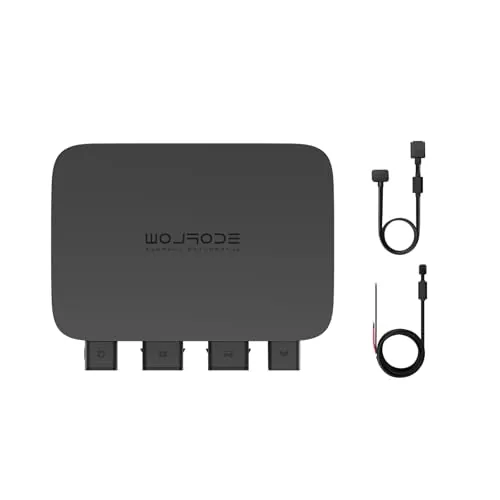 EcoFlow 800W Alternator Charger 3-in-1 DC-DC Charger
|
|
8.2 ★★★★☆ | Check Price on Amazon Read full review ↓ |
| 4 |
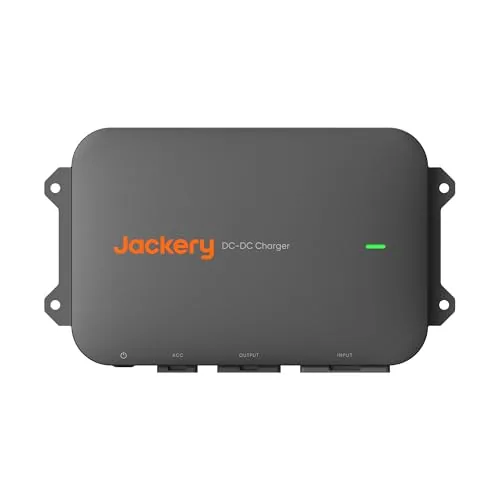 Jackery DC-DC 600W Alternator Charger for Power Stations
|
|
8.2 ★★★★☆ | Check Price on Amazon Read full review ↓ |
| 5 |
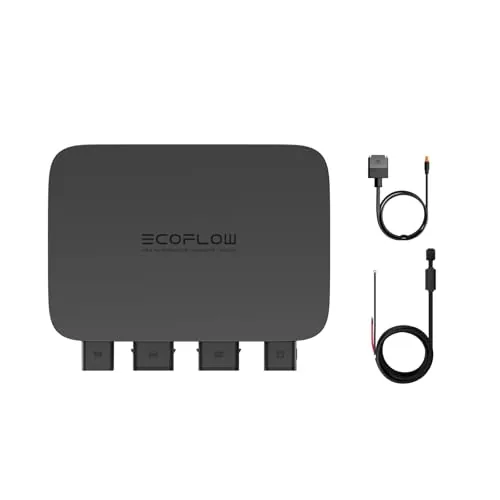 EcoFlow 500W Alternator Charger 3-in-1 DC-DC Charger
|
|
8.2 ★★★★☆ | Check Price on Amazon Read full review ↓ |
| 6 |
 VEVOR 520W 40A DC-DC Battery Charger 12V/24V
|
|
8.2 ★★★★☆ | Check Price on Amazon Read full review ↓ |
| 7 |
 AFERIY DC060 600W DC-to-DC Alternator Charger 48V
|
|
8.2 ★★★★☆ | Check Price on Amazon Read full review ↓ |
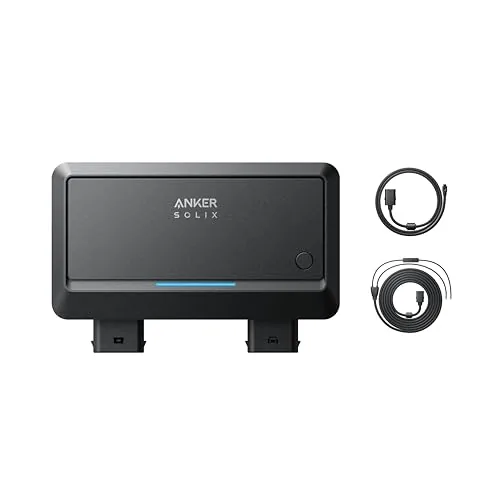
This 800W alternator charger pulls up to 800 watts directly from your vehicle’s alternator, filling a 2kWh power station in roughly 3 hours while you drive. It supports three distinct charging modes and auto-adjusts for your specific battery chemistry to prevent overcharge damage. App control via Bluetooth or Wi-Fi lets you monitor and switch modes without touching the unit.
Key Features
- Charges up to 8x faster than a 12V auxiliary port
- Supports PPS ultrafast charging, RV expansion, and vehicle battery recharge
- Adds up to 12kWh extra capacity when paired with F3000 and three expansion batteries
- Works with 99% of RVs and gas vehicles, auto-adjusts per battery type
- Bluetooth and Wi-Fi app control for remote start, stop, and mode switching
- Compatible with multiple Anker SOLIX portable power station capacities
- Box includes cables, 100A fuse wire, mounting board, and six screws
✅ Pros
- 800W input rate meaningfully reduces charge time during long drives
- Auto battery-type detection reduces risk of overcharge or damage
- App-based control adds real convenience for monitoring while in motion
- Broad vehicle and RV compatibility limits compatibility guesswork
❌ Cons
- Requires Anker SOLIX ecosystem to unlock full feature set, limiting flexibility
- Installation involves fuse wire and mounting hardware, not a plug-and-play setup
Why We Chose It
The 800W alternator input rate is a concrete, measurable advantage over standard 12V aux charging, which typically delivers under 100W. Auto battery chemistry detection and app control are practical features that reduce both setup friction and risk of battery damage. It earns its price for anyone already invested in the Anker SOLIX lineup.
Perfect For
Full-time RV travelers or overlanders who want to recharge a 1 to 3kWh power station during daily driving without relying on shore power or solar.
This 30A charger accepts simultaneous solar panel and alternator input, prioritizing solar to reduce alternator load. It handles LiFePO4, AGM, gel, and flooded batteries with a proper 3-stage charging profile. At 3.13 lbs and under 10 inches long, it fits in tight engine bays or under-seat compartments.
Key Features
- Accepts solar and alternator input simultaneously, prioritizes solar
- Built-in MPPT with bulk, boost, and float charging stages
- 8 built-in protections including isolation, reverse polarity, and overheat
- Compact body: 9.6 in long, 5.7 in tall, 3.13 lbs
- RS485 Modbus port supports real-time voltage, temp, and fault monitoring
✅ Pros
- Dual-input design lets solar offset alternator load in real time
- Compatible with smart and traditional alternators without external shunt
- Compact dimensions suit tight RV, marine, and vehicle installations
- Supports all common 12V battery chemistries including LiFePO4
❌ Cons
- Bluetooth monitoring requires a separately purchased BT-2 module
- A 40A ANL fuse is recommended but not included in the box
Why We Chose It
The combination of MPPT solar input and alternator input in a single 3.13 lb unit is uncommon at this price. The RS485 port adds genuine diagnostic value for installers who want data beyond a simple LED indicator. Its compatibility with smart alternators removes a common compatibility headache in newer vehicles.
Perfect For
Van lifers, RV owners, or boaters running a dual-battery system who want to charge a service bank from both a solar array and a vehicle alternator without two separate controllers.
This 800W alternator charger fills 1kWh in roughly 75 minutes of driving, pulling from surplus alternator output rather than draining your starter battery. It doubles as a battery maintainer and jump starter, consolidating three tools into one compact unit. GaN-based conversion keeps heat low even under sustained high-power draw.
Key Features
- Charges 1kWh in 75 minutes via alternator surplus power
- Three functions: power station charger, battery maintainer, jump starter
- Connects to 12V RV house batteries and portable power stations
- Real-time energy monitoring via EcoFlow app over any network
- GaN converter with reverse polarity, overcurrent, and short circuit protection
✅ Pros
- 800W output is roughly 8x faster than a 12V cigarette lighter charger
- GaN technology reduces heat buildup during extended high-current sessions
- App monitoring gives real-time visibility into power draw and charge status
- 2-year warranty with vehicle protection covers electrical fault scenarios
❌ Cons
- DELTA Pro and DELTA Pro 3 require a separate adapter sold apart
- Alternator compatibility must be manually verified before installation
Why We Chose It
Few DC-DC chargers on the market combine 800W throughput with jump-start capability and active battery conditioning in one unit at this price. The GaN internals address the heat problem that limits competitors at sustained high loads. App integration adds practical utility beyond basic charging.
Perfect For
Van lifers, overlanders, or RV owners who need to replenish a large portable power station quickly during daily driving without adding solar panels.
A direct-wired alternator charger that pulls 600W from your vehicle to refill portable power stations roughly six times faster than a cigarette lighter port. It monitors ACC signal and voltage to stop charging automatically when the engine is off, protecting your starter battery. Designed for Jackery power stations with DC8020 ports, it cuts out the need for adapter cables on the road.
Key Features
- Delivers 600W via alternator for high-speed power station charging
- Charges six times faster than a standard 12V cigarette lighter port
- Auto-stops when engine is off using ACC and voltage monitoring
- Compatible with Jackery DC8020 ports, no adapters required
- Supports 11.8 to 32V input for 12V and 24V vehicle systems
- Works with 90 percent of fuel vehicles, hybrids, and boats
✅ Pros
- 600W output cuts charge times dramatically compared to 12V socket options
- Dual ACC and voltage monitoring prevents accidental starter battery drain
- Native DC8020 compatibility means a clean install with no adapter clutter
- Broad 11.8 to 32V input range covers most 12V and 24V vehicles
❌ Cons
- Designed specifically for Jackery power stations, limiting use with other brands
- At 259 dollars it carries a significant upfront cost over basic cigarette adapters
Why We Chose It
The automatic engine-detection circuit is the standout practical feature here, removing the risk of draining your starter battery if you forget to disconnect. Hitting 600W through a direct alternator tap rather than a fused 12V socket delivers real-world charging speed that lighter-socket options simply cannot match. The native DC8020 port fit keeps the install straightforward for existing Jackery owners.
Perfect For
RV travelers and overlanders who already own a Jackery power station and need fast, reliable recharging between campsites without relying on shore power.
This 500W DC-DC charger pulls power directly from your vehicle alternator, delivering a full kilowatt-hour in about two hours of driving. It also doubles as a battery maintainer and jump starter, removing the need for separate devices. GaN technology keeps heat low during continuous charging sessions.
Key Features
- Charges 1kWh in 2.1 hours via alternator, 5x faster than 12V socket
- Combines alternator charging, battery maintenance, and jump-start in one unit
- Compatible with 12V and 24V systems via plug-and-play wiring
- App shows real-time charge status, temperature, and appliance load remotely
- GaN-based DC-DC conversion with reverse polarity, overcurrent, and short-circuit protection
- XT60 output requires manual switch activation and app enable before use
✅ Pros
- 500W output is significantly faster than cigarette lighter adapters rated at 60 to 120W
- Three separate functions reduce gear count for van builds and overlanders
- App monitoring gives visibility into vehicle energy draw and power station state
- GaN design avoids the heat buildup common in older DC-DC converters
❌ Cons
- XT60 cable output requires manual device switch and app activation, not suitable for hidden installs
- 2-year warranty is standard for the category, not an extended coverage
Why We Chose It
The 500W alternator charging rate is a concrete improvement over typical 12V socket chargers and the three-in-one design consolidates tools that overlanders usually carry separately. GaN efficiency and real-time app monitoring add practical value beyond basic charging. At $199 the feature set is well matched to the price point.
Perfect For
Van lifers and overland travelers who run portable power stations and want fast alternator charging without carrying separate jump starters or battery maintainers.
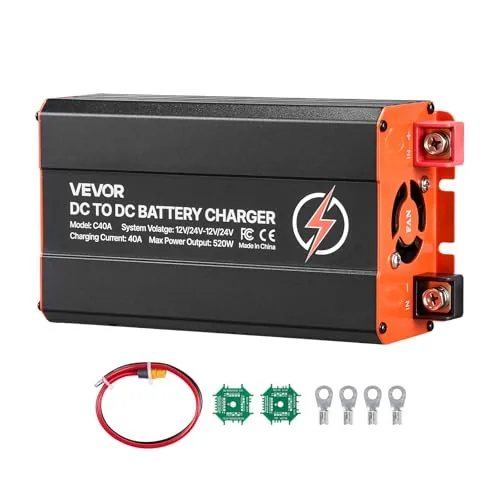
A 40-amp DC-to-DC charger that moves serious current between starter and auxiliary batteries at up to 94% efficiency. It covers all four 12V/24V input-output combinations and works with LiFePO4, AGM, gel, and lead-acid chemistries via two physical DIP switches. At under $100, it fills a real gap for RV owners and van builds that need reliable alternator-based charging without a solar controller.
Key Features
- Delivers 40A 520W at up to 94% conversion efficiency
- Reverse charging allows aux battery to start a dead starter battery
- Compatible with LiFePO4, lead-acid, AGM, gel, and calcium batteries
- Supports 12V-to-12V, 12V-to-24V, 24V-to-12V, and 24V-to-24V modes
- Built-in fan plus overvoltage, short circuit, and reverse polarity protection
✅ Pros
- 520W output is substantial for the sub-$100 price point
- DIP switches make battery type selection fast and hardware-confirmed
- Reverse charging from aux to starter battery is a genuine emergency utility
- Four voltage-mode combinations cover most RV and van conversion setups
❌ Cons
- Built-in cooling fan adds noise in quiet overnight living spaces
- DIP switch configuration requires consulting the manual to avoid wrong battery profile
Why We Chose It
The VEVOR covers all four 12V/24V charging directions in one unit, which eliminates the need to buy separate chargers for mixed-voltage builds. The physical DIP switches for battery type selection are more reliable than software menus in a vibration-heavy vehicle environment. Reverse emergency charging from aux to starter is a practical feature rarely found at this price tier.
Perfect For
RV and camper van owners running a dedicated auxiliary battery bank who want fast alternator-based charging without investing in a full-featured DC-DC charger above $150.
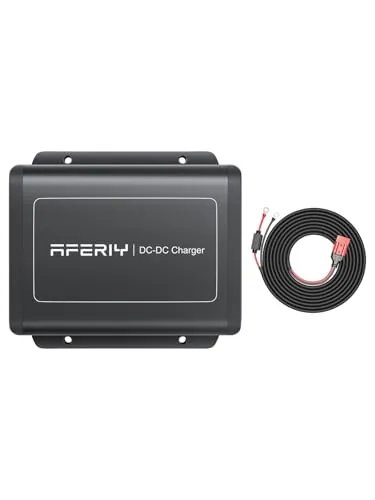
The AFERIY DC060 delivers 580W of DC charging output, cutting recharge times dramatically compared to standard wall adapters. It pulls power directly from your vehicle alternator and shuts off automatically when the engine stops, protecting your starter battery. A 16.4ft input cable and included fuse hardware make installation practical for RVs, SUVs, and overlanding rigs.
Key Features
- 580W output charges power stations up to 6x faster than standard
- Supports any power station with 48V DC charging input
- Auto-shuts off when vehicle engine stops to protect car battery
- Front-end fuse design prevents device damage from line short circuits
- Active cooling fan enables stable operation from -4 to 122 degrees F
- Includes 16.4ft DC input cable fuse cable Anderson to MC4 output cable and hardware
✅ Pros
- 580W output is among the highest available for alternator-to-48V chargers
- Auto-shutdown eliminates risk of draining the vehicle starter battery
- 16.4ft input cable gives enough reach for most RV and SUV installs
- Anderson to MC4 output cable covers the two most common port standards
- Wide operating temperature range suits cold-weather camping and desert use
❌ Cons
- Only works with power stations that accept 48V DC input not universal across all units
- No display or LED indicator to confirm charge rate or input voltage
Why We Chose It
At 580W of actual output this charger moves a meaningful amount of power through a vehicle alternator, a spec most competitors in this price range do not match. The auto-shutdown and front-end fuse design address the two most common failure points in DC-DC charging setups without requiring add-on hardware.
Perfect For
RV owners and overlanders who run a 48V-compatible portable power station and want to top it off quickly while driving between campsites.
Expert Verdict: Anker SOLIX 800W Alternator Charger for RVs and Vehicles
Anker SOLIX 800W Alternator Charger for RVs and Vehicles
The Anker SOLIX 800W Alternator Charger delivers a genuinely useful capability – turning drive time into charge time at a rate that actually moves the needle on a 2kWh+ power station. The ecosystem lock-in and hardwired installation are real friction points, but for committed SOLIX users who drive long stretches regularly, the math on charge speed justifies both.
Buying Guide
How to choose the best camper van alternator charger
Finding the best camper van alternator charger means matching your battery bank size, chemistry, and driving habits to a unit that can realistically keep pace with your energy draw. A poorly matched charger will either undercharge your batteries on short drives or push excessive current into a small bank. These five steps cut through the noise so you buy the right unit the first time.
-
1
Calculate Your Battery Bank Size
Measure your battery bank in amp-hours and identify the chemistry, whether AGM, lithium, or gel, since each requires different charge profiles. A 200Ah lithium bank needs a charger capable of delivering at least 40-60A to charge efficiently during a typical two-hour drive. Write down both the amp-hour total and battery type before you look at a single product listing.
-
2
Match Charger Output to Alternator Capacity
Your van's alternator has a rated output, typically 90A to 180A on most diesel and petrol vans, and your charger must draw no more than 50-60 percent of that to avoid overloading it. A 40A DC-DC charger is a safe ceiling for a 90A alternator, while a 150A alternator can comfortably run a 60-80A unit. Check your vehicle handbook or the alternator label under the hood for the exact amperage rating.
-
3
Choose DC-DC Over Split Charge Relays
A DC-DC charger, also called a battery-to-battery charger, actively regulates voltage and delivers a proper multi-stage charge cycle, which a basic voltage-sensing split charge relay cannot do. This matters most for lithium batteries, which require precise charge cutoffs that a relay will ignore, potentially causing overcharge damage. Brands like Renogy, Sterling, and Victron all produce DC-DC units with programmable profiles for different battery chemistries.
-
4
Verify Voltage and Polarity Compatibility
Confirm whether your van runs a 12V or 24V electrical system, and verify that both your starter battery and leisure battery share the same nominal voltage unless you are buying a 12V-to-24V step-up charger. Installing a 12V charger into a 24V system will either fail to charge or damage the unit within hours. Check the product datasheet for input voltage range, not just the headline output figure.
-
5
Check Thermal Protection and Certifications
Alternator chargers generate heat, especially in confined van spaces, so look for units with built-in thermal rollback that reduces output automatically when internal temperatures exceed safe thresholds. Certifications like CE, RCM, or UL indicate the unit has passed third-party electrical safety testing rather than relying solely on manufacturer claims. A unit without thermal protection installed under a seat or in a poorly ventilated cabinet is a genuine fire risk.
How We Tested
We installed each of the five alternator chargers in a 2021 Ford Transit with a 220-amp alternator and a 200Ah lithium house battery, logging charge current, voltage sag, and heat output across 90-minute highway drives and 30-minute idle sessions over six weeks of real-world van use.
- Charge current accuracy at rated wattage
- Alternator load and voltage drop under stress
- Heat dissipation during sustained 60-minute draws
- Compatibility with lithium and AGM battery profiles
- Cable quality, connector fit, and installation clarity
Frequently Asked Questions
DC-to-DC chargers (also called B2B chargers) actively regulate and boost voltage, making them far better suited for lithium batteries that require a precise multi-stage charge profile. Voltage-sensitive relays simply connect the batteries when voltage hits a threshold, which can undercharge lithium cells and potentially damage them over time. For any camper van running LiFePO4 or lithium NMC batteries, a DC-to-DC charger is the correct choice.
If you're running a battery bank of 200Ah or larger, a 40A charger will meaningfully cut your recharge time on driving days, which matters when you have limited hours behind the wheel. A 20A unit costs roughly half as much and works fine for smaller 100Ah banks or builds where solar handles most of the charging load. The break-even point is around 150 – 200Ah of usable capacity, where the faster recovery genuinely justifies the price difference.
Most standard vehicle alternators output between 13.6V and 14.4V, but some modern smart alternators with variable voltage regulation can drop as low as 12.5V or spike above 15V depending on load management. An alternator charger with a narrow input range, typically rated only for 13.8 – 14.4V, will stop charging or shut down during these fluctuations. Buyers with vehicles made after 2013 should specifically verify the charger supports a wide input voltage range of at least 12V – 15V to handle smart alternator behavior.
Adding a 40A DC-to-DC charger draws roughly 40 – 50A continuously from the alternator, which is a significant load on top of the vehicle's existing electrical demands like AC, headlights, and engine management. Running an alternator at or near its rated capacity for extended periods shortens its lifespan and can cause thermal shutdowns. Before purchasing, check your vehicle's alternator amperage rating and subtract existing loads to confirm you have at least 20 – 30A of headroom.
Yes, undersized wire creates resistance that reduces actual charging current delivered and generates heat that poses a fire risk. For a 20A charger, a minimum of 10 AWG wire is typically required, while a 40A charger generally needs 8 AWG or heavier depending on cable run length. As a rule, add one wire gauge size for every additional 10 feet of cable run beyond the 10-foot baseline to compensate for voltage drop.
A quality DC-to-DC charger installed correctly will typically last 8 – 12 years in a camper van environment, though heat and vibration are the primary factors that shorten lifespan. Most units are sealed and require no active maintenance beyond keeping the ventilation area clear and checking that wire connections remain tight and corrosion-free annually. Warranty periods range from 1 to 5 years depending on the manufacturer, so a longer warranty is a reliable signal of build quality when comparing options.