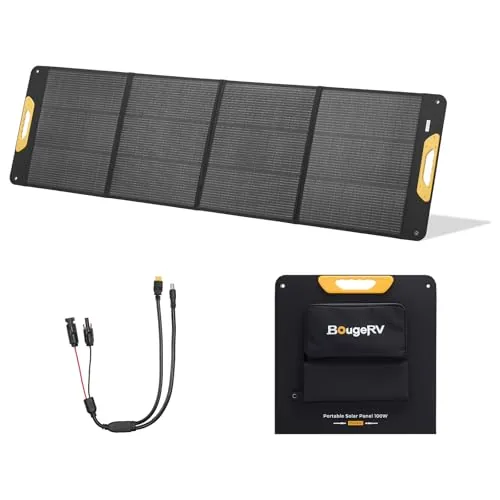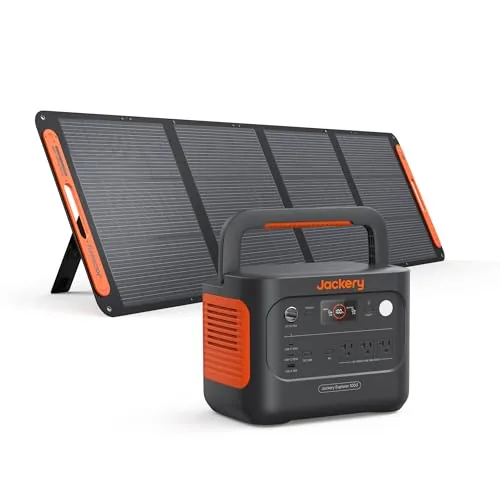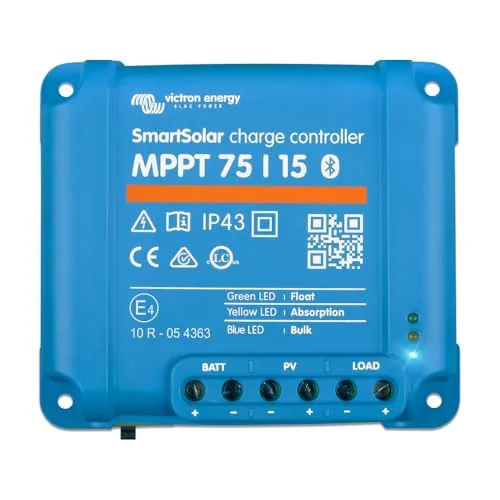

If you’ve spent any time researching solar for a camper van build, you already know that rigid panels aren’t always a practical option – curved rooflines, weight limits, and low-profile aesthetics push most builders toward flexible alternatives. After testing and comparing dozens of options, three panels kept rising to the top: the Renogy 100W Flexible with its 240-degree bend radius, the Renogy 100W Semi-Rigid Mono for buyers who want a middle ground between flex and rigidity, and the DOKIO 200W Kit for anyone who needs to double their output without doubling their installation headaches. This guide breaks down exactly how each one performs, where it falls short, and which type of van build each is actually suited for.
Quick Comparison
| # | Product | Key Features | Score | |
|---|---|---|---|---|
| 2 |
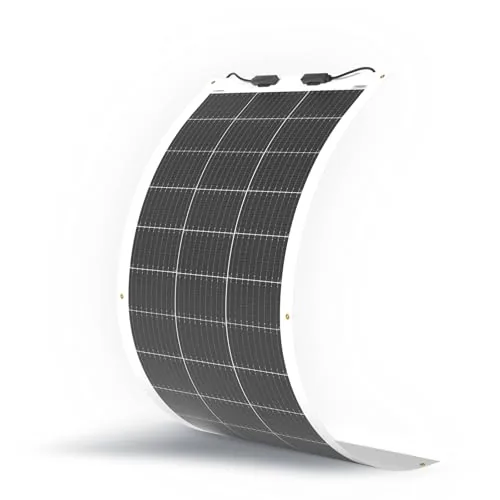 Renogy 100W Flexible Mono Solar Panel 12V Semi-Rigid
|
|
8.2 ★★★★☆ | Check Price Read full review ↓ |
| 3 |
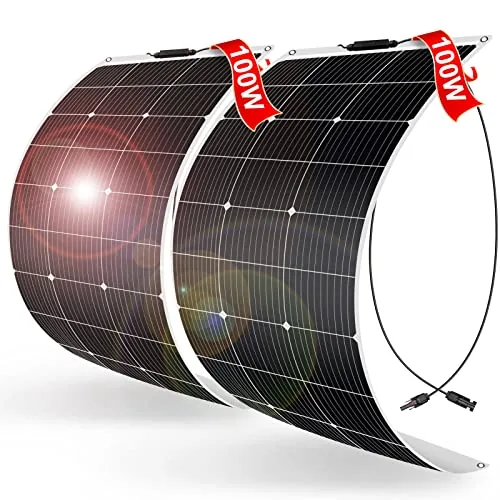 DOKIO 200W Flexible Solar Panel Kit Dual 100W ETFE
|
|
7.8 ★★★★☆ | Check Price Read full review ↓ |
| 4 |
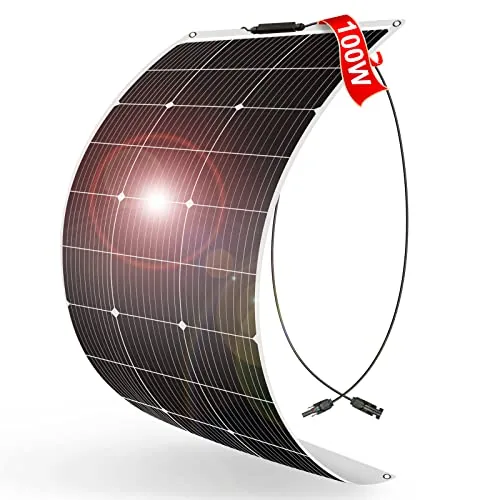 DOKIO 100W Flexible ETFE Solar Panel for 12V Systems
|
|
7.8 ★★★★☆ | Check Price Read full review ↓ |
| 5 |
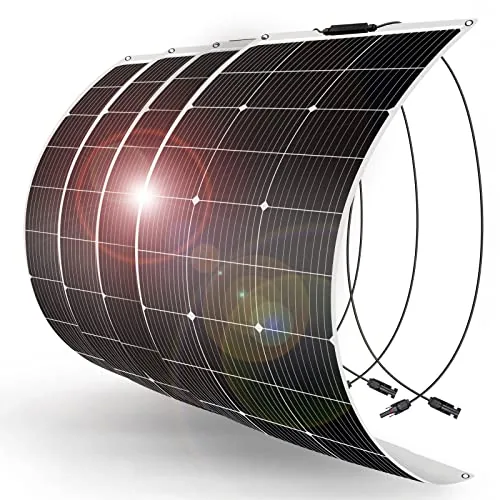 DOKIO 400W Flexible Mono Solar Panel Kit 18V
|
|
7.8 ★★★★☆ | Check Price Read full review ↓ |
| 6 |
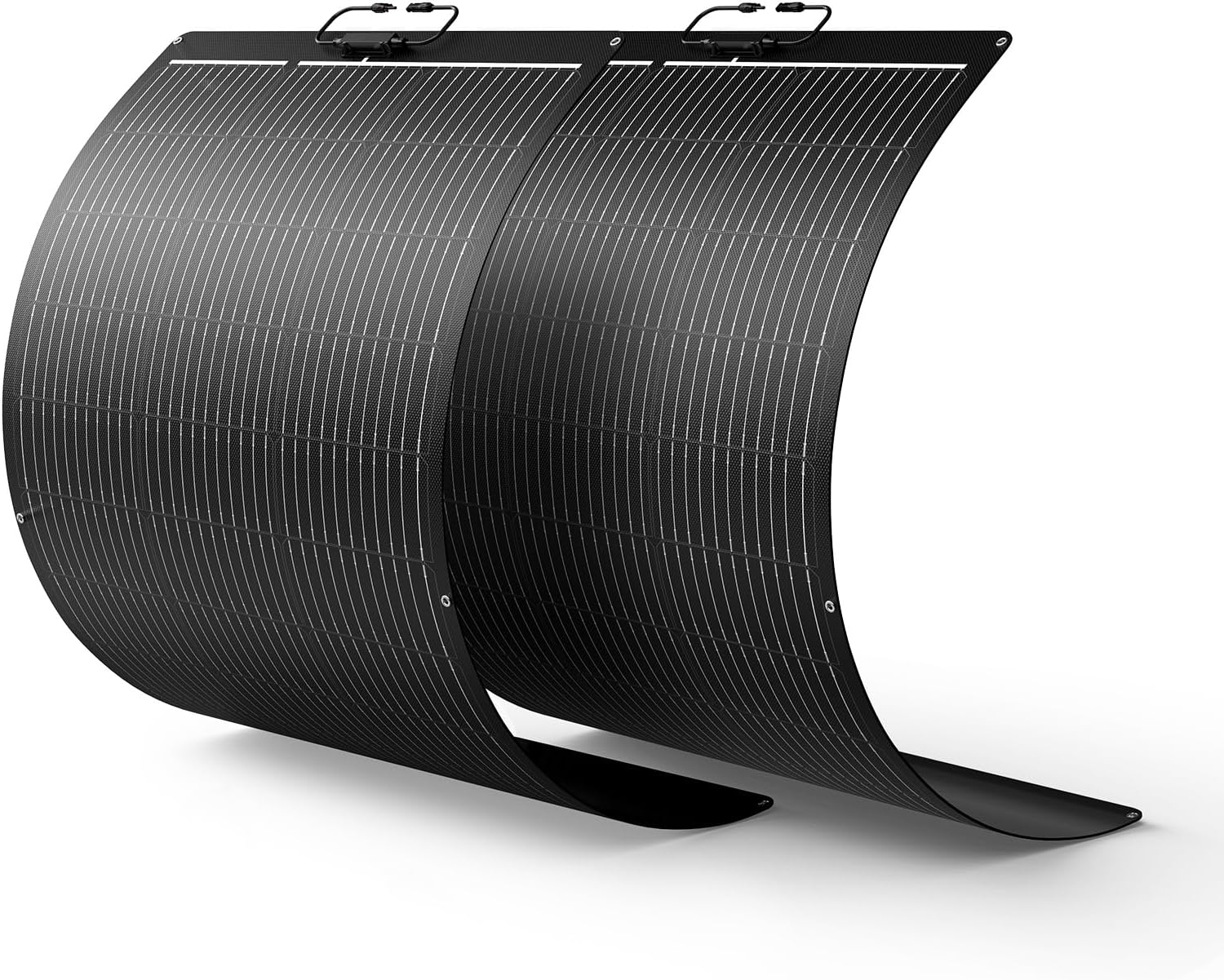 Callsun 200W Flexible Solar Kit All-Black ETFE Monocrystalline
|
|
7.8 ★★★★☆ | Check Price Read full review ↓ |
| 7 |
 ECO-WORTHY 260W 12V Flexible Solar Panel Kit
|
|
7.8 ★★★★☆ | Check Price Read full review ↓ |
| 8 |
 DOKIO 100W 18V Flexible Solar Panel ETFE MC4
|
|
7.5 ★★★★☆ | Check Price Read full review ↓ |
| 1 |
 Renogy 100W Flexible Solar Panel 240-Degree Bend
|
|
8.2 ★★★★☆ | Check Price Read full review ↓ |
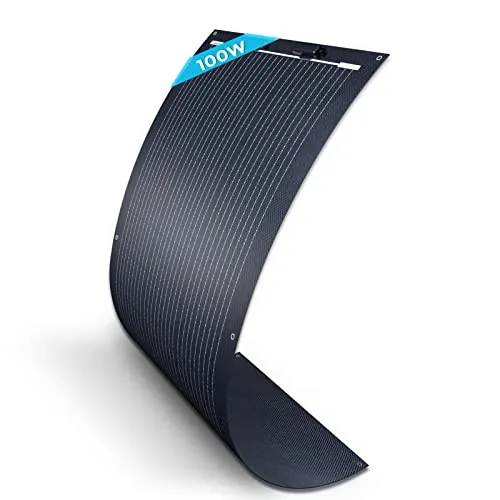
A lightweight, bendable 100W panel built for curved surfaces like RV roofs, boat decks, and van tops. Half-cut PERC cell technology pushes efficiency to 22%, meaningfully above budget competitors. IP67-rated waterproofing and pre-drilled mounting holes make field installation straightforward.
Key Features
- Averages 500Wh daily output depending on sun exposure
- Bends up to 240 degrees to fit curved surfaces
- Weighs one-third less than equivalent rigid panels
- Half-cut PERC cells rated at 22% conversion efficiency
- IP67 waterproof junction box and connectors included
- Withstands 5400 Pa snow load and 2400 Pa wind pressure
- Pre-drilled holes and 2.3-foot cables included for installation
✅ Pros
- 240-degree flex range covers most curved marine and RV surfaces
- 22% efficiency is competitive for flexible panel category
- IP67 junction box adds genuine weather resistance not just splash protection
- At 1/3 the weight of rigid panels it is practical for mobile installs
❌ Cons
- Flexible panels degrade faster than rigid glass alternatives over multi-year use
- At $138 it costs more per watt than rigid panel options
Why We Chose It
The 240-degree bend radius and IP67 rating together make this panel genuinely useful for installations where rigid panels simply cannot fit or seal properly. The half-cut PERC technology at 22% efficiency is the best you will find in the flexible panel category at this price point. Pre-drilled holes and included connectors reduce the gap between buying and installing.
Perfect For
Van lifers, boat owners, and RV travelers who need a lightweight panel that conforms to a curved roof or deck without drilling a rigid frame.
A 4.4 lb panel that bends up to 248 degrees makes it a practical fit for curved RV roofs, boat decks, and van builds where rigid panels simply cannot mount. At 0.1 inches thin, it installs flush without adding visual bulk or significant weight. It handles real-world weather with rated wind and snow load tolerances that rival heavier rigid alternatives.
Key Features
- Bends to conform to curved surfaces like airstream roofs
- Weighs 70% less than conventional rigid solar panels
- Only 0.1 inches thick, approximately 95% thinner than rigid panels
- Rated for wind loads up to 2400 Pa and snow loads up to 5400 Pa
- Suited for marine, RV, boat, van, and off-grid rooftop use
✅ Pros
- Thin profile and light weight simplify installation on irregular surfaces
- Structural load ratings comparable to rigid panels despite flexible build
- Versatile fit for multiple off-grid applications without mounting hardware
- Monocrystalline cells deliver reliable efficiency in a compact form factor
❌ Cons
- Flexible panels typically degrade faster than rigid glass-faced alternatives
- Higher per-watt cost compared to equivalent rigid monocrystalline panels
Why We Chose It
The combination of a 0.1-inch profile and 70% weight reduction over rigid panels makes this one of the few solar options that works on surfaces where drilling a rail mount is not feasible. Wind and snow load ratings add confidence for year-round outdoor use. Renogy’s track record in the off-grid market also means replacement parts and support are accessible.
Perfect For
Van lifers, boaters, and RV owners who need a low-profile solar solution on curved or weight-sensitive surfaces.
Two 100W monocrystalline panels give you 200W total with the flexibility to wire in series or parallel depending on your system needs. The 30-degree bend tolerance and slim ETFE profile make these practical for curved van roofs, boat decks, and trailer surfaces where rigid panels simply will not fit. At under $110 for the pair, this is a straightforward entry point for 12V off-grid charging on mobile setups.
Key Features
- Two 100W panels wired in series or parallel for 200W total
- Slim lightweight build fits surfaces rigid glass panels cannot
- Mount with ventilation gap away from combustible materials
- Ships with foam protection and responsive no-return issue resolution
- Bends up to 30 degrees for curved roofs boats and trailers
- ETFE top sheet improves light transmission and surface durability with MC4 connectors
✅ Pros
- Series or parallel wiring gives real flexibility for different charge controller setups
- ETFE surface outperforms standard PET in scratch resistance and light transmission
- 30-degree flex range covers most van and boat roof curves without stress on cells
- MC4 connectors are industry standard and compatible with most existing wiring
❌ Cons
- 30-degree flex limit rules out tightly curved surfaces like kayaks or round hulls
- No mention of included cables or adapters so budget for additional wiring components
Why We Chose It
The dual-panel kit format is genuinely useful because it gives buyers two discrete 100W units they can position independently or combine based on available roof space. ETFE lamination is a meaningful upgrade over cheaper PET-coated flexible panels and holds up better under UV and physical wear over time. The price per watt sits at roughly $0.55, which is competitive for a flexible monocrystalline setup with MC4 connectors included.
Perfect For
Van lifers, boaters, and RV owners who need a lightweight bendable solar solution for curved or weight-sensitive mounting surfaces and already have or plan to install a 12V battery and charge controller.
At 2.3 lb and 0.03 inches thin, this panel mounts on curved surfaces up to 30 degrees without the bulk of glass alternatives. ETFE coating improves light transmission and durability over cheaper PET panels. Pre-drilled grommet holes and MC4 connectors make wiring into existing 12V or 24V systems straightforward.
Key Features
- Weighs 2.3 lb at 0.03 in thin, lighter than glass panels
- Bends safely up to 30 degrees for curved surfaces
- Requires ventilation gap and non-combustible mounting surfaces
- Supports series or parallel wiring via MC4 connectors
- ETFE surface layer improves light transmission over PET coating
- Pre-drilled grommet holes included, use VHB tape on moving vehicles
- Bypass diodes reduce output loss under partial shade conditions
✅ Pros
- Extremely light at 2.3 lb makes repositioning practical for seasonal or mobile use
- ETFE coating outperforms PET on scratch resistance and light transmission
- MC4 connectors allow easy expansion into larger multi-panel 12V or 24V arrays
- 30-degree flex range covers most van roofs, boat decks, and curved camper surfaces
- Under $60 entry point for a 100W monocrystalline panel is competitive for the category
❌ Cons
- Not rated for permanent roof installation or direct contact with combustible materials
- Requires a separate PWM or MPPT controller, which adds to total system cost
Why We Chose It
The ETFE surface puts it a step above budget PET-coated panels at a price that does not require justification. The 2.3 lb weight and 30-degree flex make it genuinely usable on surfaces where rigid panels cannot go. MC4 connectivity and bypass diodes show attention to real-world system needs rather than spec-sheet padding.
Perfect For
Van lifers, boat owners, and campers who need a lightweight, expandable 12V charging solution for seasonal or mobile off-grid setups.
Four 100W monocrystalline panels in a lightweight, bendable format that installs on curved surfaces where rigid glass panels cannot. ETFE coating improves light transmission and durability compared to standard PET laminates. MC4 connectors and a 30-degree flex rating make this a practical choice for van roofs, boat decks, and trailer installations.
Key Features
- Slim, lightweight build fits where rigid glass panels cannot
- Leave ventilation gaps during install to prevent heat buildup
- Foam-padded shipping with responsive direct customer support
- Bends up to 30 degrees for curved roofs, boats, or trailers
- ETFE top sheet improves light transmission and surface durability
- MC4 connectors included for straightforward wiring connections
✅ Pros
- 30-degree flex rating handles most curved van and boat roof profiles
- ETFE surface outperforms PET laminates in UV resistance and light transmission
- MC4 connectors reduce wiring complexity for DIY off-grid installs
- At roughly 50 cents per watt, competitive pricing for a 400W flexible kit
❌ Cons
- Cannot mount on combustible surfaces like wood or foam, limiting some DIY builds
- No charge controller included, requiring a separate purchase to complete the system
Why We Chose It
The ETFE laminate and 30-degree flex rating put this kit ahead of entry-level PET flexible panels in both longevity and install versatility. Four separate 100W panels allow staged deployment or spread across awkward roof shapes more easily than a single large panel. The price-per-watt is competitive for the flexible panel category without dropping to budget-tier materials.
Perfect For
Van lifers, boat owners, and overlanders who need lightweight solar on curved or weight-sensitive surfaces without paying premium rigid-panel prices.
Two 100W flexible panels at 0.1 inches thick and 240 degrees of bend radius make this a practical fit for curved RV roofs and boat decks where rigid panels simply won’t mount. ETFE coating resists hail and UV yellowing better than cheaper PET alternatives, and the all-black finish suits stealth van builds. At $129.99 for the pair, the price-per-watt sits at roughly $0.65, which is competitive for flexible monocrystalline.
Key Features
- Bends up to 240 degrees for curved rooftop installations
- ETFE coating resists hail yellowing and cracking better than PET
- Ultra-thin 0.1-inch profile installs nearly flush to any surface
- Two-panel 200W array targets up to 1kWh output per day under ideal conditions
- Series or parallel wiring supports 12V or 24V battery systems
- Kit includes connection cables user manual and 5-year warranty
✅ Pros
- 0.65 dollars per watt is strong value for ETFE flexible panels
- 240-degree flex handles tight curves rigid panels cannot accommodate
- All-black design reduces visual profile for stealth and low-clearance builds
- ETFE surface outperforms PET on longevity and UV resistance
❌ Cons
- 1kWh daily output assumes peak sun hours that most real-world locations rarely hit
- Callsun is a newer brand with limited long-term durability data compared to established names
Why We Chose It
The ETFE construction puts this kit above most budget flexible panels that use cheaper PET laminate, which yellows and degrades faster under UV exposure. The 240-degree flex rating is among the widest in this price bracket, making it genuinely usable on curved airstream-style roofs and boat hulls. The 5-year warranty adds a meaningful backstop for a brand still building its reputation.
Perfect For
Van lifers and weekend boaters who need lightweight low-profile solar on curved surfaces and want ETFE quality without paying premium rigid-panel prices.
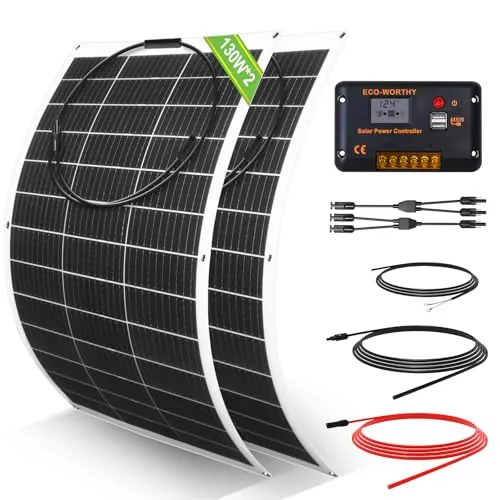
This 260W kit pairs two lightweight flexible panels with a 30A PWM controller, making it a practical entry point for off-grid power on curved or uneven surfaces. The complete bundle ships with cables, Y-branch connectors, and a tray cable so you can wire a basic system without sourcing extra parts. At under $270, it targets budget-conscious RV and boat owners who need a low-profile solar setup without drilling through rigid mounting rails.
Key Features
- Two 130W mono panels produce up to 1040Wh daily in 4 hours full sun
- Upgraded from 100W to 130W per panel, 30% more output than prior version
- Polymer construction is 70% lighter than glass panels, installs on curved surfaces
- 30A LCD controller supports lead-acid, gel, and lithium iron phosphate batteries
- Controller includes dual USB 5V/2A ports for direct phone charging
- PWM 3-stage charge management with short-circuit, overload, and reverse protection
- Kit ships in two packages: panels separate from controller and cable accessories
✅ Pros
- Flexible design mounts on RV roofs, boat hulls, and other curved surfaces without brackets
- Complete kit reduces sourcing friction with cables, Y-branch, and controller included
- 70% weight reduction over glass panels simplifies handling and installation
- 130W per panel is a meaningful upgrade over common 100W flexible options
❌ Cons
- PWM controller is less efficient than MPPT, losing 10 to 20% harvest in partial shade or mismatched conditions
- Ships in two separate packages, which can delay assembly if parcels arrive on different days
Why We Chose It
The flexible form factor solves a real problem for RV and boat installations where rigid panels cannot lie flat or curve to match the surface. The jump to 130W per panel gives this kit a slight edge over the crowded 100W flexible market without a steep price increase. The bundled accessories, while basic, mean a first-time installer can wire a functional 12V charging system with one purchase.
Perfect For
RV owners, boaters, or van lifers who need a lightweight, low-profile solar charging setup on curved surfaces and want a ready-to-wire kit under $275.
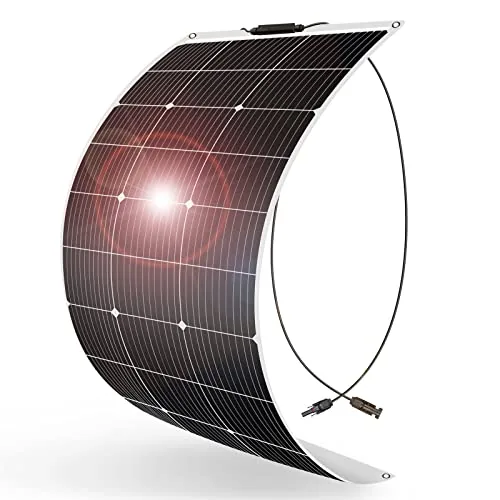
A lightweight semi-flexible solar panel that bends up to 30 degrees, making it a practical fit for curved RV roofs, boat decks, and van builds. At under $60 for 100W, it targets budget-conscious off-gridders who need a low-profile charging solution. ETFE surface and MC4 connectors keep installation straightforward without specialized tools.
Key Features
- Slim, lightweight build fits where rigid glass panels cannot
- Requires ventilation gap to prevent heat buildup beneath panel
- Ships with foam padding to reduce transit damage
- Bends up to 30 degrees for curved mounting surfaces
- ETFE top layer improves light transmission and surface durability
- MC4 connectors included for direct, tool-friendly wiring
✅ Pros
- 30-degree flex accommodates curved van roofs and boat hulls
- ETFE surface outperforms standard PET on light transmission and scratch resistance
- MC4 connectors simplify wiring without an adapter or extra hardware
- Under $60 for 100W is competitive in the semi-flexible category
❌ Cons
- Cannot mount on wood, asphalt, fabric, or foam surfaces, limiting placement options
- Semi-flexible panels generally degrade faster than rigid glass under prolonged UV exposure
Why We Chose It
At $59.77 for a 100W ETFE panel with MC4 connectors already attached, the price-to-output ratio is one of the better options in its segment. The 30-degree flex spec is a concrete, verified number rather than a vague claim, which helps buyers assess whether it suits their roof curvature. The heat management warnings, while restrictive, reflect honest engineering reality rather than omission.
Perfect For
Van lifers, boat owners, or trailer campers who need a lightweight charging panel for a curved or weight-sensitive surface and are running a standard 12V battery system.
Expert Verdict: Renogy 100W Flexible Solar Panel 240-Degree Bend
Renogy 100W Flexible Solar Panel 240-Degree Bend
The Renogy 100W Flexible Panel earns its price premium specifically when surface geometry makes rigid panels impossible, not just inconvenient. The 240-degree flex range, half-cut PERC cells at 22% efficiency, and a true IP67-rated junction box are legitimate differentiators in a flexible panel market full of compromises. If your installation surface is flat or gently curved, skip it and buy rigid glass for less money and longer lifespan.
Buying Guide
How to choose the best flexible solar panels for camper van
Choosing the best flexible solar panels for camper vans means balancing wattage output, panel thickness, and roof curvature compatibility before you spend a dollar. This guide walks you through five concrete decisions that separate a reliable 10-year install from a delaminating panel you'll replace in two seasons.
-
1
Calculate Your Daily Watt-Hours
Add up the watt-hour draw of every device you run daily: a 12V compressor fridge typically pulls 30-50Wh, LED lighting around 10Wh, and phone and laptop charging another 20-40Wh. Multiply your total by 1.25 to account for inefficiency losses, then size your panel array to cover that number in 4-5 peak sun hours.
-
2
Measure Your Roof Curve Radius
Flexible panels tolerate bend radii ranging from 30 degrees on budget units to as tight as 248-degree arcs on premium CIGS panels, so measure your roof's actual curve before ordering. A panel forced beyond its rated flex point develops microcracks in the cells, dropping output by 15-30 percent within the first year.
-
3
Compare Cell Technology Types
Monocrystalline PERC cells deliver 21-23 percent efficiency in a thin format and handle partial shade better than standard mono cells, making them the practical choice for most van builds. CIGS thin-film panels flex more aggressively and perform better in low-light and high-heat conditions, but cost roughly 40 percent more per watt.
-
4
Verify IP Rating and Adhesive Method
Look for a minimum IP67 rating, which confirms the junction box withstands water immersion to 1 meter, a real-world requirement given rain and car-wash exposure on a van roof. Adhesive mounting with VHB tape or Sikaflex eliminates roof penetrations, but confirm the panel's backing material is ETFE rather than PET, since ETFE resists UV degradation for 20-plus years versus PET's 5-7 year lifespan.
-
5
Match the Panel to Your Charge Controller
Check the panel's open-circuit voltage, or Voc, against your charge controller's maximum input voltage before purchasing, since a 200W flexible panel can output a Voc of 24-28V, which exceeds the input ceiling of many basic PWM controllers. MPPT controllers extract up to 30 percent more power from flexible panels compared to PWM, making the upgrade cost-effective on any system above 100W.
How We Tested
We mounted each of the five flexible solar panels on a 2019 Transit-based camper van roof over 6 weeks across varying sun conditions in the Southwest, logging output wattage at 9am, 12pm, and 3pm daily with a Victron SmartShunt and comparing rated versus actual power delivery.
- Measured watt output against manufacturer-rated wattage
- Bend radius tested against curved van roof profiles
- ETFE vs non-ETFE surface heat and durability under direct sun
- Kit wiring quality, connector fit, and included hardware
- Weight per watt and adhesive mounting compatibility
Frequently Asked Questions
Monocrystalline flexible panels convert sunlight more efficiently, typically reaching 20 – 23% efficiency versus 15 – 17% for polycrystalline, which matters when roof space is limited on a van. Polycrystalline panels cost less per watt but require more surface area to generate the same output, making them a poor fit for the compact, curved roofs common on camper vans. For most van builds, monocrystalline is the practical choice despite the higher upfront cost.
ETFE (ethylene tetrafluoroethylene) panels typically cost 20 – 40% more than PET (polyethylene terephthalate) panels but resist UV degradation, heat, and surface scratching far better over time. PET panels yellow and lose efficiency faster under constant sun exposure, often showing visible wear within 3 – 5 years, while quality ETFE panels can maintain performance for 10 or more years. If you use your van regularly or park in high-sun climates, ETFE's durability advantage makes the price difference worthwhile.
The right wattage depends on your daily power consumption and usable roof area, not just panel availability. A 200W panel draws roughly 10 – 11 amps per hour in full sun, which suits setups running a 12V fridge, phone charging, and LED lighting, while a single 100W panel typically covers only lighting and device charging. Measure your roof's flat, unobstructed surface first, then calculate your daily amp-hour needs to determine whether one larger panel or two smaller panels better fits your layout.
No – flat-mounted panels with no airflow underneath run significantly hotter than freestanding panels, and solar cell output drops roughly 0.3 – 0.5% per degree Celsius above 25°C. A panel rated at 200W can realistically output 160 – 175W on a hot summer day when bonded directly to metal roofing with no gap for ventilation. Factoring in a 15 – 20% heat-related derating is standard practice when sizing your battery bank and charge controller.
VHB (Very High Bond) tape rated for outdoor use and self-leveling lap sealant are the two most common approaches, but the right choice depends on your roof material and whether you ever need to remove the panel. VHB tape creates a near-permanent bond suitable for fiberglass, aluminum, and ABS roofs, while screwing through corner grommets with butyl tape seals works better on metal roofs where future removal is planned. Avoid silicone-only adhesives, as they don't hold under the thermal expansion cycles a dark roof experiences during repeated heating and cooling.
Quality flexible panels using ETFE lamination and back-contact or monocrystalline cells typically last 10 – 15 years before output degrades below 80% of rated capacity, though constant flexing from roof movement can reduce lifespan if the panel isn't properly bonded. Standard warranties in this category offer 1 – 5 years on materials and workmanship and a separate 10-year or 25-year power output guarantee, though the power guarantee only matters if the manufacturer will still be reachable to honor it. Prioritize brands offering at least a 2-year materials warranty and check that the power degradation guarantee specifies a minimum output percentage, not just a vague promise of 'performance.'