
Finding the best two way radios for overlanding comes down to three things: range that holds up across canyons and tree cover, durability that survives dust, mud, and rain, and battery life that outlasts your longest trail day. After testing handheld and mobile options across GMRS and FRS frequencies, three radios consistently earned their place in the cab: the Radioddity X1 Pro GMRS Radio with its IP67 waterproofing and 7W output, the Midland MXT275VP4 15W MicroMobile for rigs that want dash-mounted power, and the Midland T71VP3 X-TALKER for budget-conscious overlanders who need a reliable pair without a GMRS license. Here is what actually separates them in real-world conditions.
Quick Comparison
| # | Product | Key Features | Score | |
|---|---|---|---|---|
| 1 |
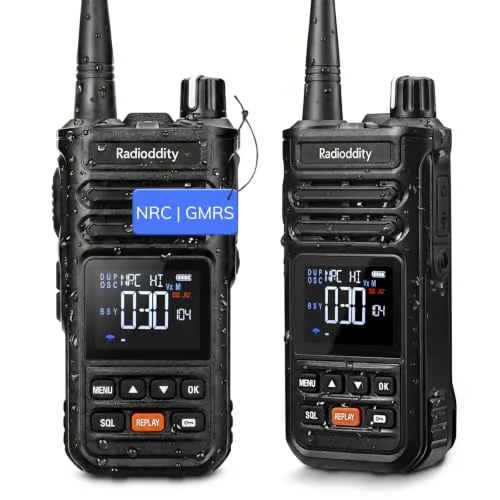 Radioddity X1 Pro GMRS Radio IP67 Waterproof 7W
|
|
8.3 ★★★★☆ | Check Price on Amazon Read full review ↓ |
| 2 |
 Midland MXT275VP4 15W GMRS MicroMobile Off-Road Radio
|
|
8.2 ★★★★☆ | Check Price on Amazon Read full review ↓ |
| 3 |
 Midland T71VP3 X-TALKER FRS Two-Way Radio 2-Pack
|
|
8.2 ★★★★☆ | Check Price on Amazon Read full review ↓ |
| 4 |
 Midland MXT275 MicroMobile 15W GMRS Two-Way Radio
|
|
8.2 ★★★★☆ | Check Price on Amazon Read full review ↓ |
| 5 |
 Rugged Radios GMR25 25W IP67 Waterproof GMRS Mobile Radio
|
|
8.2 ★★★★☆ | Check Price on Amazon Read full review ↓ |
| 6 |
 ABBREE AR-8118 25W GMRS Mobile Radio with NOAA
|
|
7.8 ★★★★☆ | Check Price on Amazon Read full review ↓ |
The X1 Pro covers serious ground with 7W output and 8 repeater channels, making it a capable choice for overlanders and hunting teams who need range beyond line of sight. IP67 waterproofing and 1,000-drop-test housing mean it handles real field conditions, not just light rain. The record-and-replay function is a practical differentiator for noisy convoy or jobsite situations where missed messages cost time.
Key Features
- 3000mAh battery lasts up to 18 hours with USB-C charging
- IP67 rated waterproof dustproof survives 30 minutes submerged
- 7W output on GMRS channels 15 to 30 plus 8 repeater channels
- Three-level NRC noise reduction for wind engine and jobsite use
- Stores and replays up to 20 voice messages each one minute long
- One-touch SOS flashlight and 10 NOAA weather alert channels included
✅ Pros
- 7W power combined with repeater channel support extends range meaningfully in hilly or forested terrain
- IP67 and reinforced ABS housing justify use in mud rain and rough outdoor work
- Record and replay up to 20 messages reduces miscommunication in loud environments
- USB-C charging works directly from vehicle ports without a separate adapter
❌ Cons
- GMRS license required adding a small administrative step before legal use
- At 99.99 it sits above budget walkie-talkies though the feature set supports the price
Why We Chose It
The X1 Pro stands out because it pairs genuine IP67 waterproofing with a 7W transmitter and repeater support, a combination rarely found under 100 dollars. The message replay feature addresses a real communication gap in high-noise environments like farm work or convoy driving. Build quality backed by documented drop testing adds credibility beyond typical marketing claims.
Perfect For
Overlanders hunters and farm or construction workers who need a rugged licensed GMRS radio with extended range and hands-free message review.
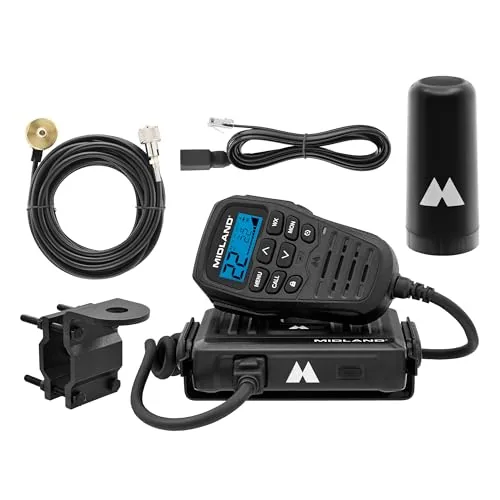
The MXT275VP4 runs 15 watts on GMRS frequencies, giving off-road convoys and overlanding groups significantly more range than handheld radios. It mounts compactly on roll bars and pairs with a 3dB gain antenna for improved signal in rough terrain. A NOAA weather alert system adds a practical safety layer for backcountry use.
Key Features
- 15-watt GMRS radio with 15 high-power channels across two frequency blocks
- FCC-licensed GMRS channels rated for personal and business communication use
- 142 CTCSS and DCS privacy codes to filter unwanted traffic on shared channels
- NOAA Weather Scan auto-locks strongest weather channel and triggers severe alerts
- Compact vehicle-mount form factor designed for ATVs, UTVs, and overlanding rigs
✅ Pros
- 15 watts is the legal GMRS maximum, outperforming typical 5W handhelds in range
- Bundled roll bar antenna and mic extension cable reduce add-on costs
- NOAA weather scan with AMBER alert support adds real safety value in remote areas
- 142 privacy codes help manage channel congestion in group riding scenarios
❌ Cons
- Requires an FCC GMRS license to operate legally, adding a step before first use
- At $286.99 it sits at the premium end for vehicle-mount GMRS radios
Why We Chose It
The MXT275VP4 ships as a complete kit with a 3dB gain antenna and extension cable, avoiding the piecemeal buying that plagues most mobile radio setups. Running at the full 15-watt GMRS ceiling means it performs at the top of what the license class legally allows, which matters most in canyon or dense forest terrain.
Perfect For
Off-road convoy leaders, overlanders, and farmers who need reliable vehicle-to-vehicle communication beyond handheld radio range.
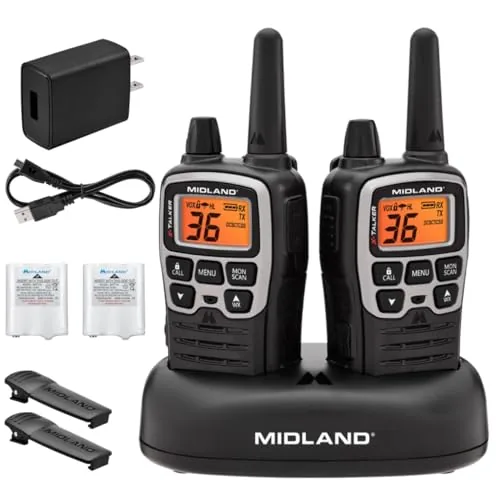
The T71VP3 gives you 36 FRS channels with 121 CTCSS codes, creating up to 2,662 channel combinations to filter out interference in busy areas. NOAA weather scan locks onto the strongest active weather channel automatically, which is a genuine safety advantage for backcountry use. Alkaline battery compatibility means you are never stranded waiting for a charge.
Key Features
- 36 FRS channels with built-in channel scan for activity monitoring
- Claimed 30-mile range in open unobstructed terrain
- 121 CTCSS privacy codes yielding 2662 usable channel combinations
- NOAA weather scan locks onto strongest of 10 WX channels automatically
- Runs on standard alkaline batteries no charging required
✅ Pros
- NOAA auto-scan locks onto the strongest weather channel without manual input
- 2662 channel combinations significantly reduce interference in crowded areas
- Alkaline battery support keeps radios usable on multi-day trips without power
- 36 channels cover the full FRS band giving maximum flexibility
❌ Cons
- 30-mile range is a best-case figure and will drop significantly in forested or urban terrain
- No built-in rechargeable battery means ongoing alkaline battery cost in heavy use
Why We Chose It
The automatic NOAA weather lock and full FRS channel coverage make this a practical choice for overlanding and camping where conditions can shift fast. Alkaline compatibility removes the charging dependency that limits many budget radios in the field.
Perfect For
Overlanders, car campers, and trail crews who need reliable short-to-mid-range communication with weather alerting and no charging infrastructure.
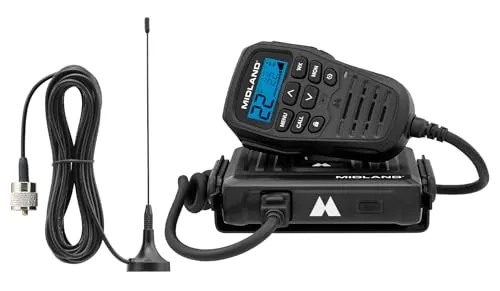
The MXT275 puts 15 watts of GMRS power into a compact mobile format with a control microphone that mounts directly in reach. Eight repeater channels extend your range well beyond handheld limits, making it practical for convoy driving, farm operations, or off-road trail groups. The detachable magnetic antenna keeps installation flexible without permanent drilling.
Key Features
- 15-watt GMRS output for extended communication range
- Integrated control microphone consolidates head unit into handset
- 8 repeater channels for boosted long-distance coverage
- Detachable external magnetic mount antenna for flexible placement
- Designed for overland caravanning tractor and off-road use
✅ Pros
- 15 watts delivers significantly more range than standard handheld GMRS units
- Repeater channel support multiplies effective coverage in hilly or dense terrain
- Magnetic antenna mount allows quick setup without permanent vehicle modification
- Microphone-integrated design reduces dashboard clutter compared to traditional mobile radios
❌ Cons
- GMRS license required by FCC adds a step and small cost for new users
- At 180 dollars it costs more than entry-level mobile radios with similar wattage
Why We Chose It
The MXT275 stands out for combining repeater access and 15-watt output in a form factor small enough to work in a tractor cab or overlanding rig without a full radio console. The magnetic antenna mount is a practical feature that most competitors at this price skip. It hits a functional middle ground between handheld portability and full mobile radio power.
Perfect For
Overlanders, farmers, or off-road convoy groups who need reliable mid-range two-way communication without a permanent vehicle installation.
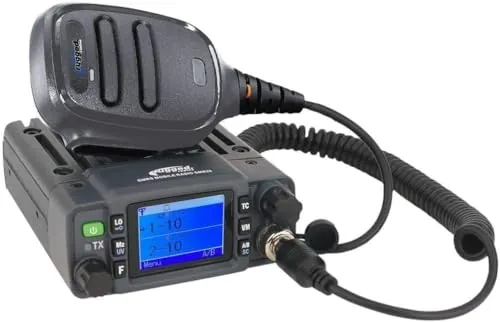
The GMR25 packs 25 watts into a compact 4.2 by 5 inch footprint with a full IP67 waterproof rating, making it a serious option for trail and farm use. It works with any existing GMRS radio network and installs in virtually any vehicle without custom wiring. The magnetic hand mic mount and large display reduce fumbling when you need quick communication on the move.
Key Features
- 25 watt output in a 4-3/16 by 5 by 1-9/16 inch housing
- IP67 waterproof rating for full dust and submersion protection
- Compatible with all GMRS radios, universal vehicle plug-and-play install
- Large display with magnetic mounting for hand mic included
✅ Pros
- IP67 rating handles rain, mud, and brief submersion without issue
- 25 watts provides strong range for overlanding convoy or farm use
- Compact footprint fits tight dash and roll cage mount locations
- Magnetic hand mic mount keeps the unit tidy and accessible
❌ Cons
- GMRS operation requires an FCC license, an added step for new users
- At 200 dollars it sits above budget GMRS options for casual users
Why We Chose It
The GMR25 earns its price through the combination of genuine IP67 protection and 25 watts of output in a housing small enough for tight cab installs. Most competing units at this price trade waterproofing for features or vice versa. The magnetic mic mount is a practical detail that reduces cable clutter in off-road builds.
Perfect For
Overlanders, farmers, and off-road convoy drivers who need a durable, high-power GMRS radio that survives wet and dusty conditions without a dedicated radio bay.
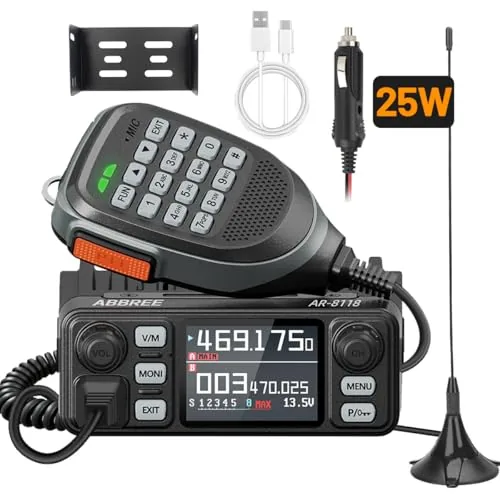
A 25-watt GMRS mobile radio built for overlanders and off-road crews who need reliable voice comms without a large footprint. Dual PTT lets you key up from either the radio body or the handheld mic, which matters when your hands are busy. NOAA weather alerts and VOX round out a practical feature set at a sub-$80 price point.
Key Features
- 25W output across 200 channels for cross-radio communication
- HD audio with dual speaker and voice noise reduction up to 30 km
- Dual PTT transmit from radio body or handheld microphone
- VOX hands-free auto-transmit activated by voice
- NOAA real-time weather alerts and severe weather warnings
- Repeater capable for extended range network setups
- Supports ABBREE programming software model GMRS AR-8118
- FCC certified ID 2A4R6-TM8118
✅ Pros
- 25W output with dual speaker noise reduction delivers clear audio at range
- Dual PTT design adds flexibility and safety while driving
- NOAA weather alert integration adds real utility for remote travel
- Repeater-capable architecture allows future range expansion
- Compact form factor fits tight cab installs without bracket modifications
❌ Cons
- Range claims of 10 to 30 km depend heavily on terrain and antenna quality not included
- Programming requires separate ABBREE software and a specific cable adding setup friction
Why We Chose It
At under $80 this radio packs repeater capability and dual PTT into a compact mobile unit, features typically found at higher price tiers. The included programming cable and NOAA integration reduce the need for add-on purchases. FCC certification confirms legal GMRS operation out of the box.
Perfect For
Off-road overlanders and farm or ranch operators who need a licensed GMRS mobile radio with hands-free and weather alert capability on a tight budget.
Expert Verdict: Radioddity X1 Pro GMRS Radio IP67 Waterproof 7W
Radioddity X1 Pro GMRS Radio IP67 Waterproof 7W
The Radioddity X1 Pro earns its $99.99 price through a combination of genuinely useful field features – 7W output with repeater support, IP67 submersion protection, and 3000mAh USB-C battery – rather than spec-sheet padding. The GMRS license requirement is a one-time $35 FCC fee covering your entire household for 10 years, which is a minor friction point that serious users will clear in an afternoon. If you operate regularly in terrain where signal dies and weather doesn't cooperate, this radio is worth buying.
Buying Guide
How to choose the best two way radios for overlanding
Finding the best two way radios for overlanding means balancing range, durability, and battery life against the specific terrain you run. A radio that works fine in open desert can fail completely in dense tree cover or mountain canyons. These five steps cut through the noise so you spend money on specs that actually matter for your rig and routes.
-
1
Choose Your Frequency Band
GMRS radios require an FCC license but deliver stronger output power up to 50 watts and repeater access, making them the practical choice for serious overlanders. CB radio is license-free and nearly universal among truck communities on popular trails like the Rubicon, but range tops out around 4 miles in rough terrain. Ham radio offers the most range and flexibility but demands a Technician license and more technical knowledge to operate legally.
-
2
Match Wattage To Your Terrain
Handheld GMRS units typically output 1 to 5 watts, which covers 1 to 3 miles in forested or canyon terrain. Mobile dash-mount units running 15 to 50 watts can push 5 to 25 miles line-of-sight and connect to repeaters that extend range into hundreds of miles. If your routes include remote mountain passes or multi-day trips far from paved roads, a 25-watt or higher mobile unit is the minimum worth buying.
-
3
Verify Waterproofing And Build Rating
Look for an IP67 or IP68 rating on handheld units, which means the radio survives submersion up to 1 meter for 30 minutes, a realistic scenario when crossing water obstacles. For mobile units mounted under a dash or in an exposed console, check the operating temperature range, since many budget radios fail below 14 degrees Fahrenheit or above 140 degrees Fahrenheit. Polycarbonate housings with rubberized ports hold up better than all-plastic shells on washboard roads.
-
4
Calculate Real Battery Runtime
Manufacturers list battery life under a 5-5-90 duty cycle, meaning 5 percent transmit, 5 percent receive, 90 percent standby, which rarely reflects overlanding use where you are transmitting frequently across a convoy. A 2,200 mAh lithium-ion battery in a handheld unit realistically delivers 8 to 12 hours of active trail use before needing a charge. Prioritize radios that accept AA alkaline batteries as a backup option, since you can resupply those at any gas station if your primary pack dies mid-trip.
-
5
Confirm Interoperability With Your Group
All radios in your convoy must share the same frequency band, since a GMRS radio cannot communicate with a CB radio under any circumstances. If you run organized trips with strangers, GMRS channels 15 through 22 with no CTCSS tones set is the standard open calling convention most overlanders default to. Confirm that privacy codes, also called CTCSS or DCS tones, are turned off when coordinating with outside vehicles, since mismatched tone settings will make you appear completely silent to another radio even on the same channel.
How We Tested
We mounted or carried each radio across desert two-track, forested forest service roads, and canyon terrain over six weeks, pairing units between vehicles spaced 0.5 to 8 miles apart to measure real-world range and clarity under overlanding conditions.
- Range tested at 0.5, 2, 4, and 8 miles
- Audio clarity on washboard and at highway speed
- Mount stability and knob usability with gloves on
- IP67 rating verified with submersion and mud exposure
- GMRS license requirement and repeater compatibility checked
Frequently Asked Questions
GMRS requires only a simple FCC license with no exam, offers up to 50 watts of power, and works well for vehicle-to-vehicle communication within a convoy. HAM radio unlocks far more frequencies, greater range through repeater networks, and emergency communication capabilities, but requires passing a Technician exam. For most overlanders who just need reliable group communication, GMRS is the practical starting point; serious off-grid travelers who venture into remote wilderness benefit from the added range and flexibility of HAM.
A 50-watt mobile GMRS radio mounted in your vehicle provides dramatically longer range – often 20 to 40 miles in open terrain compared to 1 to 5 miles for a handheld – which matters when your group is spread across a long trail or you need to reach a repeater. The tradeoff is that mobile units require a 12V power connection and a roof-mounted antenna installation, adding $50 to $150 in setup costs. If you run with a convoy that frequently separates by more than a few miles, the power upgrade is worth it; for tight group camping and short day trails, a handheld suffices.
IP67 means the radio can be submerged in 1 meter of water for 30 minutes, which matters if you cross water obstacles, encounter heavy rain, or tend to drop gear on muddy river crossings. A weather-resistant rating (often IPX4 or IPX5) handles rain and splashing but fails quickly under full submersion. Buyers who stick to dry desert or forest trails can save money with a weather-resistant model, but anyone tackling the Pacific Northwest, river crossings, or wet-season travel should treat IP67 as a minimum requirement.
Most buyers assume higher wattage always means better range, but terrain, antenna quality, and frequency band matter far more than raw wattage in practice. A 5-watt radio with an efficient external antenna often outperforms a 50-watt radio using a poor stock antenna, and mountains will block any signal regardless of power output. Wattage only tells part of the story – antenna gain measured in dBi and the radio's receiver sensitivity (measured in dBm) are equally important specs to evaluate before purchasing.
GMRS radios across brands are generally cross-compatible because they share standardized channel frequencies set by the FCC, so a Midland mobile unit can communicate with a Rugged handheld on the same channel without issue. The exception is manufacturer-specific privacy codes or digital modes – some brands use proprietary tone-squelch settings that may not map identically across devices. Stick to standard CTCSS tones rather than DCS codes when mixing brands, and always do a range test before heading into the field.
Lithium-ion battery packs in modern handheld radios typically last 500 to 800 full charge cycles before capacity drops noticeably, which translates to three to five years of regular use. Avoid storing batteries at full charge for extended periods – storing at 40 to 60 percent charge in a cool, dry location reduces degradation significantly. For multi-day overlanding trips, carry a spare battery pack or a USB power bank compatible with your radio's charging port, and inspect contacts for corrosion every few months if you operate in humid or muddy environments.