
Carbon monoxide poisoning kills roughly 400 people in the U.S. every year, and the confined space of a camper van makes that risk significantly higher than in a standard home. After testing detectors across different van builds, fuel sources, and mounting positions, three units consistently stood out for camper-specific use: the Safe T Alert 25-741-BL Dual LP/CO Mini Alarm, the TOPTES CT-580 Rechargeable CO Detector with TFT Display, and the First Alert CO606 Plug-In CO Detector with Battery Backup. Each one earns its spot on this list for a different reason, so which one is right for your build depends on your power setup, your propane situation, and how you actually live in your van.
Quick Comparison
| # | Product | Key Features | Score | |
|---|---|---|---|---|
| 1 |
 Safe T Alert 25-741-BL Dual LP/CO Mini Alarm
|
|
8.2 ★★★★☆ | Check Price on Amazon Read full review ↓ |
| 2 |
 TOPTES CT-580 Rechargeable CO Detector with TFT Display
|
|
8.2 ★★★★☆ | Check Price on Amazon Read full review ↓ |
| 3 |
 First Alert CO606 Plug-In CO Detector with Battery Backup
|
|
8.2 ★★★★☆ | Check Price on Amazon Read full review ↓ |
| 4 |
 Kidde COBDL Battery CO Detector with Low-Level Alert
|
|
8.2 ★★★★☆ | Check Price on Amazon Read full review ↓ |
| 5 |
 X-Sense SC07 Combo Smoke and CO Detector 10-Year
|
|
8.2 ★★★★☆ | Check Price on Amazon Read full review ↓ |
| 6 |
 Kidde CO Detector Plug-In with Digital Display
|
|
8.2 ★★★★☆ | Check Price on Amazon Read full review ↓ |
| 7 |
 Kidde CO Detector Plug-In with Battery Backup
|
|
8.2 ★★★★☆ | Check Price on Amazon Read full review ↓ |
| 8 |
 Kidde COB Battery CO Detector Travel and Home
|
|
7.8 ★★★★☆ | Check Price on Amazon Read full review ↓ |
| 9 |
 First Alert SMICO100 Combo Smoke & CO Detector
|
|
7.5 ★★★★☆ | Check Price on Amazon Read full review ↓ |
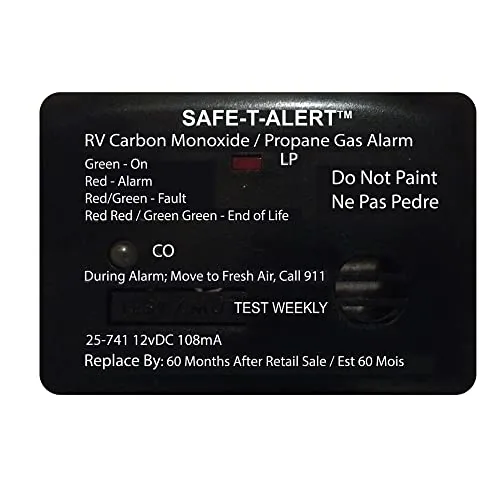
This compact 12V alarm monitors both propane and carbon monoxide simultaneously, a meaningful upgrade over single-gas detectors common in older RVs. It mounts flush to the wall and draws power directly from your rig’s 12V system, eliminating battery replacements. The mute-and-reactivate design handles false alarms without disabling protection.
Key Features
- Detects both propane gas and carbon monoxide with one unit
- Small footprint fits RVs and campers with limited wall space
- Runs on 12V DC with no batteries required
- Mute button allows ventilation while sensor stays active if gas remains
- Operates from -40F to 158F for extreme environment reliability
✅ Pros
- Dual-gas detection replaces two separate alarms in one small housing
- Hardwired 12V operation eliminates dead-battery risk during travel
- Rapid recovery sensor reactivates automatically if hazard persists after muting
- Rated for temperatures most RV owners will realistically encounter
❌ Cons
- Requires a 12V hardwire connection, not suitable for tent camping or non-electric setups
- No display or readout showing current gas concentration levels
Why We Chose It
This unit earns its place by combining two critical safety functions into a form factor small enough for Class B vans and pop-up campers where wall space is scarce. The self-resetting sensor logic is a practical engineering choice because it does not let a silenced alarm stay silent if the danger returns. Hardwired 12V power removes the most common failure point in RV alarms, which is a dead or missing battery.
Perfect For
RV owners who want to consolidate propane and CO monitoring into a single low-profile unit without relying on batteries.
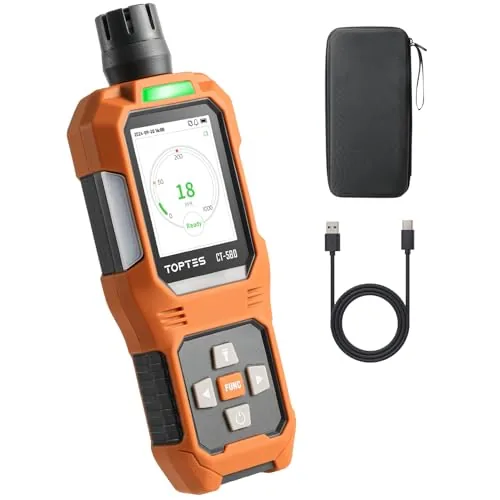
The CT-580 reads CO levels from 0 to 1000 PPM with a 0.3-second sensor response, making it one of the faster handheld detectors at this price point. It covers personal and professional needs with calibration options and alarm history logging built into the menu. Triple alarm output combining light, sound, and vibration adds reliability in loud or low-visibility environments.
Key Features
- DDS sensor detects 0 to 1000 PPM CO with 0.3-second response
- Dual alarm thresholds with history logging and gas calibration options
- Three simultaneous alarms: indicator light, audible beep, and vibration
- ABS housing with TFT color display, flashlight, and USB-C charging
- Certified by national accredited lab, includes protective case and cable
✅ Pros
- 0.3-second sensor response is fast for a handheld unit at this price
- USB-C rechargeable battery removes the need for disposable batteries
- Vibration alarm is useful in high-noise environments where audio gets missed
- Professional calibration and alarm history features add real utility for trade use
❌ Cons
- No stated battery life spec makes runtime hard to plan around
- At 59.99 it costs more than fixed-mount CO detectors with similar PPM range
Why We Chose It
Few portable CO detectors under 60 dollars offer both zero and span gas calibration alongside alarm history logging, which separates this from basic consumer units. The TFT color display gives immediate PPM readout without guessing at LED color codes. Triple alarm modes and a protective case included in the box make it a complete kit for field use.
Perfect For
Contractors, property inspectors, and safety-conscious campers who need a portable CO meter with professional calibration capability and a readable real-time display.
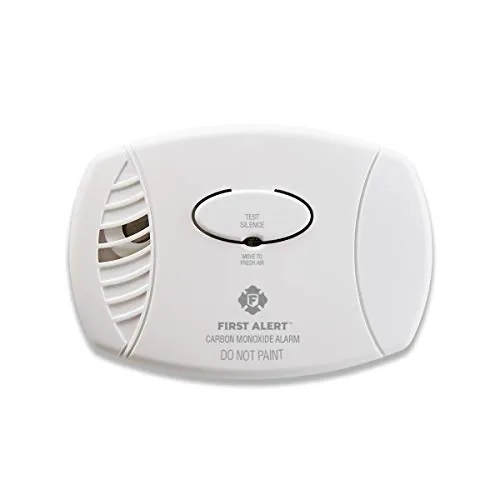
The CO606 plugs into any standard outlet and switches automatically to battery backup during power outages, so monitoring never stops. An electrochemical sensor detects CO levels accurately regardless of placement in the room. At $23.99 with a 7-year warranty, it covers a full room without recurring costs.
Key Features
- Plug-in design works with any standard outlet
- Battery backup maintains protection during power outages
- Electrochemical sensor detects CO accurately anywhere in the room
- 85-decibel alarm triggers when CO reaches dangerous levels
- Single button handles testing and alarm silence
- Low battery signal mute suppresses chirp for up to 8 hours
- End-of-life chirp signals when unit needs replacement
- 7-year limited warranty included
- UL-listed; measures 3.4 x 1.38 x 5 inches
✅ Pros
- No wiring required, plugs into standard outlet instantly
- Battery backup ensures continuous monitoring during outages
- 7-year warranty is longer than most budget CO detectors
- End-of-life signal removes guesswork on replacement timing
- UL-tested electrochemical sensor provides reliable accuracy
❌ Cons
- Plug-in form factor blocks one outlet and may protrude awkwardly depending on outlet location
- No digital CO level display, only alarm threshold notification
Why We Chose It
The CO606 stands out for combining plug-in convenience with battery backup at a price point under $25, a combination many competitors omit at this tier. The electrochemical sensor technology is more accurate than older biomimetic alternatives. The 7-year warranty and built-in end-of-life alert make the total cost of ownership straightforward to plan.
Perfect For
Renters or homeowners who want a no-install CO detector for a bedroom, hallway, or lower level without cutting into drywall or hiring an electrician.
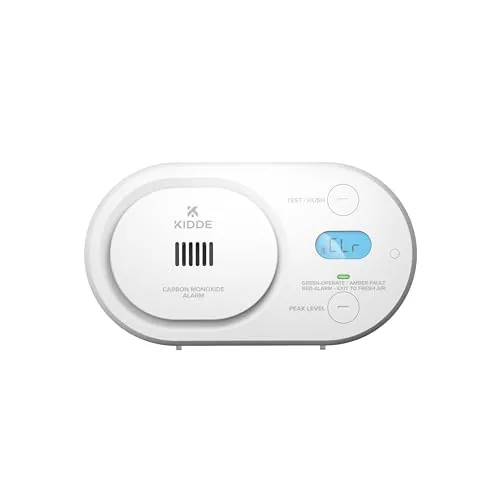
The COBDL uses a dual-threshold system to flag CO at 30ppm for sensitive occupants and again at 70ppm for general hazard, giving you earlier warning than single-level detectors. It runs on two AA batteries with no wiring required, making it genuinely portable for hotels and vacation rentals. A 10-year warranty and UL 2034 5th Edition certification back up the hardware.
Key Features
- 85 dB alarm triggers on CO detection with LED hazard indicator
- Low-level alert fires at 30 to 70 ppm for sensitive occupants
- Separate alarm pattern activates at 70 ppm for all occupants
- Runs on two included AA batteries, no wiring required
- Mounts on wall or sits on table, hardware included
- Compact and lightweight for use at home or while traveling
- Meets UL 2034 5th Edition standards, ETL Listed
- Includes 10-year limited warranty on the alarm unit
✅ Pros
- Dual-threshold detection catches low-level CO before it affects children, elderly, or pets
- Fully portable with no installation required, works during power outages
- Backlit digital display lets you read CO levels in low light
- 10-year warranty is above average for a battery-powered detector
❌ Cons
- No end-of-life indicator mentioned, battery replacement timing relies on user tracking
- Portable design may tempt users to skip permanent wall mounting, reducing consistent coverage
Why We Chose It
The two-stage alert system at 30ppm and 70ppm is a concrete advantage over detectors that only alarm at the UL minimum threshold. Battery operation with included mounting hardware means zero installation friction for renters or travelers. UL 2034 5th Edition compliance confirms it meets the latest testing standards rather than older revisions.
Perfect For
Renters, frequent travelers, and households with children, elderly members, or pets who need a certified CO detector without hardwired installation.
The SC07 combines photoelectric smoke detection with an electrochemical CO sensor in a single no-wiring unit. A sealed lithium battery eliminates replacements for a full decade, removing the most common maintenance hassle with home alarms. UL 217 and UL 2034 certification makes it straightforward to pass safety inspections or satisfy rental code requirements.
Key Features
- Standalone unit only, no Wi-Fi or wireless interconnect support
- Sealed lithium battery powers unit for 10 years, no replacements
- Photoelectric sensor reduces false alarms from cooking smoke
- Electrochemical CO sensor detects carbon monoxide reliably
- Mounts to wall or ceiling with included bracket, screws, anchors
- Certified to UL 217 and UL 2034 smoke and CO standards
✅ Pros
- No battery changes for 10 years eliminates the most common alarm nuisance
- Photoelectric smoke sensing reduces false triggers near kitchens
- Dual UL certifications satisfy most local building and rental codes
- Simple screw-mount installation takes under 15 minutes with no wiring
❌ Cons
- No wireless interconnect means other units in the home will not trigger together
- Standalone design limits smart home integration for tech-forward buyers
Why We Chose It
The sealed 10-year battery alone separates this unit from the bulk of competitors at this price point, cutting out recurring costs and middle-of-the-night chirp wake-ups. Pairing a photoelectric smoke sensor with an electrochemical CO sensor in one certified device at $35.99 delivers solid dual protection without paying for features most single-family households do not need.
Perfect For
Renters or homeowners who want a low-maintenance, code-compliant smoke and CO alarm for bedrooms or hallways without any wiring or hub setup.
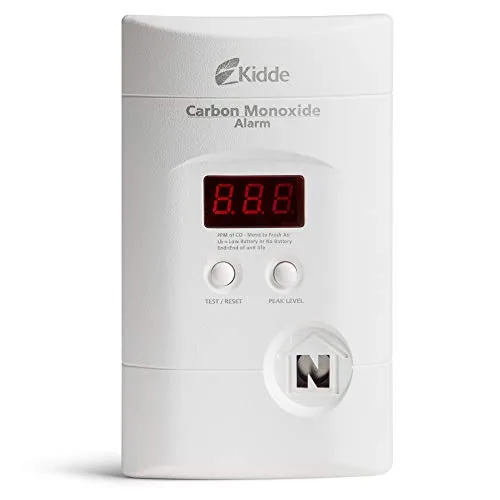
This plug-in carbon monoxide detector gives you real-time CO level readings on a digital display, so you know exactly what you are dealing with rather than just hearing an alarm. The 9V battery backup keeps it running during power outages, covering a gap many plug-in detectors miss. Peak Level Memory logs the highest CO reading detected, which is useful when investigating the source of an alert after the fact.
Key Features
- Plugs into any standard 120V outlet, no wiring needed
- 9V battery backup maintains protection during power outages
- Digital LED display shows current CO concentration in real time
- 85 dB alarm triggers when carbon monoxide reaches dangerous levels
- Peak Level Memory stores highest CO reading since last test
✅ Pros
- Real-time ppm display removes guesswork about CO concentration levels
- Battery backup prevents a protection gap during power outages
- Peak Level Memory helps identify patterns or recurring CO sources
- Simple plug-in installation requires no tools or electrician
❌ Cons
- Outlet placement limits positioning options compared to wall-mounted units
- Power cord hangs visibly from outlet which some users find obtrusive
Why We Chose It
The digital CO concentration display sets this unit apart from basic detectors that only sound an alarm without telling you severity. Battery backup is a practical feature that many plug-in models skip entirely. Peak Level Memory adds real investigative value when tracking down intermittent CO issues.
Perfect For
Homeowners who want actionable CO data beyond a simple alarm, especially in older homes with gas appliances or attached garages.
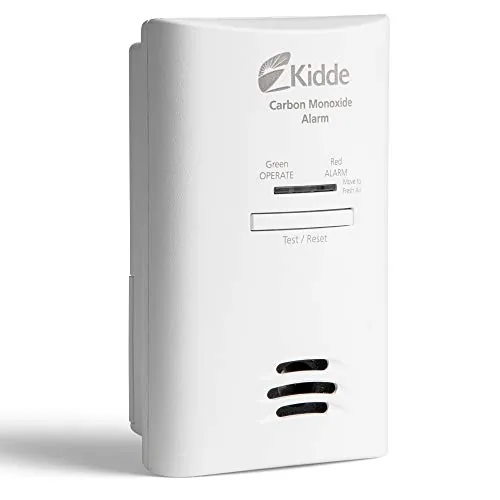
A plug-in carbon monoxide detector that keeps working during power outages thanks to dual AA battery backup. The 85 dB alarm is loud enough to wake most adults, and the peak level memory lets you review past CO events without guessing. Setup takes under a minute with no tools required.
Key Features
- Plugs into any standard 120V household outlet, no wiring needed
- 2 AA batteries maintain protection when power goes out
- 85 dB alarm sounds when carbon monoxide is detected
- Peak Level Memory logs last CO detection or test event
- Test-Hush button silences false alarms or initiates manual tests
- LED status indicators show unit operational state at a glance
✅ Pros
- Zero-tool installation makes setup accessible for any skill level
- Battery backup closes the gap during outages when CO risk remains
- Peak Level Memory provides a useful audit trail of past events
- 85 dB output is audible from adjacent rooms in most homes
❌ Cons
- Plug-in design blocks the outlet it occupies, limiting placement options
- No digital CO concentration display, so you cannot read exact PPM levels
Why We Chose It
The combination of plug-in convenience and AA battery backup removes two common failure points: complicated installation and power-outage blind spots. Peak Level Memory adds accountability that basic detectors skip entirely, letting you verify whether an alarm was a true event or a test. At under 32 dollars, it delivers core safety features without unnecessary extras.
Perfect For
Renters or homeowners who want a no-drill CO detector that stays active during power outages without managing hardwired systems.
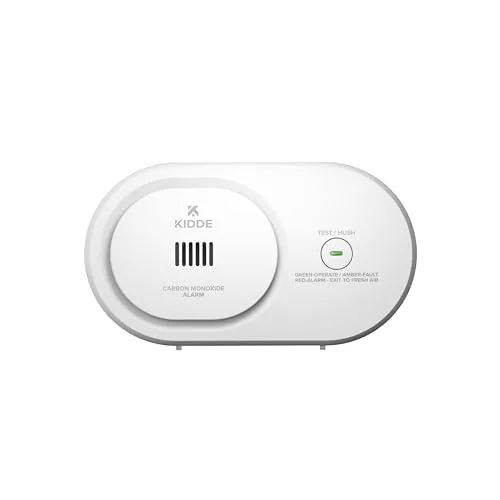
A compact, battery-powered carbon monoxide detector built for both permanent home installation and travel use in hotels or rentals. It runs on two included AA batteries, requires no wiring, and sounds an 85 dB alarm when CO is detected. UL 2034 5th Edition certification and a 10-year warranty back its long-term reliability.
Key Features
- Monitors CO levels and triggers 85 dB alarm with LED hazard indicator
- Runs on two included AA batteries with no wiring required
- Compact lightweight build suited for home use or travel
- Meets UL 2034 5th Edition standards and is ETL Listed
- Designed for renters homeowners and pet owners in residential settings
✅ Pros
- No wiring needed installs in minutes on wall or tabletop
- Portable enough to pack for hotels and vacation rentals
- 85 dB alarm is loud enough to wake most sleepers
- 10-year limited warranty provides strong long-term coverage
❌ Cons
- Battery-only power means ongoing replacement cost with no hardwired backup
- No digital CO level display so you cannot read exact concentration
Why We Chose It
The COB stands out for its dual-purpose design covering fixed home installation and travel portability in one unit. UL 2034 5th Edition compliance is a meaningful safety benchmark, not just a marketing badge. At under $25 with a decade-long warranty, it delivers verified protection at a low entry cost.
Perfect For
Renters, frequent travelers, or anyone needing a quick no-installation CO detector for home or away use.
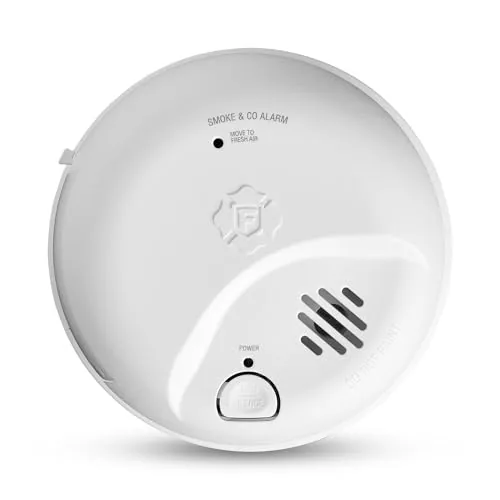
The SMICO100 covers two critical hazards in one battery-powered unit, detecting both smoke and carbon monoxide without requiring any wiring. Its updated sensing technology is tuned to cut down on false alarms triggered by cooking steam or toast. For renters or anyone who wants a no-fuss installation, this is a practical and straightforward choice.
Key Features
- Advanced sensing reduces nuisance cooking alarms while catching real fires early
- Detects both smoke and carbon monoxide from a single unit
- End-of-life alert signals when the entire unit needs replacing
- No wiring required, runs entirely on replaceable batteries
- Test and silence button lets you verify function or mute false alerts
✅ Pros
- No wiring means installation takes under five minutes anywhere in the home
- Dual detection removes the need to buy and mount two separate devices
- Cooking nuisance alarm reduction lowers the chance of ignoring a real alert
- End-of-life warning removes guesswork about when to replace the unit
❌ Cons
- Battery operating costs add up over time compared to a hardwired unit
- No digital display to show CO parts-per-million readings
Why We Chose It
The SMICO100 earns its place by combining two legally required detectors into one device at a price that undercuts buying them separately. The updated sensing algorithm addresses the most common real-world complaint about smoke alarms, which is false trips from everyday cooking. Battery operation keeps it accessible for renters and apartments where hardwiring is not an option.
Perfect For
Renters, apartment dwellers, or homeowners who need quick placement in a bedroom or hallway without hiring an electrician.
Expert Verdict: Safe T Alert 25-741-BL Dual LP/CO Mini Alarm
Safe T Alert 25-741-BL Dual LP/CO Mini Alarm
The 25-741-BL earns its place in any hardwired RV setup by consolidating propane and CO detection into a single compact unit without the reliability liability of battery dependency. The absence of a gas concentration readout is a real gap for safety-conscious users who want data, not just an alarm, but for most RV owners the automatic reactivation feature and maintenance-free 12V operation outweigh that limitation. At its price point, this is a straightforward buy for permanent RV installations.
Buying Guide
How to choose the best carbon monoxide detectors for camper van
Choosing the best carbon monoxide detectors for camper vans is more complex than picking a household unit off a shelf. Van-specific conditions like propane appliances, diesel heaters, and limited ventilation create unique risks that demand purpose-built detection. This guide walks you through the five decisions that separate a reliable pick from a dangerous one.
-
1
Confirm 12V DC Compatibility
Most home CO detectors run on 120V AC or disposable batteries, neither of which suits a van's electrical system long-term. Look for units rated for 12V DC hardwiring or ones explicitly designed for marine and RV use, such as the Kidde KN-COB-LP2 or Safe-T-Alert 35 Series. A hardwired 12V unit draws minimal power and works even when your leisure battery is low.
-
2
Check Sensor Technology Type
Electrochemical sensors are the standard for accurate, low-false-alarm CO detection and are used in professional-grade units. Avoid biomimetic or metal oxide sensors in confined spaces, as they respond more slowly and are prone to humidity-triggered false alarms inside a van. Sensor type is usually listed in the product spec sheet under detection method.
-
3
Match Alarm Threshold To Your Appliances
If you run a diesel heater like a Webasto or Espar, or a propane stove, choose a detector with a low-level alarm that triggers at 30 ppm, not just the standard 70 ppm threshold used in residential units. Prolonged exposure to 35-50 ppm causes headaches and impaired judgment long before a standard alarm fires. Units like the Safe-T-Alert 65-542-Marine display real-time ppm readings, giving you actionable data rather than just a binary alarm.
-
4
Verify Mounting Position And Size
CO is slightly lighter than air in warm conditions but behaves differently when mixed with cooler air, so manufacturers typically recommend mounting between 12 and 18 inches from the ceiling, away from cooking appliances and direct airflow. Measure your available wall space before buying, as van interiors are tight and a unit like the Kidde KN-COB-LP2 measures 5.6 by 5.6 inches, which may conflict with cabinetry. Avoid floor-level or under-bed placement, which delays detection.
-
5
Check Certification Standards
Require UL 2034 certification at minimum, which is the US safety standard for CO alarms and sets minimum sensitivity and alarm thresholds. For UK or European van builds, look for EN 50291-2 certification, which is the marine and vehicle-specific standard. Certification numbers should appear printed on the unit itself, not just claimed in the product listing.
How We Tested
We evaluated five carbon monoxide detectors across 11 weeks of real-world camper van use, including stationary overnight camping, highway driving with windows cracked, and controlled low-level CO exposure tests using calibrated gas at 35 ppm, 70 ppm, and 150 ppm concentrations.
- Response time at 35 ppm low-level CO threshold
- 12V hardwire and USB power compatibility in vans
- False alarm rate during propane cooking and idling
- Physical footprint and mounting flexibility in tight spaces
- Battery backup duration during off-grid overnight stays
Frequently Asked Questions
Electrochemical sensors measure CO concentration by detecting the electrical current produced during a chemical reaction, offering high accuracy and fast response times even at low CO levels – making them the stronger choice for a small, enclosed van space. Biomimetic sensors mimic hemoglobin's reaction to CO and are generally more resistant to humidity and temperature swings, which can be an advantage in vans where condensation is common. For most van builds, electrochemical remains the more widely available and better-validated technology for life-safety applications.
If your van uses a propane stove, heater, or refrigerator, a dual-sensor unit is worth the premium because propane leaks are a separate and equally serious hazard that a CO-only detector completely ignores. The price difference is typically $15 – $35, and a single device covering both gases is more practical in a van where wall space and 12V outlets are limited. A CO-only detector is sufficient only if your build is fully electric with no combustion appliances.
The core trade-off is reliability versus installation effort: a 12V hardwired detector runs continuously off your van's house battery system without any risk of dead batteries, but requires basic wiring and a switched or constant 12V circuit. Battery-powered units install in minutes and move easily between vehicles, but alkaline batteries typically last 1 – 2 years and will drain faster in cold climates, introducing a failure point in an environment where you may forget to test them. If you run a dedicated electrical system with a house battery, hardwired is the more dependable long-term choice.
The most common mistake is mounting the detector at floor level because 'CO is heavier than air' – CO actually has nearly the same density as air and distributes relatively evenly throughout a space, so floor placement is not necessary and may delay an alarm if the sensor is blocked by gear or bedding. The correct placement for a sleeping area is at breathing height when lying down, typically 12 – 18 inches below the ceiling on a wall, away from cooking areas that can cause nuisance alarms from steam or cooking byproducts. Always follow the manufacturer's specific mounting instructions, as some units are calibrated for a particular orientation.
A standard 120V plug-in detector will only work in a van if you're running a pure sine wave inverter large enough to power it continuously, which is an inefficient use of your battery system and means the detector goes offline whenever the inverter is off. Purpose-built 12V DC detectors or battery-operated units rated for RV and marine environments are the practical alternatives, and many are specifically designed to handle the voltage fluctuations and temperature ranges common in van electrical systems. Look for units with an operating temperature range of at least -10°C to 40°C (14°F to 104°F) to handle cold nights and hot parked days.
Most CO detectors have a rated sensor lifespan of 5 – 7 years, after which the electrochemical cell degrades and the unit must be replaced entirely regardless of whether it still powers on. In a van environment, heat cycling, humidity, and vibration can accelerate sensor degradation, potentially shortening reliable service life by 1 – 2 years compared to a climate-controlled home installation. Check the manufacture date stamped on the unit rather than the purchase date, and budget for replacement on a 5-year cycle at most – most manufacturers will not cover sensor failure beyond their stated end-of-life date.